Tuesday, April 28, 2026
  • Login
The Southern African Times
  • Home
  • Southern Africa
  • Business
    • African Start ups
    • African Continental Free Trade Area
  • Technology
    • Lifestyle
      • Health
      • Culture
      • Food and Drink
      • Entertainment
  • Opinion
  • Sports
  • SAT Jobs
    • Events
  • About Us
    • Advertise with Us
    • Contact Us
No Result
View All Result
  • Home
  • Southern Africa
  • Business
    • African Start ups
    • African Continental Free Trade Area
  • Technology
    • Lifestyle
      • Health
      • Culture
      • Food and Drink
      • Entertainment
  • Opinion
  • Sports
  • SAT Jobs
    • Events
  • About Us
    • Advertise with Us
    • Contact Us
No Result
View All Result
The Southern African Times
No Result
View All Result
Home AI Africa

South Africa Withdraws Draft AI Policy After Discovery of Fabricated References

by SAT Reporter
April 28, 2026
in AI Africa
0
South Africa Withdraws Draft AI Policy After Discovery of Fabricated References

South Africa has withdrawn its Draft National Artificial Intelligence Policy following the confirmation that the document contained fabricated academic references, raising concerns about procedural integrity within public policymaking processes.

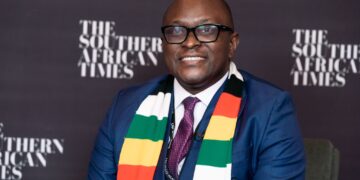
The decision was announced by the Minister of Communications and Digital Technologies, Solly Malatsi, after internal review processes substantiated earlier media reports that several cited academic sources did not exist. According to reporting by News24 and confirmation from the South African Government News Agency, the references were likely generated using artificial intelligence systems and incorporated into the policy document without sufficient verification.

The draft policy had previously been approved by Cabinet on 25 March 2026 and published for public comment in April, with submissions initially scheduled to close in June. Its withdrawal interrupts what had been positioned as a significant step in formalising South Africa’s national framework for artificial intelligence governance.


ADVERTISEMENT

In a public statement, Malatsi acknowledged that the inclusion of fictitious sources undermined the credibility of the document, emphasising that the issue extended beyond technical oversight. The minister indicated that the episode highlighted the necessity of maintaining rigorous human oversight when integrating AI tools into governmental workflows.

The development occurs within a broader continental context in which African states are actively exploring regulatory frameworks for artificial intelligence. Several countries, including Rwanda, Kenya, and Nigeria, have advanced national strategies that seek to balance innovation with ethical considerations, data governance, and socioeconomic inclusion. South Africa’s draft policy had similarly aimed to position the country within this evolving landscape, addressing areas such as innovation ecosystems, skills development, and responsible AI deployment.

Analysts note that the incident underscores both the opportunities and vulnerabilities associated with the adoption of generative AI in administrative contexts. While such technologies can enhance efficiency and expand access to information, they also introduce risks related to accuracy, accountability, and epistemic reliability. The South African case illustrates how these risks may manifest when institutional safeguards are insufficiently robust.

At a continental level, the episode invites reflection on how African governments can shape AI governance frameworks that are grounded in local realities, knowledge systems, and developmental priorities. Rather than viewing the incident solely as a procedural failure, some observers suggest it may serve as a catalyst for strengthening institutional capacity, reinforcing peer review mechanisms, and fostering greater transparency in policy development processes.

The Department of Communications and Digital Technologies has not yet indicated a revised timeline for the reintroduction of the policy. However, the withdrawal is expected to prompt a reassessment of drafting processes and verification protocols, with implications for how digital governance frameworks are constructed in South Africa and beyond.

As African countries continue to articulate their positions within the global digital order, the emphasis on credibility, inclusivity, and contextual relevance remains central. The South African experience highlights the importance of ensuring that technological adoption within governance structures is accompanied by rigorous oversight, thereby safeguarding public trust while enabling innovation.

Tags: Africa technologyAfrican innovationAI ethicsartificial intelligence policydigital policyemerging technologiesgovernancepublic policySolly MalatsiSouth Africa
Previous Post

DR Congo to deploy 20,000 strong Mining Guard to reinforce sector governance

Next Post

South African citrus rerouted to Middle East amid shipping disruption

SAT Reporter

Related Posts

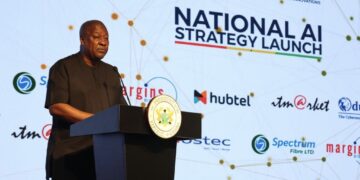
Ghana commits to accelerated artificial intelligence development with national strategy launch
AI Africa

Ghana commits to accelerated artificial intelligence development with national strategy launch

by SAT Reporter
April 26, 2026
If AI Cannot Hear Africa, It Cannot Serve Africa
AI Africa

If AI Cannot Hear Africa, It Cannot Serve Africa

by Dr Brighton Chireka
April 17, 2026
South Africa Releases Draft AI Policy for Public Comment
AI Africa

South Africa Releases Draft AI Policy for Public Comment

by SAT Reporter
April 4, 2026
Microsoft Expands AI Investment Across Africa as Global Technology Competition Intensifies
AI Africa

Microsoft Expands AI Investment Across Africa as Global Technology Competition Intensifies

by SAT Reporter
March 16, 2026
Leveraging AI to Achieve Peace, Justice, and Good Country Governance
AI Africa

Leveraging AI to Achieve Peace, Justice, and Good Country Governance

by SAT Reporter
January 16, 2026
Next Post
South African citrus rerouted to Middle East amid shipping disruption

South African citrus rerouted to Middle East amid shipping disruption

Browse by Category

  • Africa AI
  • African Continental Free Trade Area
  • African Debt
  • African Start ups
  • Agriculture
  • AI Africa
  • Algeria
  • All News
  • Analysis
  • Angola
  • Arts / Culture
  • Asia
  • Botswana
  • BOTSWANA
  • BREAKING NEWS
  • BRICS
  • Burkina Faso
  • Burundi
  • Business
  • Business
  • Business Wire
  • Cameroon
  • Central Africa
  • Chad
  • China
  • Climate Change
  • Climate Changev
  • Community
  • Congo Republic
  • Conservation
  • Côte d’Ivoire
  • COVID 19
  • CRYPTOCURRENCY
  • Culture
  • Democratic Republic of Congo
  • Diplomacy
  • Eastern Africa
  • Economic Development
  • Economy
  • Education
  • Egypt
  • Elections 2024
  • Energy
  • Entertainment
  • Environment
  • Eritrea
  • Ethiopia
  • Europe
  • Fashion
  • Feature
  • Finance
  • Financial Inclusion
  • Food
  • Food and Drink
  • Foods
  • GABON
  • Ghana
  • Global
  • Global Africa
  • Guinea
  • Health
  • Immigration
  • in Southern Africa
  • International news
  • International Relations
  • Investment
  • Ivory Coast
  • Just In
  • Kenya
  • Lesotho
  • Libya
  • Life Style
  • Lifestyle
  • Literature
  • Malawi
  • Malawi
  • Mali
  • Markets
  • Mauritius
  • Middle East
  • Mining in Africa
  • Morocco
  • Mozambique
  • Namibia
  • Niger
  • niger
  • Nigeria
  • North Africa
  • North-Eastern Africa
  • Obituaries
  • Obituary
  • Opinion
  • PARTNER CONTENT
  • Politics
  • Property
  • Racism
  • Rwanda
  • Rwanda
  • SADC
  • SAT Interviews
  • SAT Investigation
  • SAT Jobs
  • Saudi Arabia
  • Senegal
  • Seychelles
  • Somaliland
  • South Africa
  • South Sudan
  • Sports
  • Startup Africa
  • STOCK EXCHANGE
  • Sudan
  • Sustainability
  • Sustainablity
  • Tanzania
  • Technology
  • Telecommunications
  • The Editorial Board
  • The Power Of She
  • Togo
  • Trade
  • Travel
  • Travel
  • Tunisia
  • Uganda
  • Uncategorized
  • Wealth
  • West Africa
  • World
  • World
  • ZAMBIA
  • Zambia
  • Zimbabwe
  • ZIMBABWE

Browse by Tags

#NewsUpdate #SouthAfrica #SouthernAfricanTimes #TheSouthernAfricanTimes AfCFTA africa African Continental Free Trade Area African development African Development Bank African economies African economy African Union Agriculture Angola Botswana Business China Climate change Cyril Ramaphosa Economic Development economic growth energy transition food security industrialisation Inflation Infrastructure Infrastructure Development International relations Investment Kenya Mozambique Namibia news Nigeria Regional Integration renewable energy Rwanda SADC South Africa Southern Africa sustainable development Tanzania United States Zambia Zimbabwe
ADVERTISEMENT

WHO WE ARE

The Southern African Times is a regional bloc digital newspaper that covers Southern African and world news. The paper also gives a nuanced analysis on news and covers a wide range of reporting which include sports, entertainment, foreign affairs, arts and culture.

Welcome Back!

Login to your account below

Forgotten Password?

Retrieve your password

Please enter your username or email address to reset your password.

Log In

  • Home
  • Southern Africa
  • Business
    • African Start ups
    • African Continental Free Trade Area
  • Technology
    • Lifestyle
      • Health
      • Culture
      • Food and Drink
      • Entertainment
  • Opinion
  • Sports
  • SAT Jobs
    • Events
  • About Us
    • Advertise with Us
    • Contact Us
Are you sure want to unlock this post?
Unlock left : 0
Are you sure want to cancel subscription?