Artificial intelligence is advancing at an extraordinary pace. Across the world, systems are being developed to listen, interpret, and respond, from virtual assistants to clinical documentation tools and decision-support systems. These technologies promise efficiency, accuracy, and scale. Yet, as this progress continues, an important question arises, particularly within the African context: can these systems genuinely understand the people they are intended to serve?
This is not merely a technical consideration. It is a question of inclusion, relevance, and ultimately, equity.
Artificial intelligence systems are shaped by the data on which they are trained. That data reflects the languages, accents, and cultural contexts from which it is drawn. At present, much of the global AI ecosystem is built upon dominant languages, particularly English, and on datasets originating largely from Western environments. As a result, these systems tend to perform most effectively in contexts that mirror their training conditions. Where those conditions differ significantly, performance is often reduced.



Africa presents a markedly different reality. It is a continent of profound linguistic diversity, with more than 2,000 languages spoken across its nations. Communication is rarely confined to a single language. It is layered, contextual, and often shaped by cultural meaning. Individuals may move fluidly between languages within a single conversation, expressing themselves through idioms, metaphors, and culturally grounded narratives. These forms of expression are not incidental; they are central to how meaning is conveyed and understood.
Encouragingly, there is already meaningful work taking place across the continent to address this gap. Initiatives such as Masakhane have brought together African researchers to develop natural language processing tools for African languages, grounded in local context and driven by collaborative effort. There are increasing investments in building speech and text datasets that reflect African languages and accents. Startups and research institutions are beginning to develop applications that move beyond imported assumptions and instead engage directly with African realities.
These developments are significant. They demonstrate that Africa is not simply a passive recipient of artificial intelligence technologies but is beginning to contribute actively to their development. This progress deserves recognition and support.
However, the scale of the challenge requires a shift in how the conversation is framed.
There has been a tendency to ask whether Africa is ready for artificial intelligence. While this question may appear reasonable, it subtly places the burden of adaptation on African societies, suggesting that they must prepare themselves to align with systems that have largely been designed elsewhere. In doing so, it risks positioning Africa in a perpetual state of catching up.
A more appropriate question would be whether artificial intelligence, in its current form, is ready for Africa.
If AI systems are developed using languages that are not widely spoken on the continent, if they struggle to interpret African accents, and if they fail to capture culturally specific ways of expressing meaning, then the limitation does not lie with Africa. It lies with the systems themselves. When such systems perform poorly in African contexts, this should not be interpreted as a lack of readiness on the part of African societies, but rather as evidence that the technology has not yet been sufficiently adapted.
In practical terms, if artificial intelligence communicates in languages that many Africans do not use in their daily lives, it cannot be effectively heard or understood. And if it cannot be understood, its usefulness becomes limited. The responsibility, therefore, is not only for Africa to adopt artificial intelligence, but also for AI to evolve in a way that makes it accessible, relevant, and effective within African contexts. Addressing language is central to this process.
This issue is particularly important in healthcare. Clinical encounters depend heavily on accurate and nuanced communication. Patients often describe their symptoms in ways that are shaped by culture, language, and personal experience. Expressions that may appear imprecise in one context can carry clear meaning in another. If an AI system is unable to interpret these expressions accurately, the consequences extend beyond inconvenience. They can affect diagnosis, treatment decisions, and ultimately patient outcomes.
The growing use of AI systems designed to listen to consultations and generate clinical notes illustrates both the promise and the risk. While such systems have the potential to reduce administrative burdens and allow clinicians to focus more on patient care, their effectiveness depends on their ability to understand the language being spoken. If they cannot reliably interpret multilingual conversations, accents, or culturally specific expressions, they risk introducing inaccuracies into clinical records. In a healthcare setting, such inaccuracies can have serious implications.
Language, therefore, should not be regarded as a secondary feature of artificial intelligence systems. It is a foundational element that determines whether those systems can function safely and effectively.
This leads to a broader reflection on Africa’s role in the global AI landscape. The future of artificial intelligence should not be shaped solely by a small number of global technology centres, with other regions seeking inclusion within frameworks designed elsewhere. Africa must move beyond the position of requesting a place at an existing table. Instead, it should define its own priorities, develop its own frameworks, and contribute to shaping the direction of AI in a way that reflects its unique context.
This does not imply isolation from global collaboration. On the contrary, collaboration remains essential. However, meaningful participation requires ownership — of data, of language, and of the systems being developed.
Africa’s linguistic diversity, often perceived as a challenge, can in fact become a source of innovation. Developing AI systems capable of understanding multiple languages, navigating cultural nuance, and interpreting context accurately could have global relevance. In an increasingly interconnected world, such capabilities will be of growing importance.
The question, therefore, is not whether Africa can engage with artificial intelligence. That process is already underway. The more important question is whether Africa will shape AI in a way that reflects its people, its languages, and its lived realities.

Artificial intelligence must extend beyond processing data to understanding context. It must be capable of listening as well as responding. If it cannot hear Africa, it cannot serve Africa.

And if this perspective is recognised, strengthened, and acted upon, then this conversation will have contributed meaningfully to shaping a more inclusive and effective future for artificial intelligence on the continent.
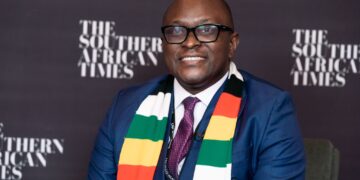
Written by Dr Brighton Chireka, a Zimbabwean-born UK-based primary healthcare physician, healthcare leadership educator, and international consultant. He writes and speaks on the responsible adoption of artificial intelligence in healthcare, focusing on human-centred innovation, ethical data governance, and the future of African health systems.