Monday, June 15, 2026
  • Login
The Southern African Times
  • Home
  • Southern Africa
  • Business
    • African Start ups
    • African Continental Free Trade Area
  • Technology
    • Lifestyle
      • Health
      • Culture
      • Food and Drink
      • Entertainment
  • Opinion
  • Sports
  • SAT Jobs
    • Events
  • About Us
    • Advertise with Us
    • Contact Us
No Result
View All Result
  • Home
  • Southern Africa
  • Business
    • African Start ups
    • African Continental Free Trade Area
  • Technology
    • Lifestyle
      • Health
      • Culture
      • Food and Drink
      • Entertainment
  • Opinion
  • Sports
  • SAT Jobs
    • Events
  • About Us
    • Advertise with Us
    • Contact Us
No Result
View All Result
The Southern African Times
No Result
View All Result
Home Opinion

OPINION | China-Africa summit a fitting showcase of Global South’s rise

The deals sealed and friendships renewed at FOCAC summit underline China’s role as a prime force of global power rebalancing

by SAT Reporter
September 9, 2024
in Opinion
0
OPINION | China-Africa summit a fitting showcase of Global South’s rise

As Xi Jinping last week rolled out the red carpet in Beijing for over 50 of Africa’s leaders, along with the UN’s Antonio Guterres, at the ninth Forum on China-Africa Cooperation (FOCAC), one could only reflect on the recent comment by Singapore’s Kishore Mahbubani: “the coming decades may belong to the Global South.”

Given its unappealing acronym, FOCAC, many may be forgiven for being unaware of this three-day “grand reunion of the China-Africa big family.” (Tiny eSwatini, population 1.2 million out of Africa’s 1.2 billion, remains the lone outlier, having stubbornly maintained diplomatic relations with Taiwan since 1968.)

After all, FOCAC only convenes every three years – and the last reunion, hosted by Senegal, was a virtual affair due to the Covid-19 pandemic. However, ignoring FOCAC’s significance would be a mistake – as with other initiatives like BRICS, the Belt and Road Initiative, and the Shanghai Cooperation Organisation, all of which signify the growing power and confidence among countries once dismissed as poor and peripheral.


ADVERTISEMENT

Such groupings, largely driven by Beijing, have solidified the previously vague concept of the Global South. They reflect the rapid shift in the global balance of economic and diplomatic power. More importantly, they highlight the ongoing failure of the post-World War II powers, clustered around the Group of 7, to move beyond what many in the Global South perceive as a condescending, neo-colonial relationship with the Third World.

For decades, most Western leaders have kept Africa on the distant periphery of their foreign policy concerns. Despite its vast size and abundant natural resources, Africa still accounts for a mere 2.7 per cent of global GDP. Worse, the continent is home to many of the world’s poorest and most troubled countries, including a “coup belt” of seven nations that have experienced a wave of coups in recent years.

Protesters waving Russian flags and chanting slogans during a rally in Niamey, Niger, in 2023. Protesters demanded the departure of the French military from the country and expressed their support for the junta, after a coup against a democratically elected president. Photo: EPA

In contrast to the Western approach, Beijing has maintained a consistent presence in Africa for over five decades. Even back in 1982, while I was living in Beijing, it was hard to keep track of the steady stream of African leaders being hosted for grand dinners in the Great Hall of the People. This long-standing consistency has earned China significant soft power, not only in Africa but also in the United Nations. As a committed member of the Global South, China is increasingly positioning itself as a driving force behind the global economic rebalancing.

As Paul Melly of Chatham House in London noted over the weekend, “For African governments resentful of the pressure to take sides in international disputes, China now appears as a refreshingly reliable partner, willing to collaborate without discrimination with both Moscow’s allies and with civilian-ruled states closer to Europe and the US.”

Melly points out that despite the coup in Niger last July, Beijing continues its work on a 2,000km oil pipeline between Niger and Benin. Similarly, in Guinea, China remains committed to building a 600km iron ore railway to the coast, despite a coup in 2021.

Demonstrating China’s commitment to action, Xi used the China-Africa summit to pledge a fresh US$50 billion, through credit lines and investments, to Africa over the next three years. He signalled a shift in focus beyond major infrastructure projects, prioritising green energy transitions, including investment in the local manufacture of electric vehicles.

Xi also hinted at a willingness to invest in nuclear energy – in sharp contrast to France, which has mined uranium in Niger for decades to fuel its own nuclear plants, yet has never supported the development of nuclear power in Niger or other West African nations.

This shift in investment priorities may help address another pressing issue – China’s massive trade surplus with the continent. Last year, China exported goods worth US$173 billion to Africa, while importing only US$109 billion in return.

While Xi’s promises have yet to materialise, Beijing has been Africa’s largest bilateral investor for nearly two decades and appears poised to remain so, despite occasional controversies, such as over its Ugandan oil pipeline into Tanzania or the illegal shipment of logs from Mozambique. Moreover, accusations of “debt-trap diplomacy” persist, with Zambia’s default in 2020 being a notable example.
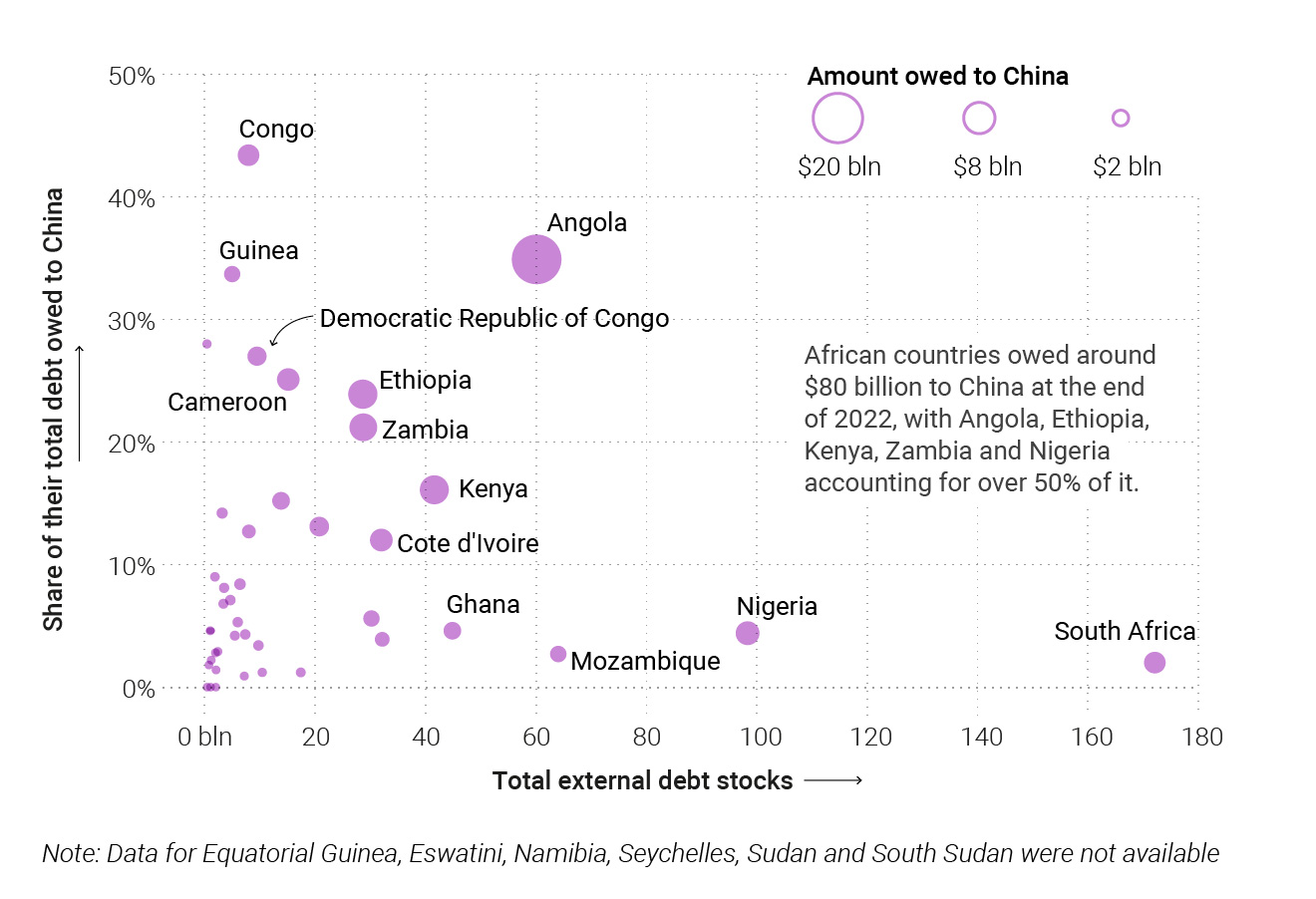
African debt undoubtedly dominated many of the bilateral discussions held on the sidelines of FOCAC last week. Many African economies are burdened by record-high debt levels, and debt interest rates are unlikely to fall as swiftly as they would hope.


The UN Conference on Trade and Development (UNCTAD) recently reported that 24 African countries currently have public debt exceeding 60 per cent of their GDP. In 20 nations, debt servicing costs amount to more than 10 per cent of revenue. Put simply, 750 million people live in countries where governments spend more on interest payments than on health or education.

While some may view the China-Africa summit as theatrical rather than substantive, it is part of a consistent Africa strategy that spans decades. This strategy is quietly but fundamentally reshaping the balance of power on the global stage.

Written by David Dodwell is the executive director of the Hong Kong-APEC Trade Policy Study Group, a trade policy think tank. The article reflects the author’s opinions and not necessarily those of The Southern African Times.

Tags: Africa investmentsAfrican developmentBeijing SummitBelt and Road InitiativeBRICSChina-Africa cooperationdebt-trap diplomacyeconomic rebalancingFOCACGlobal Southinternational diplomacyShanghai Cooperation Organisationtrade surplusXi Jinping
Previous Post

Targeting Prosperity – Sales Required to Drive UK Economy

Next Post

US Election Offers Little Hope for Change in US-China Relations, Says Standard Chartered CEO

SAT Reporter

Related Posts

LONG READ | No Longer the World’s Dustbin: China’s Waste Ban and Africa’s Circular Economy Moment
Opinion

LONG READ | No Longer the World’s Dustbin: China’s Waste Ban and Africa’s Circular Economy Moment

by Times Reporter
June 12, 2026
OPINION | The Investors Southern Africa Refuses to See
Opinion

OPINION | The Investors Southern Africa Refuses to See

by Times Reporter
June 14, 2026
Faith, Miracles and the Crisis of Religious Authenticity
Opinion

Faith, Miracles and the Crisis of Religious Authenticity

by Brendan Amadi
June 10, 2026
How DRC President Leveraged Geopolitics to Secure Political Survival
Opinion

How DRC President Leveraged Geopolitics to Secure Political Survival

by Dr. Alex Ntung
June 9, 2026
Zimbabwe’s Child Online Safety Moment and Why It Matters Beyond 2030
Opinion

Zimbabwe’s Child Online Safety Moment and Why It Matters Beyond 2030

by Kundai Vambe
June 5, 2026
Next Post
US Election Offers Little Hope for Change in US-China Relations, Says Standard Chartered CEO

US Election Offers Little Hope for Change in US-China Relations, Says Standard Chartered CEO

Browse by Category

  • Africa AI
  • African Continental Free Trade Area
  • African Debt
  • African Start ups
  • Agriculture
  • AI Africa
  • Algeria
  • All News
  • Analysis
  • Angola
  • Arts / Culture
  • Asia
  • BOTSWANA
  • Botswana
  • BREAKING NEWS
  • BRICS
  • Burkina Faso
  • Burundi
  • Business
  • Business
  • Business Wire
  • Cameroon
  • Central Africa
  • Chad
  • China
  • Climate Change
  • Climate Changev
  • Community
  • Congo Republic
  • Conservation
  • Côte d’Ivoire
  • COVID 19
  • CRYPTOCURRENCY
  • Culture
  • Democratic Republic of Congo
  • Diplomacy
  • Eastern Africa
  • Economic Development
  • Economy
  • Education
  • Egypt
  • Elections 2024
  • Energy
  • Entertainment
  • Environment
  • Eritrea
  • Ethiopia
  • Europe
  • Fashion
  • Feature
  • Finance
  • Financial Inclusion
  • Food
  • Food and Drink
  • Foods
  • GABON
  • Ghana
  • Global
  • Global Africa
  • Guinea
  • Health
  • Humanitarian Aid
  • Immigration
  • in Southern Africa
  • International news
  • International Relations
  • Investment
  • Ivory Coast
  • Just In
  • Kenya
  • Lesotho
  • Libya
  • Life Style
  • Lifestyle
  • Literature
  • Malawi
  • Malawi
  • Mali
  • Markets
  • Mauritius
  • Middle East
  • Mining in Africa
  • Morocco
  • Mozambique
  • Namibia
  • Niger
  • niger
  • Nigeria
  • North Africa
  • North-Eastern Africa
  • Obituaries
  • Obituary
  • Opinion
  • PARTNER CONTENT
  • Politics
  • Property
  • Racism
  • Rwanda
  • Rwanda
  • SADC
  • SAT Interviews
  • SAT Investigation
  • SAT Jobs
  • Saudi Arabia
  • Senegal
  • Seychelles
  • Somaliland
  • South Africa
  • South Sudan
  • Sports
  • Startup Africa
  • STOCK EXCHANGE
  • Sudan
  • Sustainability
  • Sustainablity
  • Tanzania
  • Technology
  • Telecommunications
  • The Editorial Board
  • The Power Of She
  • Togo
  • Trade
  • Travel
  • Travel
  • Tunisia
  • Uganda
  • Uncategorized
  • Wealth
  • West Africa
  • World
  • World
  • Zambia
  • ZAMBIA
  • Zimbabwe
  • ZIMBABWE

Browse by Tags

#NewsUpdate #SouthAfrica #SouthernAfricanTimes #TheSouthernAfricanTimes AfCFTA africa African Continental Free Trade Area African development African Development Bank African economies African economy African Union Agriculture Angola Botswana China Climate change Cyril Ramaphosa Economic Development economic growth energy transition governance IMF industrialisation Inflation Infrastructure Infrastructure Development International relations Investment Kenya Mozambique Namibia news Nigeria Regional Integration renewable energy Rwanda SADC South Africa Southern Africa sustainable development Tanzania United States Zambia Zimbabwe
ADVERTISEMENT

WHO WE ARE

The Southern African Times is a regional bloc digital newspaper that covers Southern African and world news. The paper also gives a nuanced analysis on news and covers a wide range of reporting which include sports, entertainment, foreign affairs, arts and culture.

Welcome Back!

Login to your account below

Forgotten Password?

Retrieve your password

Please enter your username or email address to reset your password.

Log In
  • Home
  • Southern Africa
  • Business
    • African Start ups
    • African Continental Free Trade Area
  • Technology
    • Lifestyle
      • Health
      • Culture
      • Food and Drink
      • Entertainment
  • Opinion
  • Sports
  • SAT Jobs
    • Events
  • About Us
    • Advertise with Us
    • Contact Us
Not enough quota to unlock this post
Unlock left : 0
Are you sure want to cancel subscription?