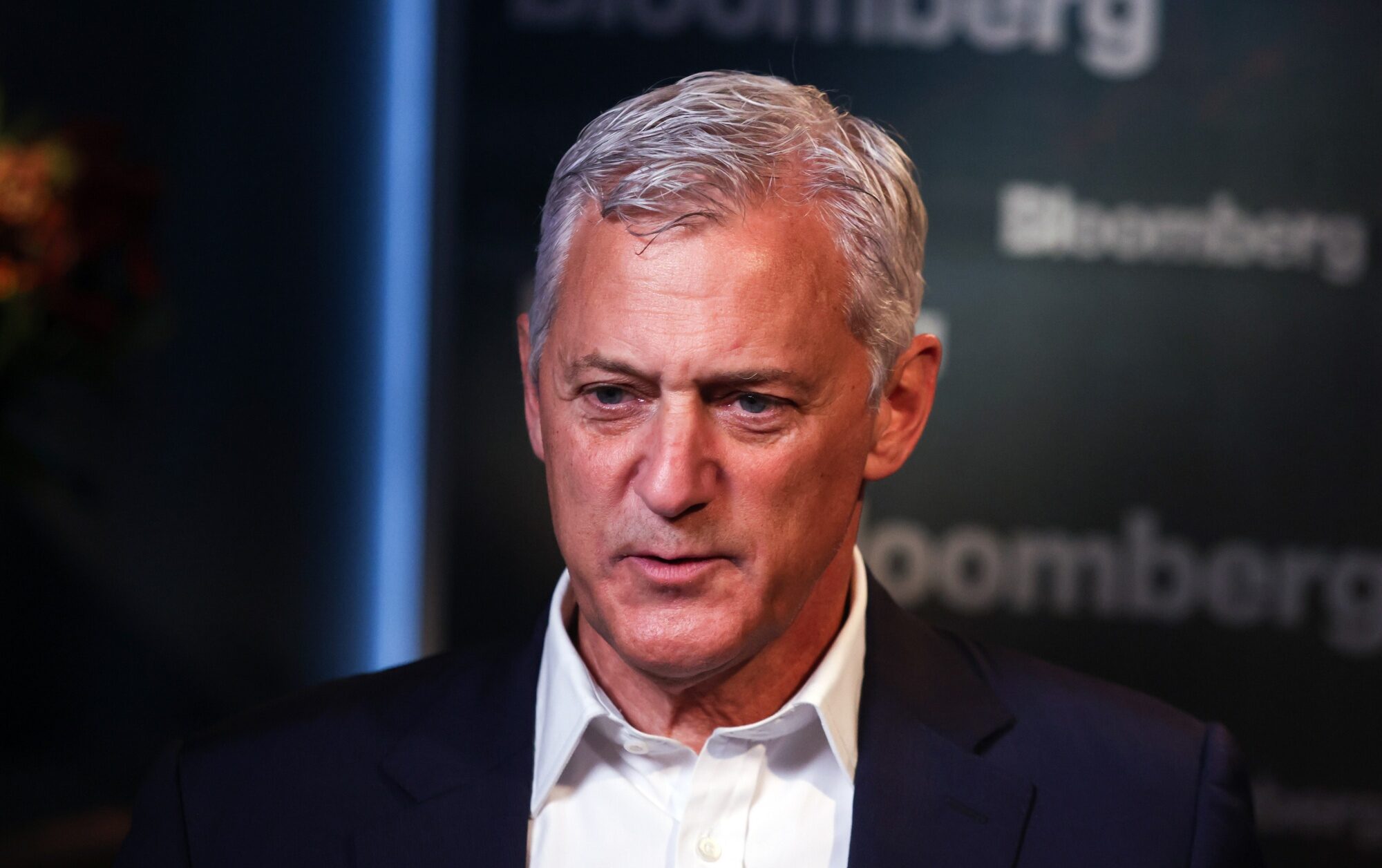
Standard Chartered Chief Executive Officer Bill Winters has voiced scepticism over the possibility of significant changes in US-China relations regardless of the outcome of the upcoming US presidential election. Speaking at Bloomberg’s Spotlight on ASEAN Business event in Singapore, Winters remarked that both US presidential candidates, Kamala Harris and Donald Trump, are united in their “China bashing” rhetoric, but neither has demonstrated a compelling or transformative impact on foreign policy.
Winters’ remarks come as tensions between the US and China continue to dominate global economic discourse, with concerns over trade, technology, and geopolitical influence. “Both candidates have made their stance on China clear, but neither has been overwhelmingly impactful,” Winters stated, pointing out that the fundamental dynamics of the relationship are unlikely to shift after the November election.
The session, moderated by Bloomberg’s Haslinda Amin, also featured insights from prominent business leaders including Minette B. Navarrete, President of Kickstart Ventures, Boon Chye Loh, CEO of the Singapore Exchange, and Tengku Abdul Aziz Tengku Zafrul, Minister of Investment, Trade, and Industry of Malaysia. While each panellist brought a unique perspective to the discussion, Winters’ assertion that the bilateral tension between the US and China is now entrenched within broader policy frameworks was a key takeaway.



Despite the political rhetoric, Winters indicated that global markets should expect continuity rather than disruption in the US-China dynamic, irrespective of the election outcome. “The relationship between the two superpowers has evolved into one of strategic competition, and that is unlikely to change anytime soon,” he added, signalling to businesses and investors that preparation for long-term rivalry is essential.


In response to Winters’ observations, Amin pressed further on how businesses in Southeast Asia might navigate the complexities of this geopolitical landscape. The panel agreed that companies must remain agile and attuned to policy shifts, but also resilient in the face of uncertainties.
With the US election looming, Winters’ tempered expectations of policy change reflect the growing sentiment among international financial leaders. As the global economy watches closely, it remains evident that the fate of US-China relations may be less about who holds office and more about how enduring strategic tensions are managed moving forward.