


As our world wrestles with a new way of living, we are all seeking some sense of the constant ‘normality’ of the pre-pandemic years. Adjustments to working lives, office attendance, commercial uncertainty, and unbridled immigration are issues for all of us.
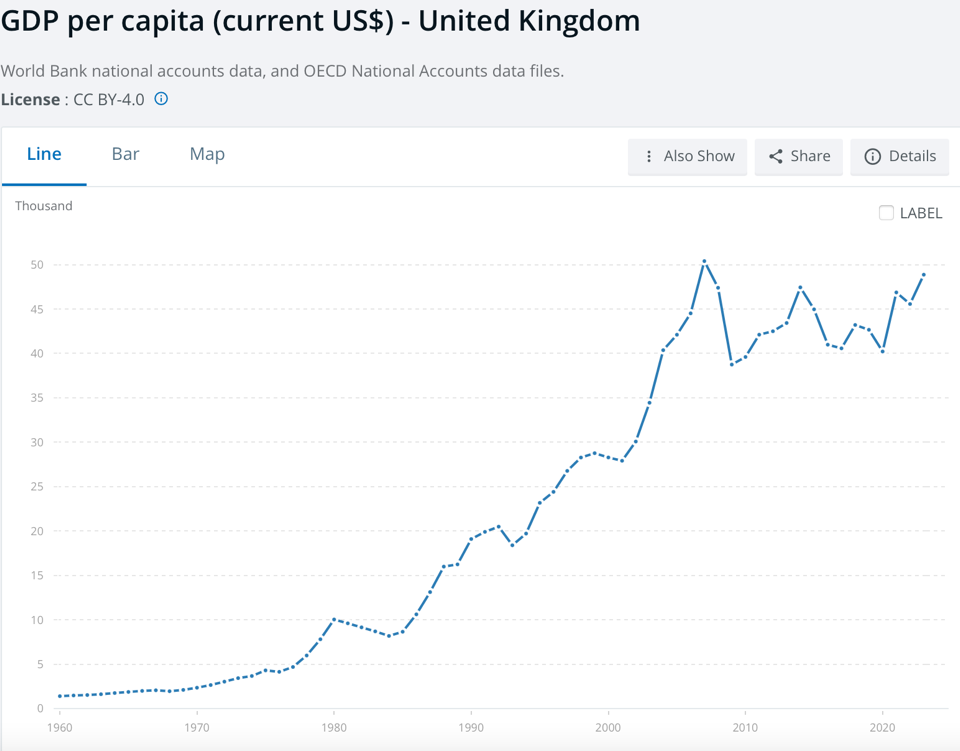
The graph below shows the impact, through GDP per head, on the UK economy of what I described in 2009 as “The Bankers’ Recession.” It illustrated the impact of greed and avarice in the property market over the common sense of our banking forefathers. It all seemed so straightforward until it wasn’t. Not much more needs to be said, except that it has cost our economy 17 years, along with huge amounts of personal and commercial angst, to have now almost regained our previous position.
It also shows why we needed to follow the wisdom of austerity, the pain it inflicted, and the positive steps we took.



Since 2019, it also depicts the impact of the pandemic and the Herculean efforts made by you and me, subsequently, to grow the economy.
At a per capita level, it brings the focus onto the individual in the UK and what we each contribute through our roles in society. However, even at $48,866.60, we are still 5% below our 2007 peak of $50,397.70.
Corporate Replication could accelerate economic development.
“Corporate Replication” is the process of creating an established business in Africa by delivering a partnership between a local entity, able to provide understanding and experience of an African country, and a developed-world technology company, with or without African experience, funded by Africa-friendly investors who can bring confidence and an understanding of the local market opportunity. Individually, each would probably fail, but together they have a good chance of success.
This process would stimulate sales, consulting services, investment in a new supply chain, and introduce lower-cost, high-technology production in African countries where production and exports are currently at very low levels.
Why do we need to sell more?
For me, the wisest investment advice I have ever received is that sales are the best investment. Loans, funds from friends and family, business angels, and other investors are all good, but the practicality is that investors are out to make money first. That is their driving force. However, their care and attention to detail are often underestimated by budding entrepreneurs who are yet to determine the value of money. Inadequate business planning, failures in operational capability, and a misunderstanding of prevailing market forces are the harbingers of failure. I would conclude that in the UK, we need sales, not more debt, nor necessarily foreign investment. We need sales—sales that help make our businesses more profitable and our communities more vibrant.
Developing new markets
My work over the last 15 years with the African community in the UK has opened up huge opportunities and introduced me to many lovely, genuine, and decent people. Sure, there are those who carry chips on their shoulders, but there is a huge amount of love, goodwill, and enthusiasm for the growth of well-being and prosperity in the community here and across the continent.

The prospect of a doubling population in Africa, of local content development, and import substitution might send a cold wind through the sales departments of UK businesses, but it should not. It is the fresh air that we need to rekindle our heritage as merchant adventurers and provide us with multiple opportunities to replicate what we are already doing so well.
Looking at our world and where we can sell more!
We all understand poverty. We recognise the times when there is more month than money, and we have developed techniques to survive such times. Borrowing, using up the savings, and, of course, living within one’s means are solutions. Sometimes we succeed, and sometimes we lose. Some of us are better off, while some are striving in quite difficult circumstances.
Comparing the UK with the performance of the world against our own struggles, the graph shows we are doing four times better than the average global citizen. We know we are not the best or the highest earners, but we are a long way from the lowly position of the average man or woman of the world.
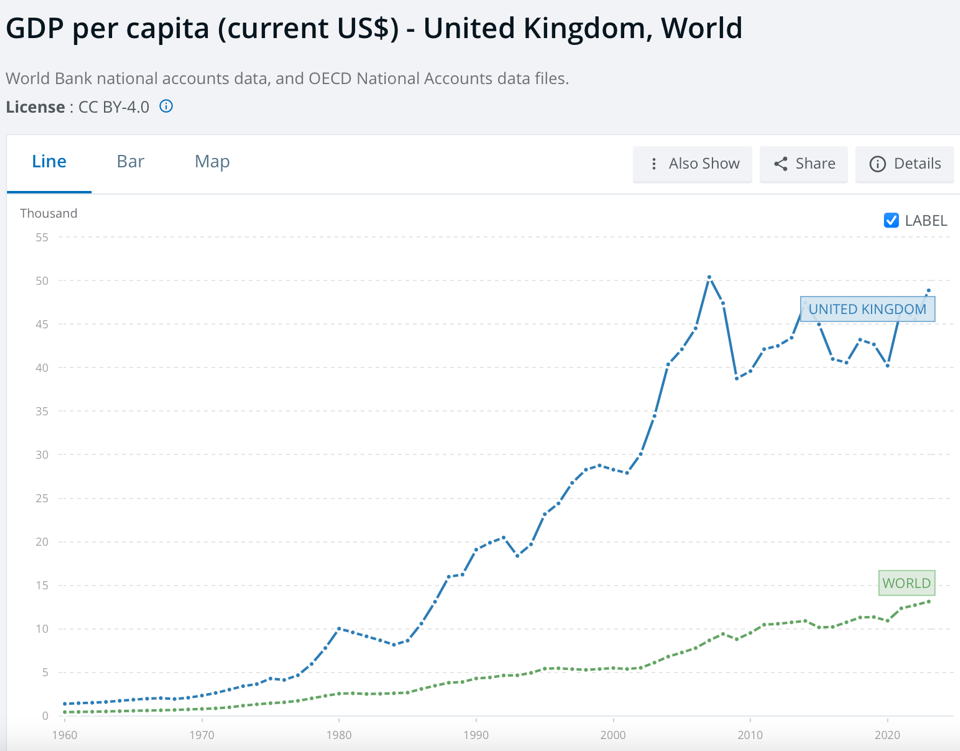
At just $13,138 per head, there is significant growth potential for other countries. If we could easily share with them some of the techniques, equipment, policies, and commercial structures that have led to our success, we could benefit from that process.
The low-hanging fruit
New, local markets are what we need. They are lower risk, there is a lower market development cost, and there is potentially higher profitability. It is also less painful for the finance director, who has the job of accommodating the market development costs. Flights, hotels, taxis, meals, and, of course, the other necessary lubrications—Guinness, wine, beer, and, with orders delivered, champagne. So, setting Ireland, France, and Germany aside, and recognising that we have established markets across Europe, the next closest export market is the UK.
Our minority ethnic groups are a hidden sales force for the best of this collective of countries: England, Scotland, Wales, and Northern Ireland. However, it seems we have not been good hosts, we have not welcomed our guests as well as we might, and the behaviour of our flag-carrying thugs is nothing short of despicable.
This is not the place for a discussion of the Rwanda Immigration Strategy, but it is a place for the opportunity Rwanda creates for a range of UK business sectors.
Set in the heart of Africa, with some very positive cultural and business-related dynamics, Rwanda wants to grow. The Rwanda Business Network (www.rwandabusinessuk.com) is intent on attracting UK business partners and, with them, Africa-friendly investors who will fund development.

In 2023, Rwanda achieved just $1,002 per capita, so it needs to grow significantly (13x) to reach the world average; and 48 times to reach parity with the UK. Apart from paying them to take our unwanted visitors, what can we sell to a country with 14 million people, who are members of our Commonwealth and need to develop their SME sector? Their government has been stable, the commercial support services are well established, and Rwanda has an active programme stimulating engagement with foreign partners. Their GDP in 2023 grew by 8.2%, but there is still a long way to go.
Africa in the UK
At the British African Business Alliance, we are focused on “Africa in the UK” and recognise that all 54 countries are well represented here, and our African colleagues are keen to provide access and introductions to solid business opportunities. The development cost is local, in the UK, within your sales department and your boardroom.
Our work with Zimbabwe has some £290 million of export sales and investment in negotiation. With Nigeria, we can boost that by over $1 billion, with a further $7.2 billion of rail infrastructure development in the pipeline.
Nigeria needs to develop its local content across multiple sectors, so by shifting the emphasis from pure sales to “corporate replication,” there is a lot of profitable work to be done, building whole industries.
For Lesotho, we have a member with a plan to help build a new chicken industry, with rural outreach as well as metropolitan, high-volume provision. Currently importing, Lesotho is losing supplies to the risks of avian flu and other complications that restrict the transport of birds, meat, and eggs—not to mention the jobs and wealth development such an industry can provide. The technology selected so far comes from France and Kenya.
In Cameroon, we are working with a chocolatier who sees local production and international export as the dynamic for his business. His chosen technology is coming from Germany. Meanwhile, in Kenya, architecture, construction, and real estate sales are creating links between Kenyans abroad and their mother country. There are 37,000 business leaders with links to Kenya in the UK, but there is no Chamber of Commerce yet. Is that 37,000 individual initiatives, or are there blockages to progress, or is this your new sales pipeline?
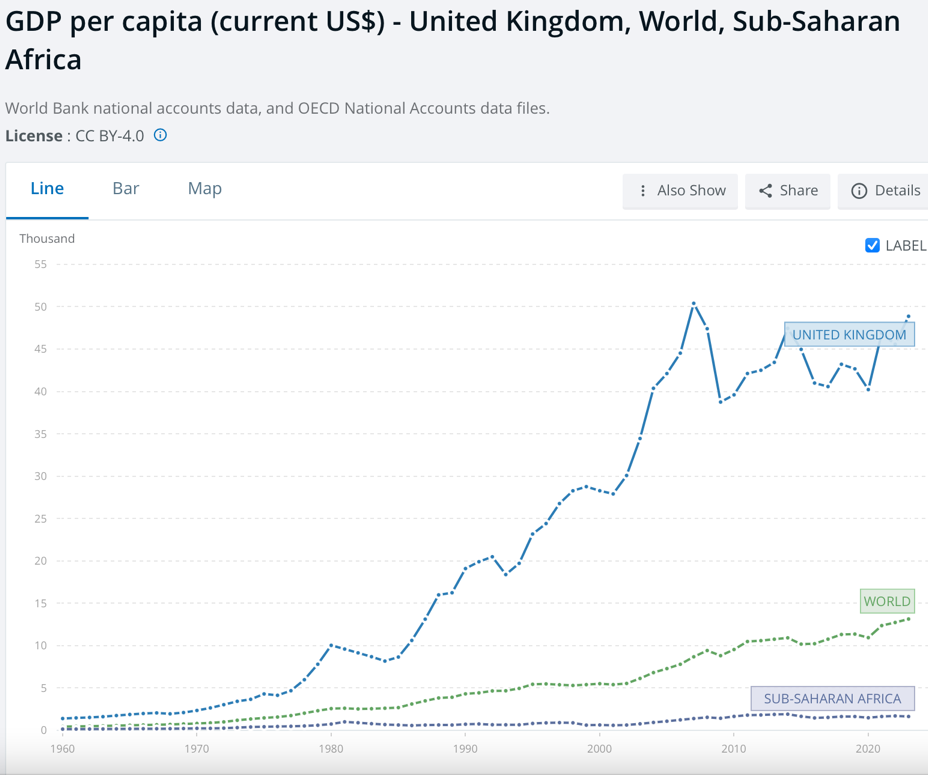
With 54 countries to cover and the need for Sub-Saharan Africa to train, orient, and find jobs, houses, schools, and hospitals for an additional 1.2 billion people in the next 25 years, there is a lot to be done across the continent. If you can bring the technology and management skills, we can bring the markets and the opportunities.
Currently achieving just $1,636 GDP per head across Sub-Saharan Africa, every business that can employ 10 people is important. Every house that can be built and every processing unit established will make a very positive contribution. Creating the most effective business model is important, and shifting the risk onto the local business is another dynamic to explore. However, a 25-year PPP contract with government support (often at both ends) and international funding is a potential revenue stream that helps secure our needs, too.
Whoever can make the chemistry work will prove to be the winners, but I would like to think that the British brand will give your company an advantage on the continent. My target is the creation of prosperity, taking us all beyond the focus on sustainable development goals.
Written by David Smith is Chairman of the British African Business Alliance Ltd – a diaspora-led business network focused on accelerating Economic Development in Africa. Working from the UK, the African Diaspora is well placed to create new links that bring technology, business opportunities, Investment to the continent that will create jobs and wealth across Africa.


