China’s comprehensive ban on imports of foreign solid waste, phased in between 2017 and fully enforced in 2021, was never an arbitrary trade barrier. Instead, it represented a strategic move to uphold environmental sovereignty, drive industrial upgrading and reshape its global development footprint. For decades, China processed vast quantities of plastic, paper and metal scrap shipped from Western economies. The year 2021 marked a definitive end to this era, as the country achieved a complete halt to solid waste imports. This policy shift has restructured the global waste trade system, bringing both challenges and transformative opportunities for Africa and the Global South. This article examines the core motivations behind China’s policy, its far-reaching global impacts, China’s latest breakthroughs in domestic waste management, and actionable strategies for developing nations to address long-standing waste-related crises and pursue sustainable growth.
I. Three Strategic Motivations for China’s Policy
1. Environmental Protection and Public Health



Decades of receiving overseas waste took a heavy toll on China’s ecosystems. Coastal provinces such as Guangdong and Zhejiang became de facto dumping grounds for hazardous residues, suffering from widespread soil and water contamination. Open burning of plastic waste also triggered a surge in respiratory illnesses among local residents. Official data confirmed that imported waste contained excessive heavy metals, persistent organic pollutants and mixed toxic substances, far exceeding the levels declared by exporters. By imposing the import ban, China eliminated a major source of environmental degradation and safeguarded the health of its people on a nationwide scale.
2. Industrial Upgrading and Circular Economy Development
China’s domestic industrial sector now generates ample recycled materials, eliminating its reliance on low-cost foreign waste as production feedstock. Aligned with the national pursuit of green development, the country has shifted its development focus from sheer scale to high-quality growth. The ban pushed domestic recycling enterprises to upgrade their operations: they invested heavily in domestic waste collection, sorting infrastructure and advanced recycling technologies, ultimately building an efficient, closed-loop circular economy. Businesses that once depended on low-grade imported waste either upgraded their technical capabilities or exited the market. This transition has also positioned China as a rising leader in environmental technology and sustainable manufacturing worldwide.
3. Safeguarding Environmental Rights and Advancing Global Environmental Equity
This policy sends a clear and powerful message to the international community: developing nations should not be forced to act as permanent waste disposal sites for wealthy economies. For many years, developed countries outsourced the environmental and social costs of waste management to less developed regions. China’s ban broke this inequitable model and laid bare fundamental flaws within the existing framework of global waste trade. As a responsible major country, China has prompted global reflection on waste governance and strengthened its moral standing and influence in international environmental negotiations.
II. China’s Leapfrog Development in Domestic Waste Management
Building on the momentum of the import ban, China’s waste management industry has undergone extraordinary advancement, evolving from basic harmless disposal to a full-chain resource recovery and low-carbon operation system.
By the end of 2025, 15 provincial-level regions across China have achieved zero landfilling of municipal solid waste. These regions include Beijing, Tianjin, Shanghai, Jiangsu, Zhejiang, Fujian, Shandong, Hainan, Guangdong, Hebei, Anhui, Jiangxi, Henan, Hubei and Hunan. Collectively, they are home to 893.51 million people, accounting for over 60% of China’s total population. This landmark achievement means nearly half of China’s provincial-level administrative divisions have fully phased out the traditional landfilling model.
To reach this milestone, China has built a diversified waste treatment system centred on waste-to-energy incineration and prioritised waste recycling. The country currently operates 1,137 municipal solid waste incineration facilities, with a combined daily treatment capacity of 1.18 million tons. Cutting-edge technologies have been widely deployed: an AI and hyperspectral sorting system piloted in Baiyun District, Guangzhou, has lifted the waste reduction rate to more than 40%. Waste classification services now cover all residential communities across 297 prefecture-level and above cities. Many areas have also adopted a bus-style dedicated collection and transportation network to ensure standardised waste delivery.
China’s waste management capabilities have seen two major rounds of upgrades since 2020. In 2020, 46 key cities completed the construction of comprehensive waste classification systems, laying a solid foundation for downstream treatment. From 2022 to 2025, both technological prowess and production capacity saw remarkable growth. Today, all core waste treatment equipment achieves 100% domestic production, with emission standards stricter than those enforced in the European Union. Beyond zero landfilling, these regions have also made solid progress in low-carbon transformation. Technologies including landfill gas methane recovery and waste-to-energy power generation effectively cut carbon emissions, turning waste management into a key sector for tackling global climate change.
A standout example of China’s integrated waste governance is the Yulong Landfill Remediation Project in Shenzhen, the largest remediation initiative for aged landfill waste in the country. The site holds 2.55 million cubic metres of historical waste. Through full-scale excavation and precision screening, the project has delivered remarkable economic, environmental and social benefits: 330,000 tons of combustible materials are used for power generation, producing 100 million kilowatt-hours of electricity; excavated soil is processed into raw materials for municipal backfilling; and 30 hectares of reclaimed land will host a digital innovation industrial park, attracting over 15 billion US dollars in investment. Supported by world-class technologies such as a large-span deodorant canopy and accelerated aerobic pre-treatment, the project has earned a 92% satisfaction rate among nearby residents. This large-scale remediation project serves a densely populated urban area and realises the triple value of ecological restoration, land reuse and carbon reduction, fully demonstrating the strengths of China’s full-chain waste resource recovery model for populous regions.
III. Global Impacts: Western Waste Crises and Regulatory Responses in Southeast Asia
1. Waste Management Crises in Western Economies
The collapse of the long-established waste export model triggered a severe waste disposal crisis across Western countries. In the United States, the recycling sector lost around 30,000 jobs, with associated economic losses reaching 25 billion US dollars. Local governments were overwhelmed by mountains of mixed plastics and unsorted paper. Many cities resumed landfilling and waste incineration, reversing years of progress in waste recycling. The United Kingdom, Germany, Australia and other developed nations faced identical challenges. Expanded landfill usage and increased waste incineration drove up carbon emissions and urban air pollution.
2. Temporary Waste Diversion and Collective Regulation in Southeast Asia
Waste exporters quickly redirected shipments to Southeast Asian countries including Vietnam, Thailand, Malaysia and Indonesia. Malaysia’s plastic scrap imports tripled in 2018, and these nations soon confronted the same environmental hazards China had once endured: rampant illegal dumping, overloaded port facilities and pervasive toxic pollution. Starting in 2019, most Southeast Asian countries rolled out strict import restrictions and sent illegal waste containers back to Western exporters. The diplomatic dispute between the Philippines and Canada over mislabelled waste shipments became a high-profile case of such conflicts. International environmental organisations have documented numerous environmental violations stemming from this cross-border waste diversion.
3. Renewed Debates over Cross-border Waste Transfer
China’s policy reignited long-standing discussions on waste transfer practices, under which developed economies exploit lax environmental regulations in less developed regions. It also exposed a harsh reality behind Western public recycling campaigns: most waste sorted carefully by local residents was never recycled domestically, but exported to become pollution in other countries. Western governments were forced to acknowledge that they lacked mature infrastructure to process mixed plastics and contaminated paper. While some European countries have since invested in advanced sorting and chemical recycling technologies, overall progress remains slow.
IV. Challenges and Opportunities for Africa and the Global South

Africa and the Global South now stand at a critical crossroads, facing persistent historical environmental challenges as well as unprecedented development opportunities.
1. Pressures from Incoming Foreign Waste
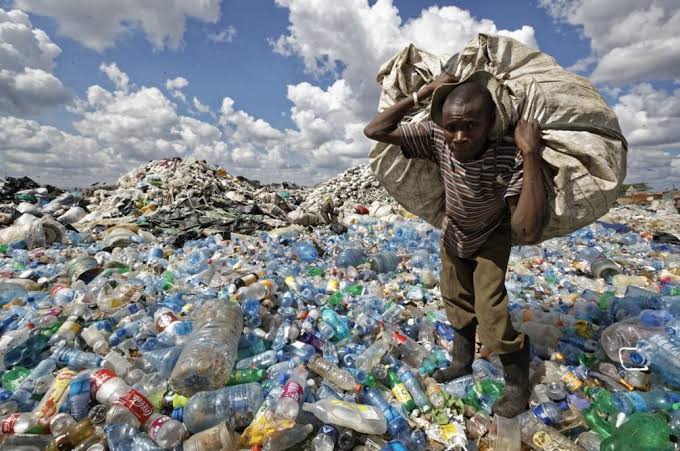
After Southeast Asia tightened its waste import rules, waste exporters shifted their focus to Africa. Ghana, Nigeria, Kenya, Tanzania and Senegal have recorded rising inflows of electronic waste, plastic scrap and low-quality second-hand clothing. Major ports such as Mombasa, Dar es Salaam and Lagos frequently intercept containers falsely labelled as second-hand goods or industrial raw materials. Most African countries lack mature waste treatment infrastructure, so imported waste ends up in open dumps, waterways or is burned informally, inflicting severe harm on local ecosystems and public health.
Agbogbloshie in Ghana, one of the world’s most heavily polluted e-waste sites, continues to receive illegal electronic waste from Europe. Local workers, including many children, extract metals using primitive methods and are constantly exposed to lead, cadmium, dioxins and other lethal toxins. It is important to clarify that cross-border waste dumping is a long-standing global problem rooted in the practices of waste-exporting nations. China’s waste import ban only brought this hidden crisis into full view and increased regulatory pressure on African regions, rather than creating the problem itself.
2. Regulatory Actions by African Nations
African countries have taken decisive steps to address the waste threat. Kenya has banned single-use plastics and strengthened customs inspections targeting illegal waste imports. Rwanda has implemented one of the world’s strictest plastic bag bans and accelerated the development of domestic recycling infrastructure. Nigeria has imposed tariffs on imported used electronic devices and drafted dedicated regulations for e-waste management.
The African Union has adopted and revised the Bamako Convention, which prohibits the import of hazardous waste into Africa. Even so, limited inspection equipment, governance loopholes and external trade pressures have hindered full implementation across the continent. Most African nations also suffer shortages of professional technology, funding and skilled personnel, making comprehensive cargo screening a major challenge. Meanwhile, foreign waste exporters keep exploiting regulatory loopholes by misclassifying waste as charity supplies or recyclable raw materials.
3. Opportunities to Build a Local Circular Economy
The demise of the old waste trade model has created favourable conditions for Africa and the Global South to develop locally adapted, resource-efficient waste management systems.
First, maximise domestic resource recovery. Waste is essentially misplaced resources. Africa generates approximately 125 million tonnes of municipal solid waste every year, and this volume is projected to triple by 2050. Organic waste accounts for 40% to 60% of the total. Through scientific sorting, composting and anaerobic digestion, organic waste can be converted into soil conditioners and biogas, reducing reliance on chemical fertilisers and imported energy. Recycled plastics, metals and paper can serve as raw materials for local manufacturing, creating jobs and cutting import expenditure.
Second, achieve technological leapfrogging. Driven by domestic demands following the import ban, China has developed cutting-edge technologies including plastic chemical recycling, pyrolysis and automated waste sorting. African nations can cooperate with Chinese environmental enterprises to introduce small-scale, modular recycling plants and proven technologies. This cooperation prioritises the transfer of expertise and equipment, rather than the cross-border movement of waste.
Third, develop regional industrial chains. The African Continental Free Trade Area provides a unified platform to harmonise waste management standards and facilitate cross-border trade in recycled materials. Recycling facilities across different African states can form interconnected regional supply chains for recycled products, while regional e-waste treatment hubs can serve the entire African continent.
Fourth, create decent green jobs. Informal waste collectors play an indispensable role in Africa’s existing waste management system. Formalising this sector by providing protective gear, centralised collection points and fair compensation can transform unstable informal labour into dignified, sustainable green employment. China’s experience integrating waste collectors into municipal sanitation systems offers valuable practical references for African communities.
V. Policy Recommendations for Policymakers in Africa and the Global South
1. Short-term Emergency Measures
Upgrade scanning and inspection equipment at ports and border crossings, conduct regular random inspections, and impose heavy penalties for deliberate mislabelling of waste shipments. Fully ratify and strictly enforce the Bamako Convention and the Ban Amendment to the Basel Convention, which bans hazardous waste exports from OECD countries to non-OECD regions. Establish public registries for all waste import permits and accept independent oversight from civil society organisations.
2. Medium-term Institutional Improvement
Formulate national circular economy roadmaps with clear, quantifiable targets for waste reduction, recycling rates and domestic resource recovery. Build municipal waste sorting and recycling facilities tailored to local waste composition, which features a high share of organic waste. Introduce incentive policies such as tax reductions, green public procurement schemes and mandatory recycled material quotas to encourage manufacturers to adopt recycled raw materials.

3. Long-term Strategic Cooperation
Leverage cooperation frameworks under the Belt and Road Initiative to introduce capital and waste-to-resource technologies from China. Expand environmental science cooperation centres across Africa to deliver circular economy training and launch demonstration projects. Apply for funding support from multilateral institutions including the Global Environment Facility and the Green Climate Fund to advance plastic and e-waste management programmes. Promote South-South knowledge exchange and draw on mature circular economy practices from other developing countries around the world.
VI. China’s New Role: From Waste Importer to Global Green Cooperation Partner
China’s solid waste import ban is by no means an isolationist policy. It marks a new era where China shares environmental governance experience and green technologies with the world, instead of passing on environmental burdens. Chinese enterprises have built waste-to-energy plants across Southeast Asia, power battery recycling facilities in Europe, and waste sorting production lines in Africa. The environmental technologies developed to address domestic challenges are now shared globally on the basis of equality and mutual benefit.
China has established a complete, rigorous regulatory system for solid waste and a mature domestic circular economy. The country firmly opposes all forms of cross-border waste dumping and abides strictly by international environmental conventions. All China-Africa cooperation projects on waste management comply with the highest environmental and labour standards, aiming to deliver win-win outcomes through green collaboration.
The waste management model that has been fully tested across regions home to nearly 900 million people has proven its technical feasibility, economic affordability and reliable performance. China’s fully domestically manufactured equipment, backed by independent intellectual property rights, greatly lowers construction and operational costs. This cost-effective suite of technologies and processes precisely matches the practical needs of developing countries.
Chinese expertise also delivers tangible climate benefits. For instance, a low-value recyclables project in Xiamen processed 58,000 tonnes of waste and reduced carbon dioxide emissions by 97,000 tonnes. Beyond hardware exports, China has shifted towards sharing industrial standards, technical services and professional training. A typical example is the waste-to-energy plant built by Chinese enterprises in Hanoi, Vietnam — the largest facility of its kind in Southeast Asia. It handles 65% of the city’s daily household waste, resolving a decades-long odour pollution problem. Incineration residues are further processed into eco-friendly bricks to realise full resource utilisation. Local Vietnamese engineers, who started with no relevant expertise, are now capable of independent operation, embodying China’s commitment to talent cultivation and knowledge transfer for the Global South.
VII. Conclusion
China’s comprehensive ban on foreign solid waste imports is a responsible choice to safeguard domestic ecological security and pursue green development. It has fundamentally dismantled an unreasonable global waste trade model that had persisted for decades. For Africa and the Global South, the end of this old system brings long-standing environmental challenges to the forefront, yet it also unlocks a rare opportunity to bypass the highly polluting stage of traditional industrialisation and build a thriving circular economy.
Waste governance is a shared mission for all humanity. African nations can capitalise on regional integration to strengthen regulatory systems and develop waste resource utilisation industries. By engaging in multilateral cooperation and partnering with global players including China, Africa can accelerate the growth of its green economy. Only when all nations abandon the outdated mindset of pollution transfer, fully implement international environmental agreements, and build a fair and collaborative global environmental governance system, can waste be fully transformed into valuable development resources. Working hand in hand, all countries can embrace a greener, more equitable and prosperous sustainable future.
Written by Saxon Zvina, Principal Consultant, Skyworld Consultancy Services Member, Belt and Road Initiative Think Tank
Email: saxon@skyworld.co.zw
X: @saxonzvina2