Wednesday, May 13, 2026
  • Login
The Southern African Times
  • Home
  • Southern Africa
  • Business
    • African Start ups
    • African Continental Free Trade Area
  • Technology
    • Lifestyle
      • Health
      • Culture
      • Food and Drink
      • Entertainment
  • Opinion
  • Sports
  • SAT Jobs
    • Events
  • About Us
    • Advertise with Us
    • Contact Us
No Result
View All Result
  • Home
  • Southern Africa
  • Business
    • African Start ups
    • African Continental Free Trade Area
  • Technology
    • Lifestyle
      • Health
      • Culture
      • Food and Drink
      • Entertainment
  • Opinion
  • Sports
  • SAT Jobs
    • Events
  • About Us
    • Advertise with Us
    • Contact Us
No Result
View All Result
The Southern African Times
No Result
View All Result
Home Economy

Africa emerges as a central corridor in reconfigured global shipping routes

by SAT Reporter
May 3, 2026
in Economy
0
Africa emerges as a central corridor in reconfigured global shipping routes

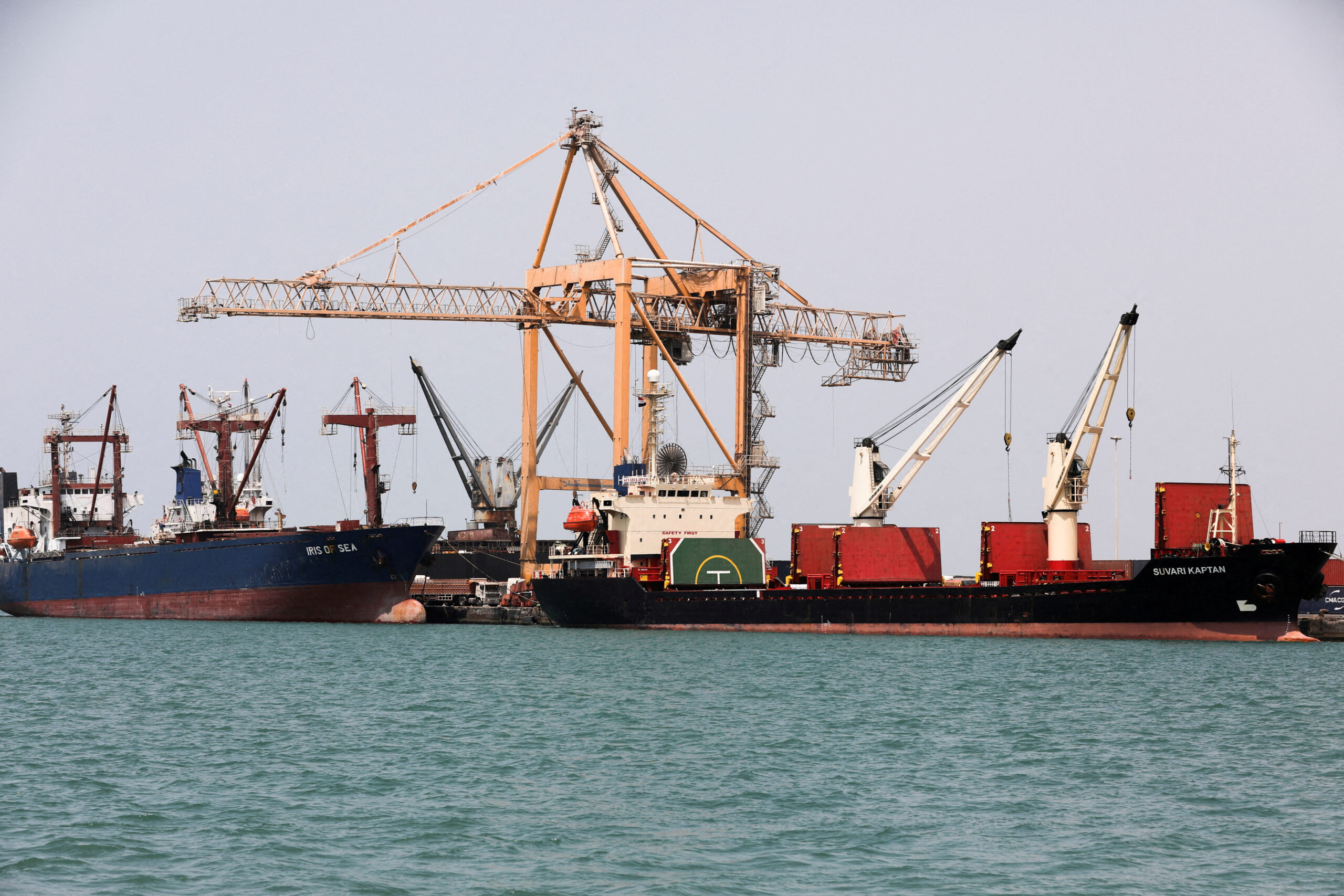
FILE PHOTO: Commercial ships are docked at the Houthi-held Red Sea port of Hodeidah, as a container ship carrying general commercial goods docked at the port for the first time since at least 2016, in Hodeidah, Yemen February 25, 2023. REUTERS/Khaled Abdullah/File Photo

The reconfiguration of global maritime trade routes amid ongoing instability in the Gulf and Red Sea is repositioning Africa from a peripheral transit space to a central logistical corridor, with significant implications for regional economies, infrastructure systems and geopolitical alignments.

Disruptions linked to insecurity around the Strait of Hormuz and sustained tensions along the Red Sea corridor have compelled shipping operators to adopt longer alternative routes, most notably via the Cape of Good Hope. According to aggregated vessel tracking data from the IMF PortWatch platform, traffic around the southern tip of Africa has increased markedly over recent years, while flows through the Bab al Mandeb Strait have declined substantially. This shift reflects both immediate security concerns and a broader recalibration of risk within global supply chains.

The diversion has extended transit times between Asia and Europe by approximately two weeks in many cases, increasing fuel consumption and operational costs. Industry estimates suggest that maintaining existing service frequencies now requires significantly more vessels, contributing to higher freight rates across key routes. Data referenced from the Drewry World Container Index indicates a measurable rise in container shipping prices year on year, with variations depending on route exposure to disruption.


ADVERTISEMENT

Within this evolving landscape, several African ports are experiencing heightened activity. The Tanger Med port complex in Morocco has reported sustained growth in container throughput, reflecting its strategic positioning along reoriented Europe Africa trade lanes. Similarly, ports along the eastern and southern African seaboards are seeing increased vessel calls as shipping lines bypass traditional chokepoints.

However, the redistribution of maritime flows is not uniform in its benefits. While some African ports are absorbing increased traffic, others face capacity constraints that expose longstanding infrastructure gaps. Congestion, longer turnaround times and pressure on hinterland transport networks are emerging challenges in several locations. These dynamics underscore the uneven readiness across the continent to fully capitalise on shifting trade patterns.

At the same time, alternative multimodal corridors are being activated beyond maritime routes. Cargo destined for Gulf markets is increasingly being redirected through ports such as Jeddah before continuing overland via road networks. Other logistical pathways are developing through Jordan and Türkiye into Iraq, illustrating a diversification of supply routes that extends beyond Africa but indirectly influences its trade positioning.

The decline in traffic through the Suez Canal has had notable economic consequences for Egypt, where canal revenues constitute a significant portion of national income. Estimates indicate substantial losses in recent years, reflecting reduced vessel transits as operators opt for longer but more predictable routes. The Suez Canal Authority has acknowledged the impact of these shifts, which are tied to both security concerns and changing cost calculations among shipping firms.

From an African perspective, the current moment presents a complex interplay of opportunity and constraint. Increased maritime relevance offers prospects for port development, regional integration and value chain participation. Yet it also raises questions around sustainability, investment capacity and the equitable distribution of gains across different regions of the continent.

Importantly, the framing of Africa within global trade narratives is itself evolving. Rather than being positioned solely as a transit zone shaped by external disruptions, the continent is increasingly recognised as an active space where logistical decisions, infrastructure investments and policy responses can influence global outcomes. This shift calls for approaches that centre African agency, including coordinated regional strategies and long term planning aligned with frameworks such as the African Union’s Agenda 2063.

As maritime routes continue to adjust in response to geopolitical volatility, Africa’s role is likely to remain central, not only as a passage but as a participant in shaping the future architecture of global trade.


Tags: Africa portsAfrican economyCape of Good Hopeglobal trademaritime logisticsRed Sea crisisshipping routesStrait of HormuzSuez Canalsupply chains
Previous Post

Sumitomo to Exit Majority Stake in Madagascar Nickel Project

Next Post

South Africa Launches National Competition to Send Fans to 2026 FIFA World Cup

SAT Reporter

Related Posts

Tanzania Telecom and Internet Use Surge as Infrastructure Expands
Economy

Tanzania Telecom and Internet Use Surge as Infrastructure Expands

by SAT Reporter
May 1, 2026
Africa’s Waters Under Siege: Foreign Fleets and the Fight for the Blue Economy
Economy

Africa’s Waters Under Siege: Foreign Fleets and the Fight for the Blue Economy

by SAT Reporter
April 26, 2026
China’s zero tariff policy signals recalibration in Africa trade relations
Trade

China’s zero tariff policy signals recalibration in Africa trade relations

by The Editorial Board
April 26, 2026
Nigeria–South Africa Trade Reaches 2.16 Billion Dollars as Energy Ties Grow
Economy

Nigeria–South Africa Trade Reaches 2.16 Billion Dollars as Energy Ties Grow

by SAT Reporter
April 25, 2026
South Africa secures 54 billion dollars in investment commitments as execution gap persists
Economy

South Africa secures 54 billion dollars in investment commitments as execution gap persists

by SAT Reporter
April 23, 2026
Next Post
South Africa Launches National Competition to Send Fans to 2026 FIFA World Cup

South Africa Launches National Competition to Send Fans to 2026 FIFA World Cup

Browse by Category

  • Africa AI
  • African Continental Free Trade Area
  • African Debt
  • African Start ups
  • Agriculture
  • AI Africa
  • Algeria
  • All News
  • Analysis
  • Angola
  • Arts / Culture
  • Asia
  • Botswana
  • BOTSWANA
  • BREAKING NEWS
  • BRICS
  • Burkina Faso
  • Burundi
  • Business
  • Business
  • Business Wire
  • Cameroon
  • Central Africa
  • Chad
  • China
  • Climate Change
  • Climate Changev
  • Community
  • Congo Republic
  • Conservation
  • Côte d’Ivoire
  • COVID 19
  • CRYPTOCURRENCY
  • Culture
  • Democratic Republic of Congo
  • Diplomacy
  • Eastern Africa
  • Economic Development
  • Economy
  • Education
  • Egypt
  • Elections 2024
  • Energy
  • Entertainment
  • Environment
  • Eritrea
  • Ethiopia
  • Europe
  • Fashion
  • Feature
  • Finance
  • Financial Inclusion
  • Food
  • Food and Drink
  • Foods
  • GABON
  • Ghana
  • Global
  • Global Africa
  • Guinea
  • Health
  • Immigration
  • in Southern Africa
  • International news
  • International Relations
  • Investment
  • Ivory Coast
  • Just In
  • Kenya
  • Lesotho
  • Libya
  • Life Style
  • Lifestyle
  • Literature
  • Malawi
  • Malawi
  • Mali
  • Markets
  • Mauritius
  • Middle East
  • Mining in Africa
  • Morocco
  • Mozambique
  • Namibia
  • Niger
  • niger
  • Nigeria
  • North Africa
  • North-Eastern Africa
  • Obituaries
  • Obituary
  • Opinion
  • PARTNER CONTENT
  • Politics
  • Property
  • Racism
  • Rwanda
  • Rwanda
  • SADC
  • SAT Interviews
  • SAT Investigation
  • SAT Jobs
  • Saudi Arabia
  • Senegal
  • Seychelles
  • Somaliland
  • South Africa
  • South Sudan
  • Sports
  • Startup Africa
  • STOCK EXCHANGE
  • Sudan
  • Sustainability
  • Sustainablity
  • Tanzania
  • Technology
  • Telecommunications
  • The Editorial Board
  • The Power Of She
  • Togo
  • Trade
  • Travel
  • Travel
  • Tunisia
  • Uganda
  • Uncategorized
  • Wealth
  • West Africa
  • World
  • World
  • ZAMBIA
  • Zambia
  • Zimbabwe
  • ZIMBABWE

Browse by Tags

#NewsUpdate #SouthAfrica #SouthernAfricanTimes #TheSouthernAfricanTimes AfCFTA africa African Continental Free Trade Area African development African Development Bank African economies African economy African Union Agriculture Angola Botswana Business China Climate change Cyril Ramaphosa Economic Development economic growth energy transition fiscal policy industrialisation Inflation Infrastructure Infrastructure Development International relations Investment Kenya Mozambique Namibia news Nigeria Regional Integration renewable energy Rwanda SADC South Africa Southern Africa sustainable development Tanzania United States Zambia Zimbabwe
ADVERTISEMENT

WHO WE ARE

The Southern African Times is a regional bloc digital newspaper that covers Southern African and world news. The paper also gives a nuanced analysis on news and covers a wide range of reporting which include sports, entertainment, foreign affairs, arts and culture.

Welcome Back!

Login to your account below

Forgotten Password?

Retrieve your password

Please enter your username or email address to reset your password.

Log In

  • Home
  • Southern Africa
  • Business
    • African Start ups
    • African Continental Free Trade Area
  • Technology
    • Lifestyle
      • Health
      • Culture
      • Food and Drink
      • Entertainment
  • Opinion
  • Sports
  • SAT Jobs
    • Events
  • About Us
    • Advertise with Us
    • Contact Us
Are you sure want to unlock this post?
Unlock left : 0
Are you sure want to cancel subscription?