

Egypt’s ambitions to position itself as a leading renewable energy hub on the African continent received a further boost this week after Norwegian renewable energy company Scatec announced plans to invest approximately US$5 billion across a range of green infrastructure projects over the next two years.
According to statements made during a meeting between Egyptian Prime Minister Mostafa Madbouly and representatives of the Oslo listed renewable energy developer, the proposed investments will span renewable energy generation, desalination, energy storage, green data centres and wider infrastructure associated with the low carbon transition.
The announcement reflects the growing strategic relationship between Egypt and international renewable energy investors at a time when African governments are seeking to balance energy security, industrialisation and climate commitments. For Egypt, which has increasingly positioned renewable energy as a pillar of its long term economic strategy, the planned investment programme represents both an infrastructure opportunity and a potential catalyst for industrial development.



Scatec, which develops, builds and operates renewable energy projects across emerging markets, already maintains a substantial presence in Egypt through a portfolio of solar and energy storage developments. The company told Egyptian officials that its latest investment plans form part of a broader long term partnership between Egypt and Norway, supported by the Norwegian government’s continued engagement with the Egyptian market.
Prime Minister Madbouly welcomed the proposals, noting that they align with Egypt’s efforts to increase the share of renewable energy within its national energy mix and strengthen the country’s energy resilience. He also reaffirmed government support for ongoing projects and indicated that authorities would continue monitoring implementation progress in coordination with the Ministry of Electricity and Renewable Energy.

Among the projects highlighted during the discussions was the Obelisk solar and battery storage development in Qena Governorate. Once completed, the project is expected to comprise approximately 1.1 gigawatts of solar generation capacity together with 200 megawatt hours of battery energy storage. Scatec confirmed earlier this year that the first phase of the project, consisting of 561 megawatts of solar capacity and the full battery storage component, had already entered commercial operation, while the second phase remains under construction and is expected to become operational during 2026. The company has described Obelisk as one of the largest hybrid solar and storage projects currently under development in Africa.
The meeting also reviewed progress on the Wadi El Taka renewable energy project, a large scale development designed to combine approximately 1.75 gigawatts of solar generation with four gigawatt hours of battery storage capacity. Egyptian authorities view the project as an important component of efforts to provide reliable electricity for industrial activity and support future investment into manufacturing and export oriented sectors.
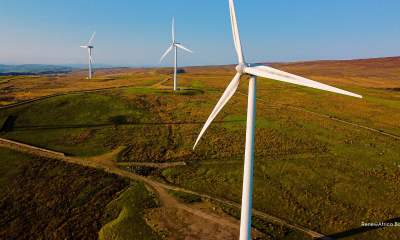
Attention was also directed towards the proposed 900 megawatt Shadwan wind project in the Ras Shukair region. Once developed, the facility is expected to rank among the largest wind energy projects in Egypt and contribute to the country’s objective of diversifying electricity generation sources.
Another strategic initiative under consideration is the Dendera project, which is planned to include one gigawatt of solar generation capacity alongside 200 megawatt hours of battery storage. The facility is expected to supply renewable electricity to Egyptian Aluminium, one of the country’s largest industrial enterprises. The project could help strengthen the competitiveness of Egyptian exports as international markets increasingly introduce carbon related trade requirements and sustainability standards.
Beyond the immediate economic benefits, the scale of these projects highlights a broader shift taking place across Africa’s energy landscape. While much international attention often focuses on energy access challenges, an increasing number of African countries are simultaneously pursuing sophisticated energy transition strategies that integrate renewable generation, battery storage, industrial development and digital infrastructure.
Egypt’s experience is particularly significant because it demonstrates how renewable energy investment can be linked not only to decarbonisation objectives but also to industrial competitiveness, economic diversification and regional integration. Large scale projects such as Obelisk, Wadi El Taka and Dendera illustrate an emerging model in which clean energy infrastructure is increasingly viewed as a foundation for manufacturing, data services, mineral processing and export growth.
For African economies seeking to accelerate industrialisation while navigating changing global trade dynamics, the Egyptian case offers an example of how renewable energy investment can be positioned within a broader development agenda rather than treated solely as an environmental objective.

Should the proposed US$5 billion investment programme proceed as outlined, it would further cement Egypt’s status as one of Africa’s most active renewable energy markets and underscore the continent’s growing importance within the global clean energy economy.


