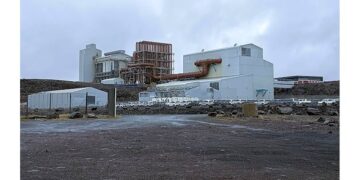
Sumitomo Corporation has announced plans to divest its majority stake in the Ambatovy nickel and cobalt operation in Madagascar, marking a significant shift in one of Africa’s most prominent mining investments. The Japanese trading house confirmed that it intends to sell its 54 percent share in the project during the fiscal year ending March 2027, following an internal review of performance and market conditions.
The Ambatovy project, located near Moramanga in eastern Madagascar, has long been regarded as a cornerstone of the country’s industrial economy and a key supplier of nickel and cobalt to global markets. These minerals are integral to battery production and the broader energy transition, positioning the project within evolving global supply chains linked to electric mobility and renewable energy systems.
Sumitomo’s decision follows a series of operational disruptions that have affected output and continuity. In February 2026, Cyclone Gezani caused damage to infrastructure at the site, prompting a suspension of operations. According to company representatives, production has yet to resume. The cyclone’s impact adds to earlier technical challenges, including reported issues with the slurry pipeline and processing systems that have constrained production efficiency.



While Ambatovy has contributed significantly to Madagascar’s export earnings and employment, its trajectory has also illustrated the complexities of large scale extractive projects on the continent. Infrastructure vulnerabilities, exposure to climate related events, and fluctuating commodity markets have all influenced performance over time. In this context, Sumitomo indicated that it expects to record a financial charge of approximately 70 billion yen, equivalent to about 445 million US dollars, linked to the divestment. The company noted that this impact may be partially offset by reduced tax liabilities.

The potential sale aligns with earlier statements by Sumitomo leadership suggesting that strategic options for the asset were under consideration after efforts to stabilise operations. The move may open space for new investors or partnerships, though no successor has yet been confirmed.
From a broader African perspective, the development underscores both the opportunities and tensions inherent in resource extraction. Projects such as Ambatovy are deeply embedded in local economies, shaping livelihoods, infrastructure development, and national revenues. At the same time, they remain exposed to global market dynamics and environmental realities that are often beyond local control.
As Madagascar and its regional partners continue to position themselves within global mineral value chains, the future of Ambatovy will likely be closely watched. Its evolution may offer insight into how African resource economies navigate investment transitions while seeking to balance economic resilience, environmental stewardship, and community interests.