ArcelorMittal reported net income of 575 million dollars for the first quarter of 2026, describing its performance as resilient despite uneven global conditions and continued pressure across parts of the steel market.
The Luxembourg based steel and mining group said sales rose to 15.5 billion dollars in the three months to 31 March 2026, compared with 15.0 billion dollars in the previous quarter and 14.8 billion dollars a year earlier. Earnings before interest, tax, depreciation and amortisation reached 1.68 billion dollars, up from 1.59 billion dollars in the fourth quarter of 2025.
The company’s results point to a business seeking to balance cost discipline, strategic investment and shareholder returns while navigating shifting trade rules, carbon policy and demand patterns across its markets. Net income attributable to shareholders was lower than the 805 million dollars reported in the first quarter of 2025, but significantly higher than the 177 million dollars recorded in the previous quarter.



ArcelorMittal said its safety performance continued to improve, with the lost time injury frequency rate falling to 0.45 in the quarter from 0.63 a year earlier. The company described this as the lowest quarterly rate in its history.
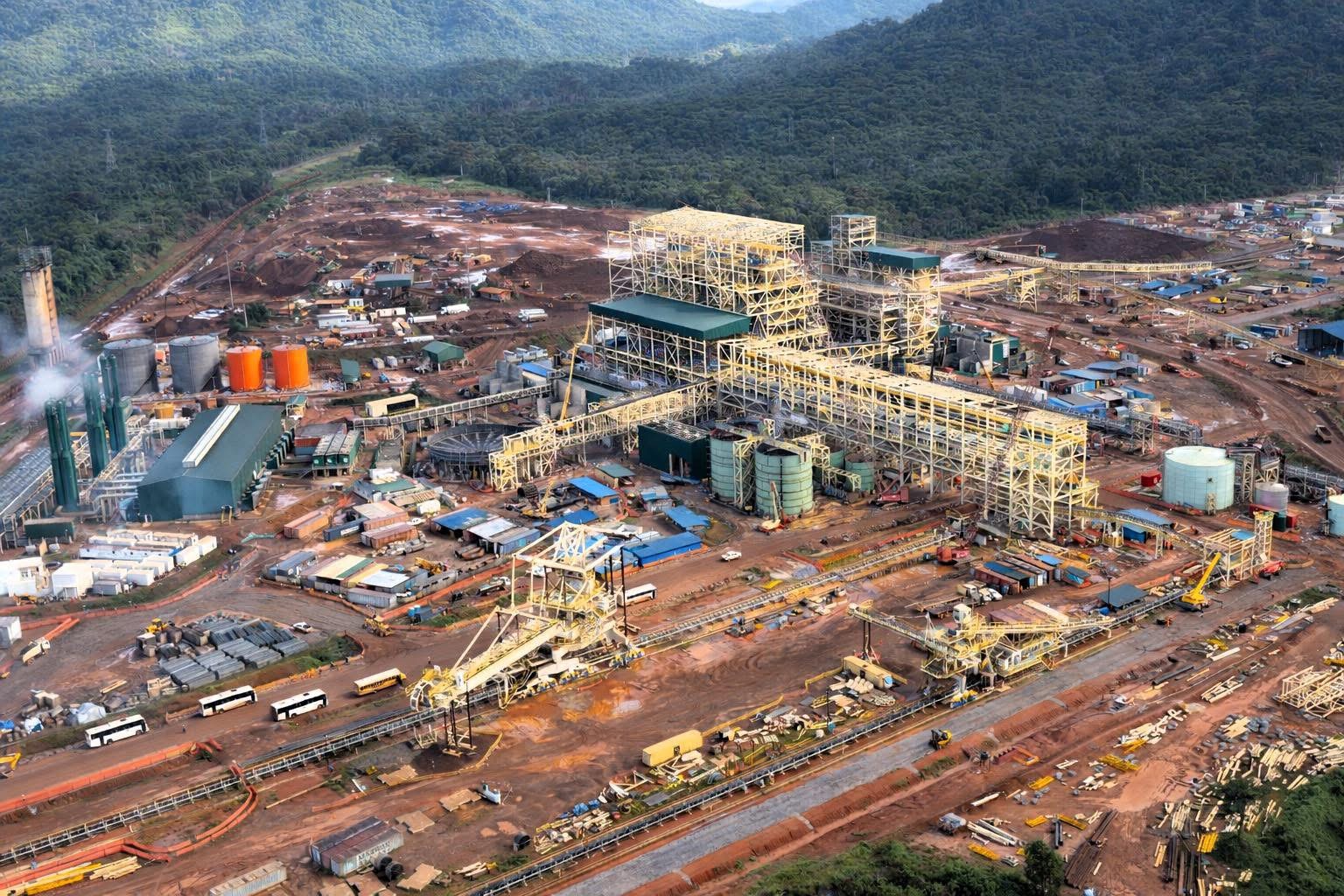
For African markets, the most significant operational development was in Liberia, where ArcelorMittal reported record iron ore production and shipments. The company said its Liberia operations, together with ArcelorMittal Mines Canada, produced 9.7 million tonnes of iron ore during the quarter and shipped 10.0 million tonnes. Liberia shipment guidance for 2026 remains above 18 million tonnes.
The Liberia performance reflects the growing importance of African mineral corridors in global steel supply chains. ArcelorMittal said it had extended its Mineral Development Agreement in Liberia to 2050, with a right to renew for a further 25 years. Under the agreement, the company paid 200 million dollars to the Government of Liberia for mining rights and reserved access to expanded rail capacity. The infrastructure is intended to support the transport of up to 30 million tonnes of iron ore a year.

The figures also illustrate the more complex role African economies play in global industry. Liberia is not merely a source of raw material, but part of a wider industrial network in which transport infrastructure, state revenue, local employment, environmental obligations and long term resource governance remain closely connected.
In South Africa, which sits within ArcelorMittal’s wider business footprint, the results will be read against continuing debates over industrial competitiveness, energy reliability, regional value chains and the future of steel production on the continent. The company’s results did not provide a separate South Africa earnings breakdown, but its broader African presence remains relevant to discussions about how mining and steel can support industrial development beyond extraction alone.
The group’s steel shipments declined to 12.8 million tonnes from 13.0 million tonnes in the previous quarter and 13.6 million tonnes a year earlier. Crude steel production stood at 13.3 million tonnes, up from 12.8 million tonnes in the fourth quarter of 2025 but below the 14.8 million tonnes reported a year earlier.
ArcelorMittal said performance improved in North America, where steel output recovered after maintenance, while Europe benefited from higher shipments. The company said European prospects had improved following the introduction of the Carbon Border Adjustment Mechanism and an agreed tariff rate quota system expected to take effect on 1 July 2026. Management said these measures could reduce imports and support higher domestic capacity utilisation.
The company also confirmed that capital expenditure guidance for 2026 remains between 4.5 billion and 5.0 billion dollars, including 1.7 billion to 2.0 billion dollars for strategic projects. These include investments in India, Liberia, Calvert in the United States and electric arc furnace projects in Europe.
Free cash flow was negative 1.34 billion dollars in the quarter, reflecting a seasonal working capital investment of 1.5 billion dollars and capital expenditure of 1.27 billion dollars. Net debt rose to 9.3 billion dollars at the end of March from 7.9 billion dollars at the end of December.
The company paid a quarterly interim dividend of 0.15 dollars per share in March as part of a proposed annual dividend of 0.60 dollars per share. It said it would continue to return at least 50 per cent of post dividend free cash flow to shareholders through buybacks.
ArcelorMittal’s first quarter report presents a company benefiting from diversified operations, stronger pricing in some markets and African mining momentum, while still facing lower year on year steel volumes, higher debt and policy uncertainty. For African economies, the central question remains how such multinational investment can be shaped to deliver durable local value, stronger infrastructure and broader industrial participation.