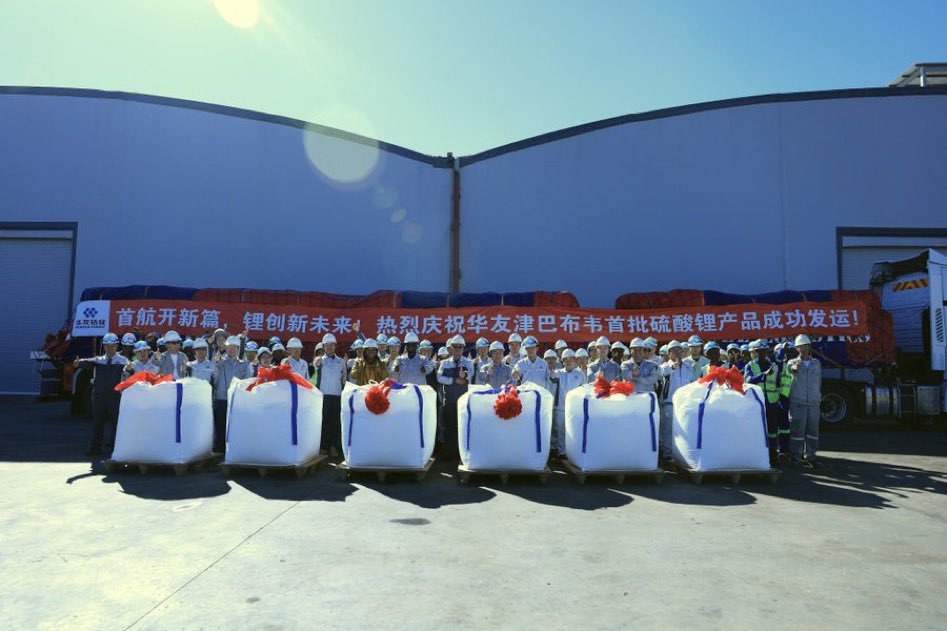
Zimbabwe has recorded a notable development in its lithium sector with the reported export of lithium sulphate from the Arcadia Lithium Project, signalling a step towards domestic mineral beneficiation and participation in higher value segments of the global battery supply chain. The project, situated approximately 38 kilometres east of Harare, is operated by Prospect Lithium Zimbabwe, which is owned by Zhejiang Huayou Cobalt, a Chinese industrial group with extensive interests in battery materials.
The reported shipment follows Zimbabwe’s 2022 policy decision to prohibit the export of unprocessed lithium ore, a move intended to encourage in country processing and retain greater economic value from mineral resources. According to policy statements issued by the Government of Zimbabwe, the ban formed part of a wider strategy to promote industrialisation and reduce reliance on the export of raw commodities.
Lithium sulphate is an intermediate product used in the production of battery grade lithium chemicals such as lithium carbonate and lithium hydroxide, both of which are essential inputs in electric vehicle batteries and energy storage technologies. The transition from the export of spodumene concentrate to the production of lithium salts represents a technological and economic shift, although the scale and sustainability of such processing capacity in Zimbabwe remain under development.



Zimbabwe holds some of the largest known lithium resources in Africa, and in recent years the sector has attracted significant foreign direct investment, particularly from Chinese firms. Companies including Zhejiang Huayou Cobalt, Sinomine Resource Group, and Chengxin Lithium have acquired or developed lithium assets across the country. This concentration of investment reflects both the strategic importance of lithium in the global energy transition and China’s established role in battery material supply chains.
The Arcadia project itself has undergone redevelopment since its acquisition by Huayou Cobalt in 2022, with capital investment directed towards expanding processing capabilities. Company disclosures and industry reports indicate that Arcadia was designed to produce spodumene concentrate for export, with subsequent phases aimed at integrating downstream processing. The reported export of lithium sulphate therefore aligns with these longer term plans, though independent verification of production volumes and processing capacity remains limited in the public domain.
Across the African continent, there is a growing policy emphasis on beneficiation and local value addition in the mining sector. Countries such as Namibia, the Democratic Republic of Congo, and Zimbabwe have all introduced or proposed measures aimed at increasing domestic processing of critical minerals. These initiatives are often framed within broader efforts to reposition African economies within global supply chains, moving beyond extractive roles towards more industrial participation.
At the same time, analysts have noted that beneficiation strategies face structural challenges, including infrastructure constraints, energy supply limitations, and the capital intensive nature of chemical processing. As such, the extent to which lithium processing in Zimbabwe can scale to compete with established processing hubs in China and elsewhere remains an open question.

The reported development at Arcadia nevertheless illustrates an evolving trajectory within Zimbabwe’s mining sector. It highlights the intersection of national policy, foreign investment, and global demand for battery minerals. Whether this marks a sustained transformation or an incremental step will depend on continued investment, regulatory consistency, and the broader integration of African producers into global industrial networks.
Further details on Zimbabwe’s mining policies can be found through the Ministry of Mines and Mining Development, while information on Huayou Cobalt’s international operations is available via the company’s official disclosures. Broader context on lithium markets and battery supply chains is provided by the International Energy Agency.