Sunday, June 7, 2026
  • Login
The Southern African Times
  • Home
  • Southern Africa
  • Business
    • African Start ups
    • African Continental Free Trade Area
  • Technology
    • Lifestyle
      • Health
      • Culture
      • Food and Drink
      • Entertainment
  • Opinion
  • Sports
  • SAT Jobs
    • Events
  • About Us
    • Advertise with Us
    • Contact Us
No Result
View All Result
  • Home
  • Southern Africa
  • Business
    • African Start ups
    • African Continental Free Trade Area
  • Technology
    • Lifestyle
      • Health
      • Culture
      • Food and Drink
      • Entertainment
  • Opinion
  • Sports
  • SAT Jobs
    • Events
  • About Us
    • Advertise with Us
    • Contact Us
No Result
View All Result
The Southern African Times
No Result
View All Result
Home Economy

World Bank Meetings Conclude with Economic Foreboding as Tariff Questions Linger

by SAT Reporter
April 27, 2025
in Economy, Trade
0
World Bank Meetings Conclude with Economic Foreboding as Tariff Questions Linger

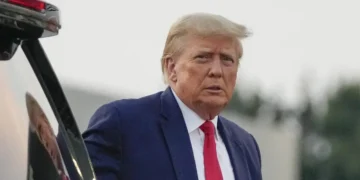
The recent Spring Meetings of the International Monetary Fund (IMF) and the World Bank in Washington concluded without providing much-needed clarity on United States tariff policies, leaving global finance leaders facing heightened economic uncertainty.

Delegates arrived seeking definitive signals from President Donald Trump’s administration regarding the potential alleviation of sweeping tariffs that have strained global trade. However, participants departed with more questions than answers. Despite the receipt of 18 written proposals and numerous ongoing discussions, no definitive agreements were reached during the meetings.

Concerns about the direction of U.S. trade policy were magnified by the lack of access to key administration figures. Many finance and trade ministers who sought meetings with U.S. Treasury Secretary Scott Bessent were either unsuccessful or left with vague assurances to remain patient. The 90-day suspension of the steepest tariffs continues to loom over global economic strategies, with little sign of imminent resolution.


ADVERTISEMENT

The imposition of 25% tariffs on U.S. imports of vehicles, steel, and aluminium, and 10% on most other goods, has elicited widespread warnings from financial officials. Polish Finance Minister Andrzej Domanski encapsulated the sentiment, stating that the uncertainty surrounding these policies is detrimental not only to Europe and the United States but to the global economy as a whole. Domanski noted that U.S. officials appeared to view the tariffs as a temporary discomfort leading to long-term gains, a perspective he feared would result in both short- and long-term economic pain.

Negotiations with Japan and South Korea yielded limited progress. Talks were described as “productive,” yet no specific agreements were reached, particularly concerning currency policies. Future negotiations are expected to address U.S. concerns about the relative weakness of the yen and the won, which Washington views as non-tariff barriers to American exports.

The IMF, through its World Economic Outlook, reflected cautious optimism by lowering growth forecasts across most major economies while avoiding predictions of a full-scale global recession. Nevertheless, China, an export-dependent economy, now faces U.S. tariffs of up to 145% on numerous goods, escalating trade tensions considerably.

IMF Managing Director Kristalina Georgieva acknowledged the anxiety surrounding global economic prospects, exacerbated by ongoing trade disputes, persistent inflation, the aftermath of the COVID-19 pandemic, and armed conflicts. Georgieva emphasised that resolving these uncertainties would greatly benefit global growth and business confidence.

Despite the IMF’s relatively muted projections, several finance officials privately indicated that the real probability of a recession might exceed the IMF’s official estimate of 37%, drawing upon private sector analyses.

Debt vulnerabilities were another critical concern. Eric LeCompte, Executive Director of the Jubilee USA Network, noted that while official discussions remained inconclusive, private meetings revealed profound concern about emerging debt crises. He characterised the Spring Meetings as largely ineffectual regarding concrete solutions for developing nations.

Former Pakistan central bank governor Reza Baqir, now leading sovereign debt advisory at Alvarez & Marsal, expressed frustration that Financing for Development—a crucial agenda for emerging economies—received little attention. This concern was echoed by World Bank Chief Economist Indermit Gill, who warned that reduced trade and foreign direct investment, spurred by tariff uncertainties, are endangering growth prospects in the Global South.

The debt risks faced by developing economies were compounded by a sharp contraction in foreign direct investment flows, a phenomenon crucial to sustaining development and poverty reduction initiatives across Africa, Asia, and Latin America.

An unexpected positive development was the United States’ renewed commitment to the IMF and World Bank. Scott Bessent affirmed the enduring relevance of these institutions, despite criticising their expansion into non-economic spheres such as climate change and gender equality. Contrary to the recommendations of the Project 2025 policy manifesto, which advocates a reduced U.S. role in multilateral organisations, Bessent outlined plans to refocus the institutions on economic stability and development, proposing an end to World Bank lending to China and a significant expansion of energy financing initiatives.

Nevertheless, optimism was tempered by contradictory signals surrounding U.S.-China relations. Although Bessent suggested that the current tariff levels were unsustainable and hinted at the possibility of a negotiated easing, Beijing publicly denied that substantive negotiations were taking place. This divergence further deepened the pervasive sense of confusion and instability among delegates.

Josh Lipsky, Senior Director of the Atlantic Council’s GeoEconomics Center, summarised the prevailing mood, noting that most participants left Washington anticipating a deterioration in global economic conditions. The broader picture, he said, was deeply concerning.

Particularly alarming was the recent sell-off of U.S. Treasury securities and other dollar-denominated assets, reflecting a growing erosion of trust in American economic policy. The trust underpinning the U.S. dollar’s status as the world’s reserve currency is critical; a sustained loss of confidence could prompt major trading partners to seek alternatives, Lipsky warned.

As the world watches developments unfold, the challenge of navigating an increasingly fractured and uncertain global economic landscape remains formidable.

Tags: Debt crisisDonald TrumpEmerging Marketsglobal economyIMFinternational financetariffstrade warsU.S. dollarWorld Bank
Previous Post

Namibian Agriculture Minister Resigns After Arrest on Multiple Criminal Charges

Next Post

Vast Resources Secures Zimbabwe Diamond Parcel After 15-Year Wait

SAT Reporter

Related Posts

Africa emerges as a central corridor in reconfigured global shipping routes
Economy

Africa emerges as a central corridor in reconfigured global shipping routes

by SAT Reporter
May 3, 2026
Tanzania Telecom and Internet Use Surge as Infrastructure Expands
Economy

Tanzania Telecom and Internet Use Surge as Infrastructure Expands

by SAT Reporter
May 1, 2026
Africa’s Waters Under Siege: Foreign Fleets and the Fight for the Blue Economy
Economy

Africa’s Waters Under Siege: Foreign Fleets and the Fight for the Blue Economy

by SAT Reporter
April 26, 2026
China’s zero tariff policy signals recalibration in Africa trade relations
Trade

China’s zero tariff policy signals recalibration in Africa trade relations

by The Editorial Board
April 26, 2026
Nigeria–South Africa Trade Reaches 2.16 Billion Dollars as Energy Ties Grow
Economy

Nigeria–South Africa Trade Reaches 2.16 Billion Dollars as Energy Ties Grow

by SAT Reporter
April 25, 2026
Next Post
Vast Resources Secures Zimbabwe Diamond Parcel After 15-Year Wait

Vast Resources Secures Zimbabwe Diamond Parcel After 15-Year Wait

Browse by Category

  • Africa AI
  • African Continental Free Trade Area
  • African Debt
  • African Start ups
  • Agriculture
  • AI Africa
  • Algeria
  • All News
  • Analysis
  • Angola
  • Arts / Culture
  • Asia
  • Botswana
  • BOTSWANA
  • BREAKING NEWS
  • BRICS
  • Burkina Faso
  • Burundi
  • Business
  • Business
  • Business Wire
  • Cameroon
  • Central Africa
  • Chad
  • China
  • Climate Change
  • Climate Changev
  • Community
  • Congo Republic
  • Conservation
  • Côte d’Ivoire
  • COVID 19
  • CRYPTOCURRENCY
  • Culture
  • Democratic Republic of Congo
  • Diplomacy
  • Eastern Africa
  • Economic Development
  • Economy
  • Education
  • Egypt
  • Elections 2024
  • Energy
  • Entertainment
  • Environment
  • Eritrea
  • Ethiopia
  • Europe
  • Fashion
  • Feature
  • Finance
  • Financial Inclusion
  • Food
  • Food and Drink
  • Foods
  • GABON
  • Ghana
  • Global
  • Global Africa
  • Guinea
  • Health
  • Humanitarian Aid
  • Immigration
  • in Southern Africa
  • International news
  • International Relations
  • Investment
  • Ivory Coast
  • Just In
  • Kenya
  • Lesotho
  • Libya
  • Life Style
  • Lifestyle
  • Literature
  • Malawi
  • Malawi
  • Mali
  • Markets
  • Mauritius
  • Middle East
  • Mining in Africa
  • Morocco
  • Mozambique
  • Namibia
  • niger
  • Niger
  • Nigeria
  • North Africa
  • North-Eastern Africa
  • Obituaries
  • Obituary
  • Opinion
  • PARTNER CONTENT
  • Politics
  • Property
  • Racism
  • Rwanda
  • Rwanda
  • SADC
  • SAT Interviews
  • SAT Investigation
  • SAT Jobs
  • Saudi Arabia
  • Senegal
  • Seychelles
  • Somaliland
  • South Africa
  • South Sudan
  • Sports
  • Startup Africa
  • STOCK EXCHANGE
  • Sudan
  • Sustainability
  • Sustainablity
  • Tanzania
  • Technology
  • Telecommunications
  • The Editorial Board
  • The Power Of She
  • Togo
  • Trade
  • Travel
  • Travel
  • Tunisia
  • Uganda
  • Uncategorized
  • Wealth
  • West Africa
  • World
  • World
  • ZAMBIA
  • Zambia
  • ZIMBABWE
  • Zimbabwe

Browse by Tags

#NewsUpdate #SouthAfrica #SouthernAfricanTimes #TheSouthernAfricanTimes AfCFTA africa African Continental Free Trade Area African development African Development Bank African economies African economy African Union Agriculture Angola Botswana China Climate change Cyril Ramaphosa Economic Development economic growth energy transition Ghana governance industrialisation Inflation Infrastructure Infrastructure Development International relations Investment Kenya Mozambique Namibia news Nigeria Regional Integration renewable energy Rwanda SADC South Africa Southern Africa sustainable development Tanzania United States Zambia Zimbabwe
ADVERTISEMENT

WHO WE ARE

The Southern African Times is a regional bloc digital newspaper that covers Southern African and world news. The paper also gives a nuanced analysis on news and covers a wide range of reporting which include sports, entertainment, foreign affairs, arts and culture.

Welcome Back!

Login to your account below

Forgotten Password?

Retrieve your password

Please enter your username or email address to reset your password.

Log In
  • Home
  • Southern Africa
  • Business
    • African Start ups
    • African Continental Free Trade Area
  • Technology
    • Lifestyle
      • Health
      • Culture
      • Food and Drink
      • Entertainment
  • Opinion
  • Sports
  • SAT Jobs
    • Events
  • About Us
    • Advertise with Us
    • Contact Us
Not enough quota to unlock this post
Unlock left : 0
Are you sure want to cancel subscription?