Nigerian cities have been marred by violence and looting as widespread protests against soaring living costs spiral into chaos. The demonstrations, which began on August 1, were initially aimed at peacefully urging the government to tackle the country’s severe economic challenges. However, they have quickly escalated into unrest, with reports of vandalism, destruction, and confrontations with security forces.
Protesters mobilised in their thousands across the nation, setting up bonfires and blocking highways in major cities, including Abuja, Kano, Kaduna, and Gombe. The unrest saw protesters clash with police, resulting in injuries and significant damage to both public and private properties.
The Inspector General of Police, Kayode Egbetokun, declared a “red alert” across all police units, citing extensive vandalism and attacks on security personnel. According to Egbetokun, eight out of Nigeria’s 36 states witnessed destruction on the first day of the protests. He criticised the motives behind the protests, questioning the legitimacy of the demonstrations given the scale of the violence.



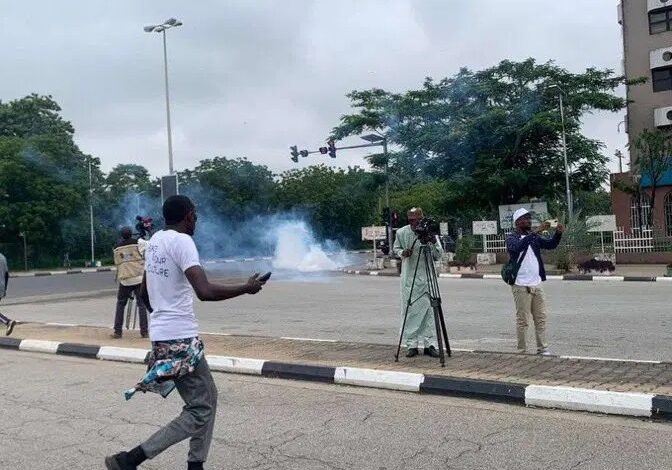
In Abuja, the situation deteriorated as police used tear gas to disperse crowds moving towards key government buildings. The chaos spread to Kaduna, where a confrontation with police escalated as protesters reportedly aimed to set fire to the Government House. A police officer was injured in this incident.

In Yobe state, a local government office was set ablaze, and several government vehicles were destroyed. Kano state also saw substantial damage, including the vandalism of the Digital Industrial Park, a prominent tech hub. Minister of Communications, Innovation, and Digital Economy Bosun Tijani condemned the destruction, noting that valuable equipment was stolen.
In response to the violence, Kano State Governor Abba Yusuf imposed a 24-hour curfew. Yusuf attributed the unrest to individuals who hijacked the protests and committed violent acts, including attacks on businesses and public infrastructure.
Deji Adeyanju, leader of the Concerned Nigerians group, defended the protests, stating that efforts were made to ensure their peaceful nature. Adeyanju accused pro-government demonstrators of attempting to undermine the protests and incite violence.
The Nigerian government has called for calm, urging protesters to halt their demonstrations in favour of continued dialogue. Minister of Information and National Orientation Mohammed Idris expressed concern that the protests could be exploited by elements seeking to provoke violence.
The current unrest follows significant economic reforms by the Nigerian government, including the removal of petrol subsidies and the floating of the local currency. These measures have led to a sharp rise in inflation, which reached 34.19 percent in June, exacerbating the cost-of-living crisis in the country.