

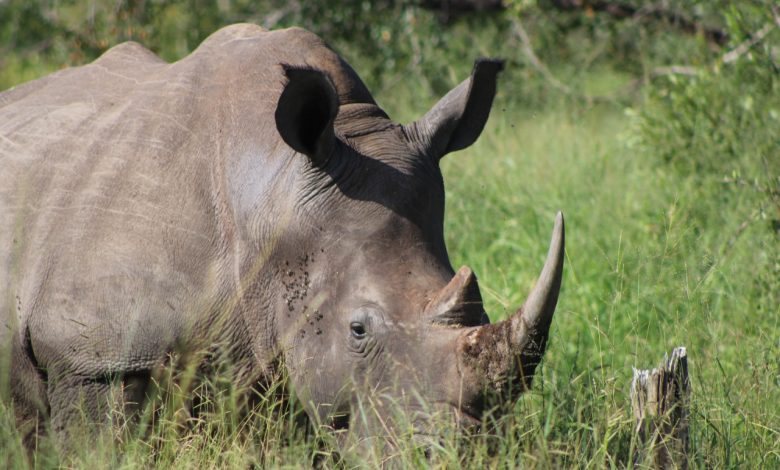
South Africa has recorded a notable decline in rhinoceros poaching during May and June this year compared to the same months last year, according to the Department of Forestry, Fisheries and the Environment (DFFE). Minister of Forestry, Fisheries and the Environment Dion George highlighted in a statement that the national losses of rhinoceroses were 21 in May and 22 in June, a significant reduction from the 42 and 34 reported in May and June of 2023 respectively.
The decrease is attributed primarily to the dehorning of rhinoceroses in KwaZulu-Natal Province, particularly in Hluhluwe iMfolozi Park, where over 1,000 rhinoceroses have been dehorned since April. The DFFE’s efforts also include enhanced protection measures such as advanced technology and biological management strategies aimed at safeguarding rhinoceroses from poaching.
In the first six months of 2024, 229 rhinoceroses were killed for their horns, compared to 231 during the same period in the previous year. Of the rhinoceroses killed this year, 191 were on state properties, while 38 were on privately owned reserves and farms.




The DFFE has reported the arrest of over 60 suspects and the recovery of 20 heavy calibre firearms in connection with rhino poaching and horn trafficking. The department also provided an update on rhinoceros population numbers, stating that at the end of 2023, South Africa had 16,056 rhinoceroses, comprising 2,065 black and 13,991 white rhinoceroses. This represents a modest increase from the 2,056 black and 12,968 white rhinoceroses recorded at the end of 2021.
The implementation of the National Integrated Strategy to Combat Wildlife Trafficking continues to progress, with ongoing collaboration between government agencies and the private sector.


