The United States has confirmed that it carried out an airstrike targeting Islamic State militants in Nigeria’s northwest region following a formal request from the Nigerian government. According to official statements released on Thursday, the operation was executed under joint coordination between U.S. Africa Command and Nigerian defence authorities.
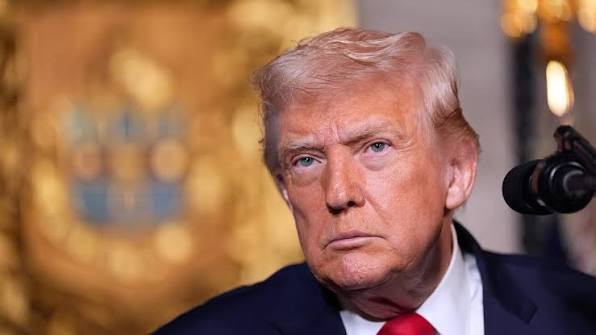
President Donald Trump, speaking from his Mar-a-Lago residence in Florida, announced that the strike had been directed at what he described as “ISIS terrorist scum” allegedly responsible for attacks on Christian communities in the region. He stated that the decision was taken “at my direction as Commander in Chief,” characterising it as a necessary action to counter escalating extremist violence.
U.S. Africa Command confirmed that the airstrike took place in Sokoto State and resulted in the deaths of multiple militants associated with the Islamic State. Earlier, an initial statement posted by the command on X (formerly Twitter) emphasised that the strike was carried out “at the request of Nigerian authorities.” That post was later withdrawn without explanation.



Nigeria’s Ministry of Foreign Affairs subsequently affirmed that the strike was part of an ongoing bilateral security collaboration between Abuja and Washington. In a statement posted on X, the ministry said the operation formed part of wider efforts to enhance “intelligence sharing and strategic coordination” aimed at dismantling militant networks across the northwest.
A short video released by the U.S. Department of Defense appeared to show the launch of at least one projectile from a naval vessel. A senior defence official, speaking on condition of anonymity, said the target comprised multiple Islamic State-linked positions. U.S. Defence Secretary Pete Hegseth publicly thanked Nigeria for its cooperation and noted there would be “more to come,” implying future joint security actions.
In recent months, Nigeria has been grappling with a complex and evolving security landscape shaped by multiple armed groups, banditry, and insurgent activities. While Washington has emphasised that the strike was aimed at protecting Christian communities, the Nigerian government has maintained that both Muslims and Christians have been victims of extremist violence. It cautioned against narratives that overlook the intricate social and religious dynamics of the country.
Nigeria’s population is almost evenly divided between Muslims, predominantly in the north, and Christians, largely concentrated in the south. Religious identity often overlaps with broader socio-economic and political factors, making the conflict landscape multifaceted rather than religiously binary.
Earlier the same day, a suspected suicide attack at a mosque in the country’s northeast killed at least five people and injured thirty-five others, according to police reports. The incident underscored the persistent threat posed by extremist groups operating across northern Nigeria, particularly in Borno, Yobe, and now Sokoto states.

In his Christmas message, President Bola Tinubu appealed for peace and mutual understanding among Nigerians of all faiths. “I stand committed to doing everything within my power to enshrine religious freedom in Nigeria and to protect Christians, Muslims, and all Nigerians from violence,” he said.
The strike in Sokoto marks the first confirmed instance of direct U.S. military engagement in Nigeria since 2017, when U.S. special forces were deployed in support of counter-terrorism operations in the country’s northeast. Analysts suggest that the renewed cooperation between the two nations reflects both a recalibration of regional security priorities and Washington’s continued interest in curbing extremist influence across the Sahel.
While the U.S. military has presented the operation as a response to specific militant threats, the move also raises broader questions about sovereignty, accountability, and the long-term implications of foreign involvement in African security affairs. African security experts have cautioned that sustainable peace depends not solely on military intervention but also on addressing governance deficits, economic inequalities, and community-level grievances that fuel extremist recruitment.
The Nigerian government has yet to release detailed casualty figures or disclose the precise locations targeted during the operation. Independent verification remains limited due to restricted access to the affected areas.
As the situation unfolds, regional observers note that a coordinated African-led approach to counter-terrorism may offer a more durable path to stability than isolated external interventions. The growing cooperation between Abuja and Washington thus represents both an opportunity and a test of how international partnerships can align with African priorities for peace and development.