Eni and its partners have approved the next major phase of development at Ivory Coast’s flagship Baleine oil and gas project, marking a significant step in the expansion of the country’s energy sector.
The Italian energy group said it had taken a final investment decision alongside Petroci and Vitol for the third phase of the offshore development, widely regarded as Ivory Coast’s largest hydrocarbon discovery to date.
The new phase is expected to dramatically scale up production. Oil output is set to rise to 150,000 barrels per day from the current 60,000, while gas production will increase to 200 million cubic feet per day from 80 million. The expansion positions the project as a central pillar of the country’s ambitions to strengthen energy security and boost industrial growth.



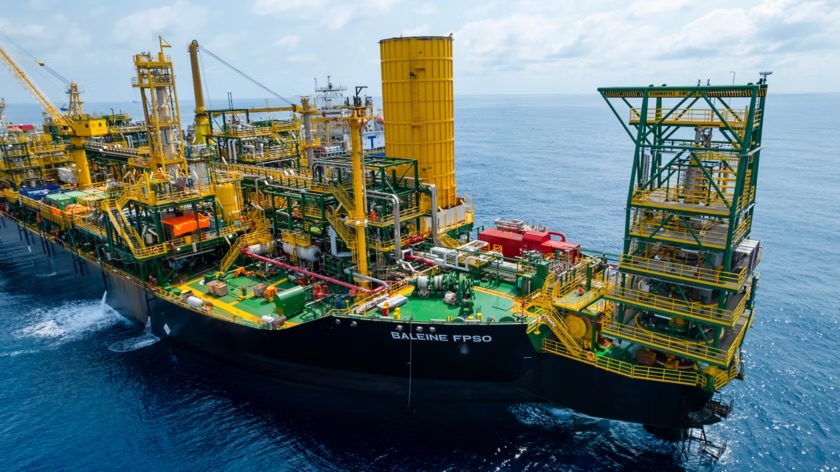
At the core of the development is the construction of a new floating production, storage and offloading vessel, a system designed to process and store hydrocarbons offshore before transferring them to tankers. The company said the new unit would prioritise operational efficiency, safety and reduced environmental impact, reflecting growing pressure on energy producers to balance expansion with sustainability concerns.
A key element of the project is its domestic focus. All gas produced under the Baleine development will be directed to the local market, where it is expected to support electricity generation and provide a more stable energy supply for businesses and households. For a rapidly growing economy, reliable power remains a critical constraint, and increased gas availability could ease some of that pressure.
The project also underscores the strategic importance of recent discoveries made by Eni in the country, including Baleine and Calao, since it began operations there in 2015. These finds have helped position Ivory Coast as an emerging player in West Africa’s energy landscape, at a time when global interest in new hydrocarbon sources remains strong.
The third phase is expected to come online within 32 to 36 months, with a total investment of around 4 billion dollars. That timeline reflects both the technical complexity of offshore developments and the urgency with which producers are moving to bring new supply to market amid ongoing global energy volatility.
For Ivory Coast, the expansion represents more than just increased output. It is part of a broader effort to leverage natural resources to drive economic transformation, reduce reliance on imports and create a more resilient energy system.
At the same time, the project highlights the balancing act facing many African producers. While hydrocarbons remain vital for development and energy access, there is increasing scrutiny over environmental impacts and the long term role of fossil fuels in a shifting global energy mix.

For now, the Baleine project stands as a clear signal that investment in oil and gas across the continent is not only continuing, but accelerating in key regions where resources, demand and strategic priorities align.