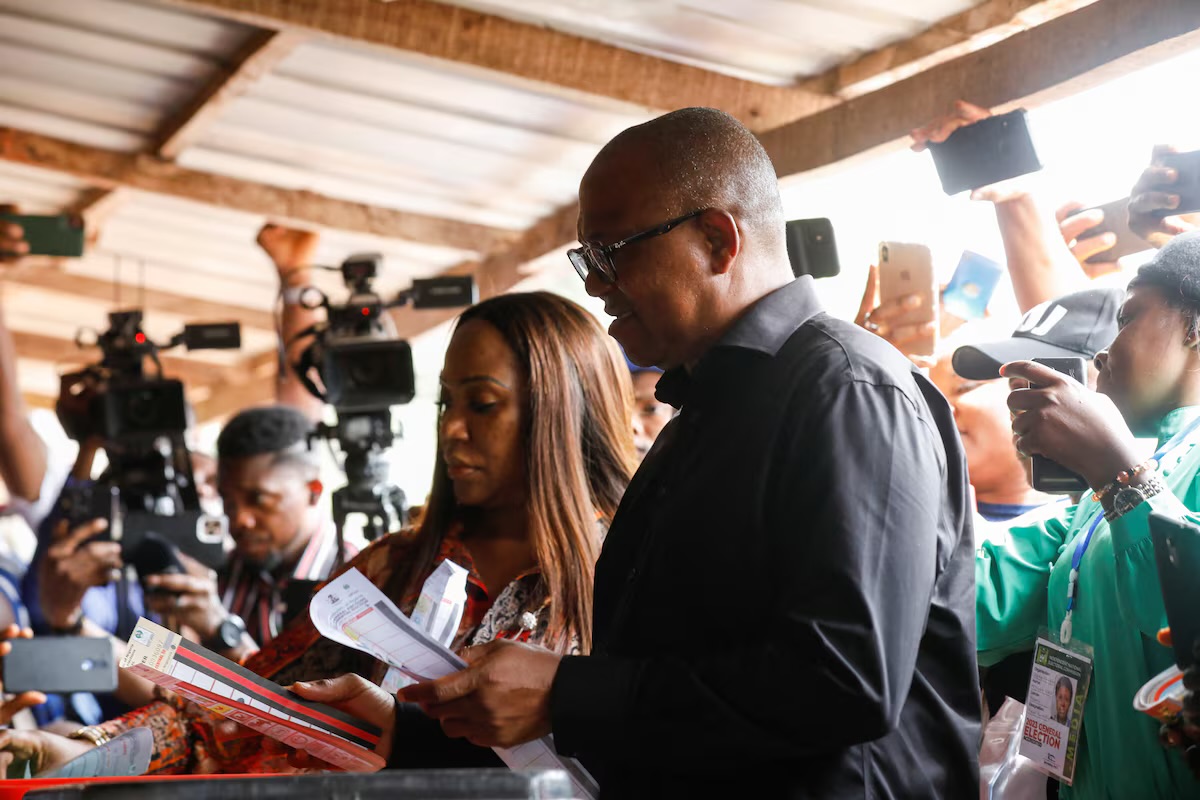
Nigerian politician Peter Obi will contest the country’s January presidential election after securing the nomination of the Nigeria Democratic Congress, setting the stage for a renewed battle with incumbent President Bola Tinubu in what is shaping up to be another fiercely contested race.
Obi was declared the winner of his party’s primary election on Sunday, less than a month after leaving an opposition alliance that had sought to unite rival parties behind a single candidate. His decision to run independently has effectively ended hopes among some opposition supporters that a united front could emerge against Tinubu.
The development sets up a repeat of the three way contest that defined the 2023 election, raising questions about whether growing public frustration over the cost of living and insecurity can translate into electoral change or whether the opposition vote will once again be divided.



In a statement following his nomination, Obi said tackling insecurity would be among his top priorities.

“We must address insecurity with resolve and urgency, for no nation can thrive while its citizens live in trepidation,” he said.
Nigeria continues to face multiple security challenges beyond the long running insurgency in the northeast, where Boko Haram and Islamic State West Africa Province militants have waged a violent campaign for more than a decade. In the northwest, armed criminal groups known locally as bandits continue to carry out kidnappings, attacks on villages and raids on schools, while communal violence linked to land and grazing disputes persists in parts of the country’s central region.
Economic concerns are also expected to dominate the election campaign.
Since taking office in 2023, President Bola Tinubu has introduced a series of sweeping economic reforms, including the removal of fuel and electricity subsidies, the liberalisation of the foreign exchange market and broader fiscal restructuring measures. While the reforms have been praised by investors and international financial institutions, many Nigerians have struggled with rising living costs, inflation and declining purchasing power.
Higher global oil prices linked to tensions in the Middle East have added further pressure, contributing to fuel price increases and broader inflationary challenges across Africa’s most populous nation.
Tinubu has defended his policies, arguing that they have stabilised the economy and restored investor confidence despite the short term hardships experienced by households.
The opposition landscape remains fragmented. Former Vice President Atiku Abubakar, who finished second in the 2023 election, recently secured the presidential nomination of the African Democratic Congress, marking his seventh bid for the country’s highest office. Several smaller parties are also expected to field candidates.
Obi’s strong showing among younger voters in the last election transformed him into one of Nigeria’s most influential opposition figures and demonstrated the growing political influence of urban and first time voters. Whether that support can be expanded into a winning coalition remains one of the key questions heading into January’s vote.
With Tinubu seeking a second term, Obi returning as a major challenger and Atiku once again in the race, Nigeria appears set for another highly competitive election that could shape the political and economic direction of Africa’s largest economy for years to come.