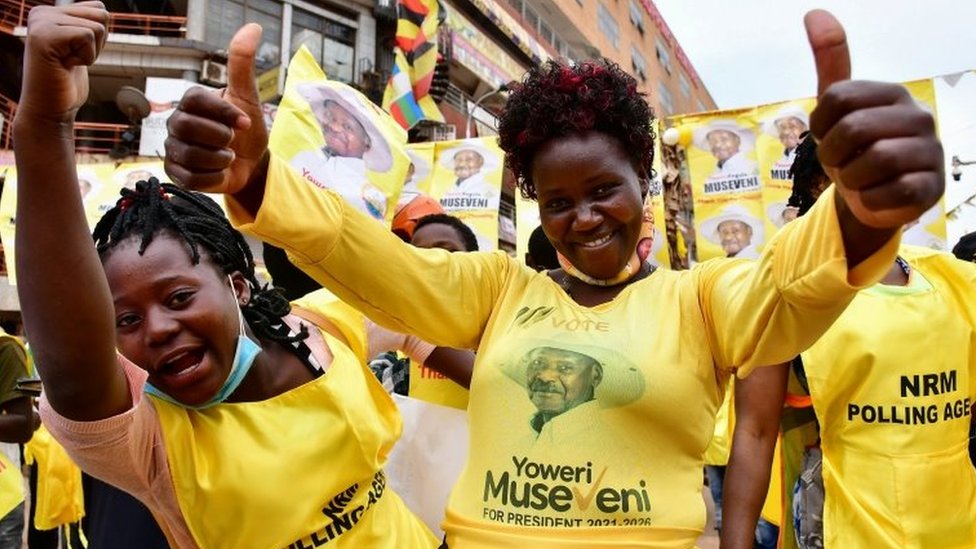
Millions of Ugandans turned out early on Thursday morning to cast their votes in the country’s general elections, marking another key moment in the nation’s democratic process. The elections encompass both the presidential and parliamentary contests, with more than 21 million registered voters expected to take part across Uganda’s districts, according to the Electoral Commission of Uganda.
Voting officially began at 7:00 a.m. local time (0400 GMT) and is scheduled to close at 4:00 p.m. local time (1300 GMT). Citizens are voting not only for the presidency but also for 353 directly elected parliamentary representatives and 146 district women representatives, reflecting efforts to ensure gender inclusion within the country’s political landscape.
The Electoral Commission has affirmed that all polling stations were supplied with the necessary materials ahead of time, while security forces have been deployed to maintain calm throughout the process. The Commission has reiterated its commitment to transparency and adherence to electoral procedures, noting that results will be transmitted through official channels once counting concludes.



Uganda’s elections are taking place in a context of regional significance, as the country continues to play a vital role in East Africa’s political and economic dynamics. Observers from various African organisations, including the African Union (AU) and the East African Community (EAC), have been accredited to monitor the electoral process, underscoring continental interest in the integrity of Uganda’s democratic exercise.

In the broader African context, these elections highlight ongoing efforts across the continent to strengthen democratic institutions through homegrown mechanisms. Analysts note that while challenges persist, particularly regarding civic participation and equitable access to information, Uganda’s experience represents a continuing narrative of political evolution that is deeply African in character and scope.
Beyond the numbers and logistics, the elections capture a shared continental aspiration for accountability, inclusive governance, and peaceful transition. In that regard, Uganda’s 2026 elections form part of a wider Pan-African dialogue about agency, legitimacy, and the meaning of democracy in African societies as they negotiate the complexities of development and self-determination.
As voting concludes and counting begins, the focus now turns to the transparency of the tallying process and the response of citizens to the eventual results. Ugandans, like many across the continent, continue to express a strong belief in the power of the ballot as a vehicle for shaping their nation’s future within an African-centred vision of democracy.