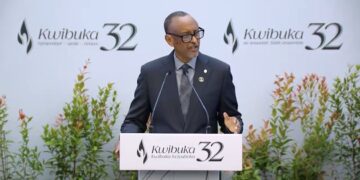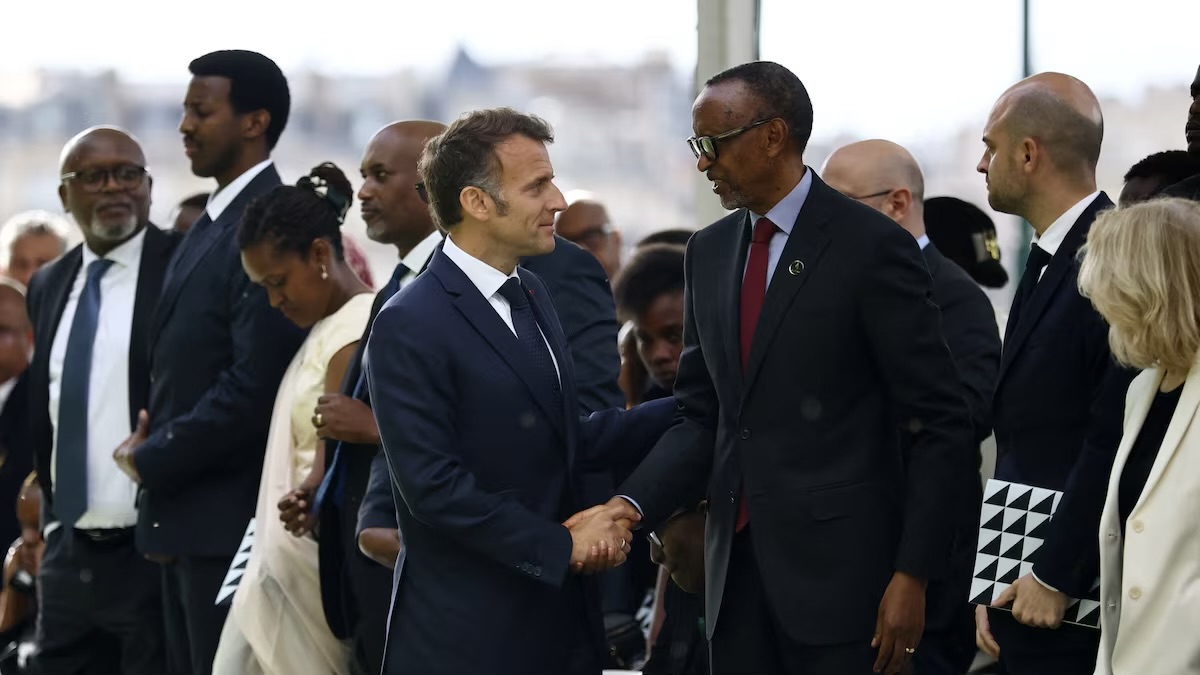
French President Emmanuel Macron and Rwandan President Paul Kagame on Tuesday inaugurated a memorial in Paris dedicated to the victims of the 1994 Genocide against the Tutsi in Rwanda, in a symbolic gesture reflecting ongoing efforts to confront one of the darkest chapters in modern African history.
The memorial, situated on the banks of the Seine in the heart of the French capital, honours the hundreds of thousands of men, women and children who were killed during the genocide that unfolded between April and July 1994. The massacre claimed the lives of an estimated 800,000 people, the majority of whom were ethnic Tutsis.
Speaking at the inauguration ceremony, Macron said the memorial places the Genocide against the Tutsi “at the heart of our capital and our history”, describing it as the culmination of a long and painstaking search for truth and historical understanding.



Named L’Archive, the memorial was designed by Portuguese artist Grada Kilomba. The installation consists of two black steles bearing an engraved tribute to the victims of the genocide. Its prominent location in Paris is intended to serve as a permanent reminder of the atrocities committed and the importance of preserving historical memory.
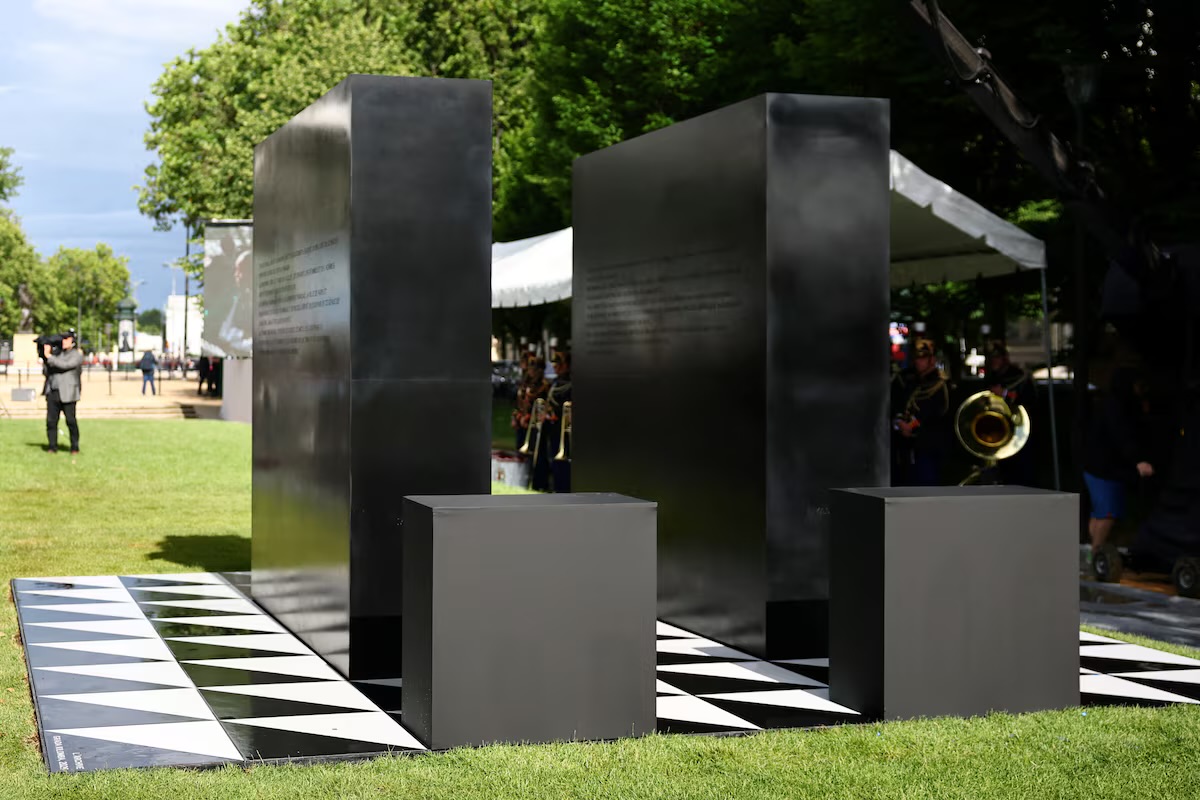
Image: Reuters
The unveiling represents another significant milestone in the gradual rapprochement between France and Rwanda, whose relations were strained for decades by accusations from Kigali that Paris bore responsibility for its actions before and during the genocide.
For many years, Rwanda accused France of supporting the government responsible for the killings and of failing to prevent the violence despite its close political and military ties with the regime at the time. French authorities consistently rejected allegations of direct complicity, but pressure mounted for a fuller examination of France’s role in the events leading up to the genocide.
A turning point came in March 2021 when a commission established by Macron published a landmark report examining France’s involvement in Rwanda before and during the genocide. The commission concluded that France had been blinded by a colonial mindset and political misjudgements, resulting in what it described as a “serious and overwhelming” responsibility for failing to recognise the danger that was unfolding and for not acting decisively to prevent the slaughter.

Two months later, during a historic visit to Kigali in May 2021, Macron acknowledged France’s responsibility in relation to the genocide and expressed hope that Rwanda would grant forgiveness. While he stopped short of issuing a formal apology, his remarks were widely viewed as a major step towards reconciliation between the two countries.
The improved relationship between Paris and Kigali has since been reflected in growing diplomatic, economic and cultural cooperation. Analysts have noted that both governments have sought to move beyond decades of tension while maintaining a commitment to historical accountability and remembrance.

The inauguration of L’Archive comes as Rwanda continues to promote international recognition and education about the genocide, while France seeks to confront difficult aspects of its own historical record. The memorial is expected to become an important site of reflection for visitors and future generations, reinforcing the global commitment to ensuring that such atrocities are never repeated.