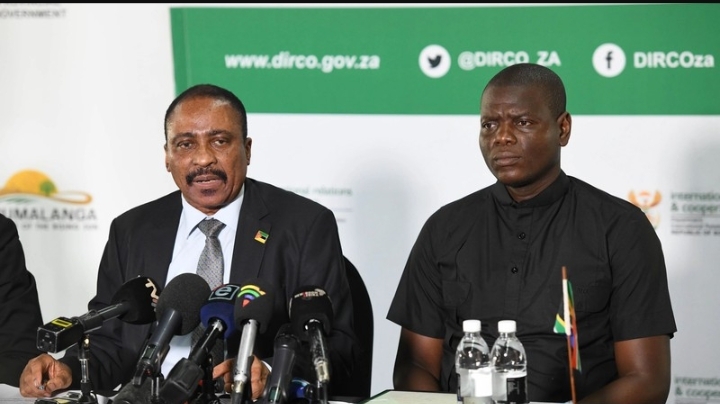
South Africa’s Minister of International Relations and Cooperation, Ronald Lamola, met Mozambique’s Minister of Interior, Pascoal Ronda, in Malelane, Mpumalanga Province, on Wednesday, to address disruptions caused by election-related protests in Mozambique. The high-level meeting marked a crucial step in safeguarding economic and logistical ties between the two nations.
Both officials described the dialogue as constructive, acknowledging the significant economic fallout caused by recent disruptions at key border crossings. Over the past weeks, operations at the Lebombo Port of Entry were temporarily suspended, with companies reporting financial losses due to interrupted trade flows. Although the border reopened on 12 December, residual impacts on supply chains continue to pose risks to regional stability.
Minister Lamola underscored the criticality of unhindered trade and movement between South Africa and Mozambique, stressing the importance of diplomatic channels in averting further crises. “Many companies have suffered losses due to the interruption in trade, and if the situation persists, there is a great risk of food and energy insecurity,” Lamola remarked.




The meeting yielded an agreement to bolster cooperation on multiple fronts. Both countries pledged to enhance bilateral mechanisms for dialogue, safeguard critical infrastructure, and expedite supply chain operations. This collaboration aims to mitigate economic risks and stabilise trade, particularly in sectors reliant on the uninterrupted flow of goods across the border.
While the discussions prioritised immediate remedial measures, they also reflected a broader commitment to strengthening bilateral relations. Lamola emphasised the significance of a united approach to security and trade, positioning the partnership as a safeguard against future disruptions.
The recent suspension of operations at Lebombo, one of the region’s busiest ports of entry, highlighted vulnerabilities in cross-border logistics. South Africa’s Border Management Authority took the decision on 9 December amid heightened tensions from election-related demonstrations near the border area. Although normalcy resumed shortly after, the incident underscored the fragility of economic activities reliant on political stability.
Mozambique’s electoral landscape remains a source of concern, with local protests underscoring wider socio-political challenges. For South Africa, Mozambique is a vital trade partner, and maintaining a seamless flow of goods is pivotal for industries ranging from agriculture to energy. The shared commitment to restoring peace and stability at the border reflects an understanding of the intertwined destinies of the two economies.
This latest diplomatic engagement highlights the necessity of robust contingency plans in the face of political upheavals. As both nations navigate this chapter, their cooperative efforts serve as a testament to the importance of regional unity in addressing complex challenges.