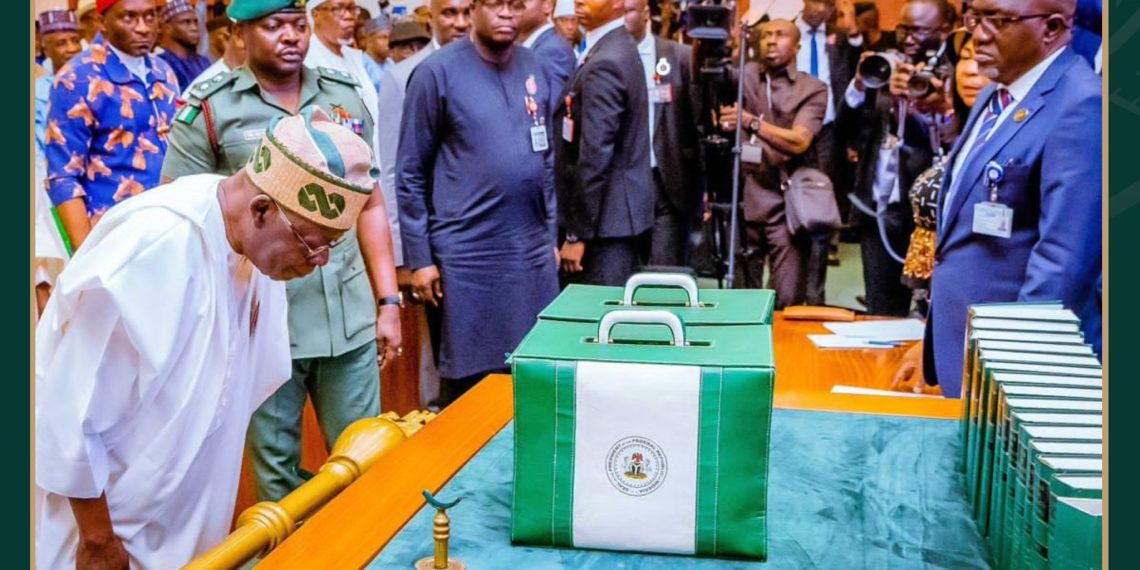
Nigeria’s President Bola Ahmed Tinubu has projected a positive outlook for the nation’s economy in 2025, highlighting an array of reforms aimed at stabilising Africa’s largest economy. Presenting the 2025 national budget to a joint session of the legislature in Abuja, Tinubu outlined measures to stimulate growth, tackle inflation, and reduce poverty while emphasising a commitment to macroeconomic stability and an improved business environment.
The proposed budget, amounting to 49.8 trillion nairas (approximately 32 billion U.S. dollars), reflects a deliberate effort to address systemic challenges. Tinubu underscored that the Nigerian economy, which grew by 3.46% in the third quarter of 2024 compared to 2.54% during the same period in 2023, is responding positively to targeted stimulus measures. This growth rate surpasses global projections for the outgoing year, which the International Monetary Fund estimates at 3.2%.
In his address, Tinubu stated that ongoing fiscal reforms are yielding tangible results. Nigeria’s foreign reserves have climbed to nearly 42 billion U.S. dollars, providing a robust buffer against external economic shocks. Additionally, the National Bureau of Statistics reported a trade surplus of 5.8 trillion nairas (around 3.7 billion U.S. dollars), attributed to rising exports and improved economic resilience.



The government’s revenue target for 2025 is set at 34.82 trillion nairas (about 22.4 billion U.S. dollars), with expenditure estimated at 47.9 trillion nairas (roughly 30.8 billion U.S. dollars). Debt servicing is expected to account for 15.81 trillion nairas (approximately 10.2 billion U.S. dollars), highlighting the significant fiscal pressure posed by Nigeria’s public debt. Nevertheless, Tinubu described the budget as ambitious yet necessary to secure the nation’s economic future.
Inflation, which currently stands at 34.6%, remains a key concern. Tinubu’s administration aims to reduce this rate to 15% while improving the naira’s exchange rate from 1,700 to 1,500 nairas per U.S. dollar. Oil production, a cornerstone of Nigeria’s economy, is projected to reach 2.06 million barrels per day in 2025, underscoring the country’s reliance on energy revenues.

Tinubu assured lawmakers that the reforms initiated 18 months ago would not be reversed but strengthened, building on progress toward creating a robust and globally competitive economy. These policies, he noted, are critical to fostering a more equitable economic framework, particularly for a population facing significant socio-economic challenges.
The president’s economic vision comes at a time when many Nigerians grapple with the realities of high inflation and a depreciating currency. While the government’s projections offer a semblance of hope, critics argue that sustained implementation of reforms and prudent fiscal management are essential to translating these policies into tangible improvements in living standards.
As Africa’s most populous nation navigates its path to recovery, the success of Tinubu’s economic strategy will depend on the administration’s ability to balance fiscal discipline with measures that directly alleviate the pressures faced by ordinary Nigerians.