As African economies continue to recalibrate their development pathways in response to energy transition pressures and shifting global capital flows, Senegal has positioned itself as an emerging focal point for strategic investment dialogue. This was underscored at the Senegal London Strategic Investment and Energy Forum, convened during London Energy Week, where senior policymakers, energy executives and investment leaders examined the country’s evolving economic and energy priorities .
The forum, organised by Serigne Mansour Gaye, brought together representatives from key Senegalese institutions and international partners in what participants described as an execution oriented dialogue rather than a purely conceptual exchange . At the centre of the discussions were sovereign priorities including gas monetisation, infrastructure expansion, regulatory reform, energy transition planning and investment facilitation. The stated objective was to translate policy vision into implementable frameworks .
Bakary Sega Bathily, Chief Executive Officer of APIX SA, Senegal’s national investment promotion agency, participated in discussions relating to investment facilitation and regulatory reform. APIX SA has a statutory mandate to promote and support private sector investment into priority sectors of the Senegalese economy, and its presence reflected the emphasis placed on improving investor confidence and project bankability.




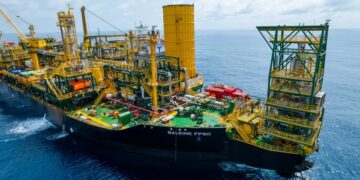
Alioune Gueye, Managing Director of PETROSEN Holding, contributed to exchanges concerning hydrocarbon development and gas monetisation. PETROSEN, as Senegal’s national oil company, plays a central role in the development of offshore gas projects and in structuring the state’s participation in resource extraction. Discussions linked gas development to the country’s broader gas to power strategy, which aims to enhance domestic electricity generation capacity and support industrialisation.
Dr Khadim Bamba Diagne, Permanent Secretary of COS PETROGAZ, engaged in dialogue on governance and oversight mechanisms within the petroleum and gas sector. COS PETROGAZ is mandated to supervise and coordinate the implementation of Senegal’s oil and gas strategy, and its participation signalled attention to institutional accountability and long term resource management.
Pape Momar Lo, Managing Director of RGS SA, was also among the participants shaping conversations on infrastructure and sectoral implementation . While details of specific project pipelines were not publicly elaborated, the inclusion of domestic private sector leadership reflected the forum’s stated focus on moving from vision to execution.

International industry representation included Clive Jones of Woodside Energy, a company involved in offshore energy developments linked to Senegal’s hydrocarbon sector . Engagement with global operators highlighted the interplay between national policy frameworks and international technical and financial expertise.
Diplomatic engagement was represented by His Excellency General Cheikh Wade, Ambassador of Senegal to the United Kingdom . His presence reflected Senegal’s ongoing efforts to deepen bilateral relations and attract diversified capital flows within a shifting geopolitical and energy landscape.
The African Caribbean Sustainability and Investment Initiative and the African Caribbean Sustainability and Investment Summit were represented by Chairman David F Roberts . Their participation positioned the dialogue within a broader Africa Caribbean and United Kingdom engagement framework focused on sustainability, trade and capital mobilisation. The initiatives have announced forthcoming trade and investment engagements in Barbados and Zimbabwe, signalling a transregional approach that seeks to expand South South collaboration alongside traditional global partnerships .
The forum addressed regulatory reform, public private partnerships and blended finance mechanisms, recognising that infrastructure financing gaps across the continent require layered capital structures. Participants also considered local content development and skills transfer, areas widely regarded as essential if hydrocarbon development is to translate into durable domestic value creation .

From a pan African perspective, the dialogue reflects broader continental debates on how to balance climate commitments with developmental imperatives. Gas to power strategies are often presented by African policymakers as transitional pathways designed to expand access, stabilise grids and support industrial policy while renewable capacity scales up. Senegal’s approach situates resource governance, institutional reform and regional positioning as integral components of its economic strategy.
The London convening therefore can be understood as part of a wider pattern of African states engaging international capital while articulating sovereign development priorities. The range of individuals present, spanning public institutions, national companies, private enterprise, diplomacy and transregional initiatives, illustrated an effort to construct a multi stakeholder framework for implementation rather than a singular narrative of resource extraction.