Tuesday, March 10, 2026
  • Login
The Southern African Times
  • Home
  • Southern Africa
  • Business
    • African Start ups
    • African Continental Free Trade Area
  • Technology
    • Lifestyle
      • Health
      • Culture
      • Food and Drink
      • Entertainment
  • Opinion
  • Sports
  • SAT Jobs
    • Events
  • About Us
    • Advertise with Us
    • Contact Us
No Result
View All Result
  • Home
  • Southern Africa
  • Business
    • African Start ups
    • African Continental Free Trade Area
  • Technology
    • Lifestyle
      • Health
      • Culture
      • Food and Drink
      • Entertainment
  • Opinion
  • Sports
  • SAT Jobs
    • Events
  • About Us
    • Advertise with Us
    • Contact Us
No Result
View All Result
The Southern African Times
No Result
View All Result
Home Fashion

Zimbabwe Expands Electric Vehicle Market as BYD Expands into Southern African Market

by SAT Reporter
February 16, 2026
in Fashion
0
Zimbabwe Expands Electric Vehicle Market as BYD Expands into Southern African Market

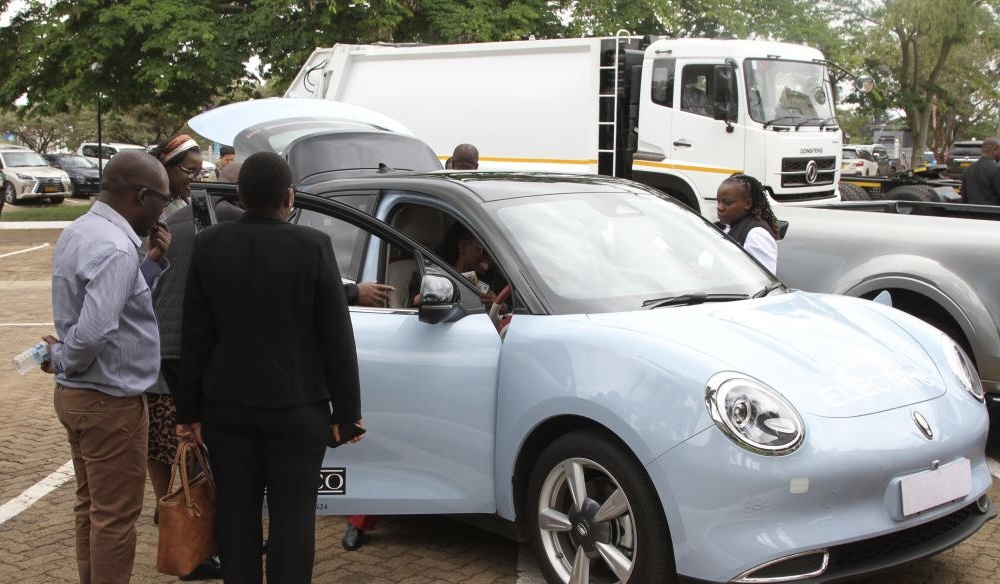
Electric vehicles are beginning to register measurable growth in Zimbabwe as the country navigates the global transition towards low carbon mobility. Long characterised by a market dominated by imported internal combustion engine vehicles, Zimbabwe is now witnessing early stage adoption of battery electric models, particularly from Chinese manufacturers such as BYD.

According to reporting by Xinhua on 15 February 2026, BYD Zimbabwe has reported favourable consumer reception following the launch of several fully electric models in Harare. The company’s local general manager, Clayton Chimudima, indicated that demand has been supported by fiscal reforms introduced by the Government of Zimbabwe. In 2024 the government reduced import duty on fully electric vehicles from 40 percent to 25 percent, a policy confirmed in the national budget statement issued by the Ministry of Finance, Economic Development and Investment Promotion available at https://www.zimtreasury.gov.zw. This measure forms part of a broader strategy to diversify the energy mix and reduce reliance on imported petroleum products.

Zimbabwe’s energy context provides important background. The country imports a significant proportion of its refined fuel, according to the Zimbabwe Energy Regulatory Authority and has simultaneously expanded investment in solar power to mitigate electricity supply constraints. Duty free importation of solar equipment, referenced in recent fiscal policy documents, has created opportunities for the development of solar powered charging stations. The government has also introduced rebates for equipment used in establishing charging infrastructure, reflecting a recognition that vehicle adoption must be accompanied by supporting systems.


ADVERTISEMENT

BYD, headquartered in Shenzhen, is among the world’s largest producers of new energy vehicles. The company reported global sales exceeding three million new energy vehicles in 2023, according to its annual report.  Its entry into Zimbabwe aligns with a wider expansion of Chinese electric vehicle manufacturers across African markets, including South Africa, Kenya and Morocco. In South Africa, for example, electric vehicle sales remain a small proportion of total vehicle sales but have grown steadily, as noted by the National Association of Automobile Manufacturers of South Africa. This situates Zimbabwe within a continental pattern of gradual uptake rather than an isolated case.

Local consumer interest in Zimbabwe appears to be influenced by several factors. Sales representatives cite affordability relative to fuel costs, environmental considerations and the technological features of new models. While upfront vehicle prices remain higher than many second hand petrol vehicles commonly imported into the country, lifecycle operating costs may be lower where charging infrastructure is available. Data from the International Energy Agency indicates that electric vehicles generally offer lower maintenance costs due to fewer moving parts, although battery replacement remains a long term cost consideration.

Environmental considerations are increasingly present in public discourse across southern Africa. Zimbabwe is a signatory to the Paris Agreement under the United Nations Framework Convention on Climate Change and has submitted nationally determined contributions that include mitigation measures in the transport and energy sectors. Although Zimbabwe’s overall contribution to global greenhouse gas emissions is small, policymakers have emphasised the co benefits of cleaner urban air and reduced fuel import bills.

Infrastructure and skills development remain central challenges. Charging networks in Zimbabwe are limited, and electricity supply has historically been affected by drought related reductions in hydropower generation at Kariba Dam. Expanding distributed solar capacity may partially offset these constraints, but grid stability and investment in transmission remain policy priorities. At the same time, automotive technicians have acknowledged the need for retraining. Electric drivetrains require different diagnostic tools and safety protocols compared to conventional engines. Regional technical colleges and vocational institutions are beginning to integrate modules on electric mobility, reflecting a recognition that skills development must accompany technological change.

Across the continent, electric mobility adoption has followed diverse pathways shaped by national energy systems, income levels and trade policies. Morocco has invested in local manufacturing linked to European supply chains, while Kenya has seen growth in electric two wheelers tailored to urban transport needs. Zimbabwe’s experience, centred for now on imported passenger vehicles, represents another variant within a broader African transition that is neither uniform nor externally dictated. Rather than framing adoption solely through external environmental agendas, local actors have articulated the shift in terms of economic resilience, technological modernisation and intergenerational responsibility.

Current sales volumes in Zimbabwe remain modest when compared with established markets in Europe or China. However, incremental policy reforms, private sector participation and evolving consumer attitudes suggest that electric vehicles are moving from novelty to niche market segment. Whether this segment expands significantly will depend on sustained infrastructure investment, grid reliability, access to finance and continued fiscal clarity.

Zimbabwe’s emerging electric vehicle market therefore reflects a complex intersection of global industrial change and local economic realities. It underscores the agency of African markets in negotiating technological transitions on their own terms, informed by domestic priorities while connected to continental and global currents.

Tags: African mobilityautomotive industryBYDclimate policyelectric vehiclesGreen Energyrenewable energySouthern Africatransport policyZimbabwe
Previous Post

Senegal Advances Energy and Investment Dialogue in London

Next Post

West Wits Mining Launches Scoping Study to Assess Expansion of Witwatersrand Gold Project in South Africa

SAT Reporter

Related Posts

Zimbabwean designer selected for Creative DNA exchange in London
Fashion

Zimbabwean designer selected for Creative DNA exchange in London

by SAT Reporter
February 18, 2026
Nairobi Fashion Week Held at Sarit Centre as Designers Present New Collections
Fashion

Nairobi Fashion Week Held at Sarit Centre as Designers Present New Collections

by SAT Reporter
February 2, 2026
Lagos Fashion Week 2025: Sustainability, Style & the Rise of Nigerian Fashion Powerhouses
Fashion

Lagos Fashion Week 2025: Sustainability, Style & the Rise of Nigerian Fashion Powerhouses

by Elizabeth Aderinola
November 23, 2025
Africa Sourcing and Fashion Week Opens in Addis Ababa, Reflecting a Growing Pan-African Industry
Fashion

Africa Sourcing and Fashion Week Opens in Addis Ababa, Reflecting a Growing Pan-African Industry

by Times Reporter
November 1, 2025
From Kano to Chelsea: Winston Leather and the Untold Story of African Luxury
Fashion

From Kano to Chelsea: Winston Leather and the Untold Story of African Luxury

by SAT Reporter
August 28, 2025
Next Post
West Wits Mining Launches Scoping Study to Assess Expansion of Witwatersrand Gold Project in South Africa

West Wits Mining Launches Scoping Study to Assess Expansion of Witwatersrand Gold Project in South Africa

Browse by Category

  • Africa AI
  • African Continental Free Trade Area
  • African Debt
  • African Start ups
  • Agriculture
  • AI Africa
  • Algeria
  • All News
  • Analysis
  • Angola
  • Arts / Culture
  • Asia
  • Botswana
  • BOTSWANA
  • BREAKING NEWS
  • BRICS
  • Burkina Faso
  • Burundi
  • Business
  • Business
  • Business Wire
  • Cameroon
  • Central Africa
  • Chad
  • China
  • Climate Change
  • Climate Changev
  • Community
  • Congo Republic
  • Conservation
  • Côte d’Ivoire
  • COVID 19
  • CRYPTOCURRENCY
  • Culture
  • Democratic Republic of Congo
  • Diplomacy
  • Eastern Africa
  • Economic Development
  • Economy
  • Education
  • Egypt
  • Elections 2024
  • Energy
  • Entertainment
  • Environment
  • Eritrea
  • Ethiopia
  • Europe
  • Fashion
  • Feature
  • Finance
  • Financial Inclusion
  • Food
  • Food and Drink
  • Foods
  • GABON
  • Ghana
  • Global
  • Global Africa
  • Guinea
  • Health
  • Immigration
  • in Southern Africa
  • International news
  • International Relations
  • Ivory Coast
  • Just In
  • Kenya
  • Lesotho
  • Libya
  • Life Style
  • Lifestyle
  • Literature
  • Malawi
  • Malawi
  • Mali
  • Markets
  • Mauritius
  • Middle East
  • Mining in Africa
  • Morocco
  • Mozambique
  • Namibia
  • niger
  • Niger
  • Nigeria
  • North Africa
  • North-Eastern Africa
  • Obituaries
  • Obituary
  • Opinion
  • PARTNER CONTENT
  • Politics
  • Property
  • Racism
  • Rwanda
  • Rwanda
  • SADC
  • SAT Interviews
  • SAT Investigation
  • SAT Jobs
  • Saudi Arabia
  • Senegal
  • Seychelles
  • South Africa
  • South Sudan
  • Sports
  • Startup Africa
  • STOCK EXCHANGE
  • Sudan
  • Sustainability
  • Sustainablity
  • Tanzania
  • Technology
  • Telecommunications
  • The Editorial Board
  • The Power Of She
  • Togo
  • Trade
  • Travel
  • Travel
  • Tunisia
  • Uganda
  • Uncategorized
  • Wealth
  • West Africa
  • World
  • World
  • ZAMBIA
  • Zambia
  • ZIMBABWE
  • Zimbabwe

Browse by Tags

#NewsUpdate #SouthAfrica #SouthernAfricanTimes #TheSouthernAfricanTimes AfCFTA africa African Continental Free Trade Area African development African Development Bank African economy African Union Agriculture Angola Botswana Business China Climate change Cyril Ramaphosa Donald Trump Economic Development economic growth energy transition Finance food security Ghana industrialisation Infrastructure Development International relations Investment Kenya Mozambique Namibia news Nigeria Pan-Africanism Regional Integration renewable energy Rwanda SADC South Africa Southern Africa sustainable development Tanzania Zambia Zimbabwe
ADVERTISEMENT

WHO WE ARE

The Southern African Times is a regional bloc digital newspaper that covers Southern African and world news. The paper also gives a nuanced analysis on news and covers a wide range of reporting which include sports, entertainment, foreign affairs, arts and culture.

Welcome Back!

Login to your account below

Forgotten Password?

Retrieve your password

Please enter your username or email address to reset your password.

Log In

  • Home
  • Southern Africa
  • Business
    • African Start ups
    • African Continental Free Trade Area
  • Technology
    • Lifestyle
      • Health
      • Culture
      • Food and Drink
      • Entertainment
  • Opinion
  • Sports
  • SAT Jobs
    • Events
  • About Us
    • Advertise with Us
    • Contact Us
Are you sure want to unlock this post?
Unlock left : 0
Are you sure want to cancel subscription?