


Basotho blankets, long associated with the Kingdom of Lesotho and Basotho communities across Southern Africa, continue to occupy a distinctive place at the intersection of cultural heritage, identity, and contemporary design. Recognised for their bold geometric motifs and symbolic colour palettes, these woollen textiles are not merely functional garments but widely understood as carriers of meaning shaped by historical experience and social practice.
Historical research indicates that the adoption of woollen blankets among the Basotho dates to the nineteenth century, when imported textiles began to replace animal skins as forms of dress. Over time, these materials were incorporated into Basotho cultural systems and became embedded in everyday life as well as ceremonial contexts. Today, the blanket is often regarded as a national emblem of Lesotho, with specific designs and patterns conveying information about social status, life stages, and communal belonging. More detail on the historical trajectory of Basotho textiles can be explored through resources such as regional textile histories and anthropological analyses of Basotho material culture.
In recent years, Basotho blankets have entered new circuits of visibility through their incorporation into contemporary fashion. Designers working across the African continent and in the diaspora have engaged with these textiles by adapting traditional motifs into modern garments, including coats, dresses, and tailored pieces. This process reflects an ongoing dialogue between heritage and innovation, where visual languages rooted in Basotho identity are translated into forms that resonate within global fashion systems. At the same time, such adaptations have prompted discussion regarding cultural ownership and the ethics of design, particularly where motifs are reproduced without direct engagement with originating communities.




The influence of Basotho blankets extends beyond clothing into a range of accessories. Bags, scarves, and headwear inspired by the blankets provide more accessible points of engagement with the textile tradition, allowing wearers to incorporate elements of Basotho visual culture into everyday contexts. These reinterpretations suggest that the communicative function of the blanket persists even as its form evolves, maintaining its role as a visible marker of identity while adapting to contemporary lifestyles.
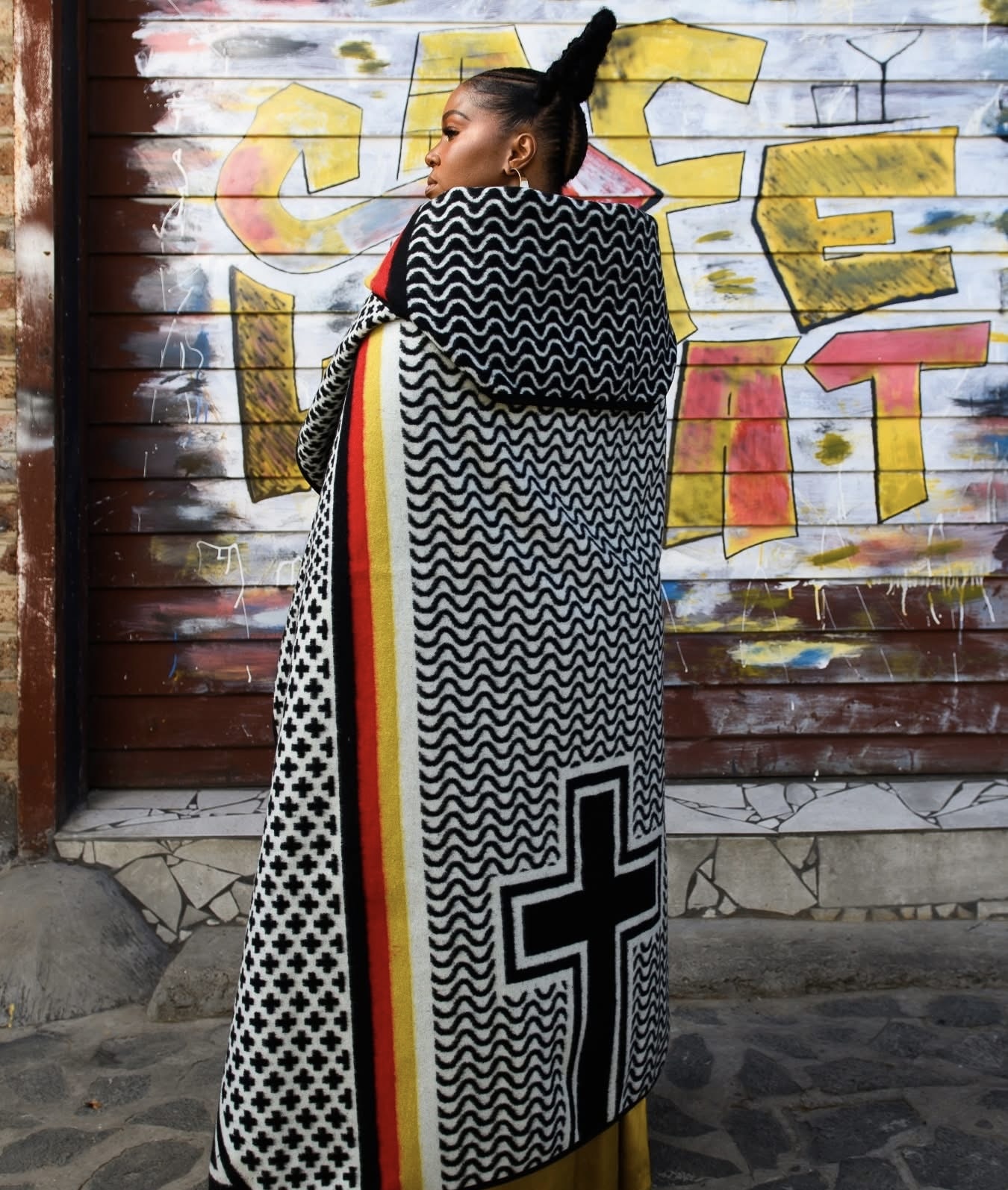
Photo: Aranda Blankets
Sustainability discourse has also shaped current approaches to Basotho blanket design. Some practitioners have turned to reuse and adaptation, repurposing existing blankets into new products in ways that reduce material waste. This approach aligns with longstanding practices of durability and multifunctionality within Basotho material culture, where garments are designed for longevity and varied use. In this sense, contemporary sustainability narratives intersect with established African approaches to resourcefulness and environmental awareness.
At the same time, the increasing global circulation of Basotho inspired designs has highlighted the need for careful consideration of context. Scholars and cultural practitioners have raised concerns about appropriation, emphasising that these blankets are not simply aesthetic objects but are embedded within specific histories and social meanings. Further insight into these debates can be found through studies on textile appropriation and collaboration and ethnographic research on identity and dress in African contexts.

Photo: Aranda Blankets
Across the continent, there is a growing emphasis on repositioning African textiles within narratives that foreground local knowledge and creative agency. Basotho blankets exemplify this shift, illustrating how material culture can serve as both a repository of historical memory and a platform for contemporary expression. Their continued evolution reflects a broader pan African engagement with heritage that resists singular interpretations and instead embraces multiplicity, continuity, and change.
As these textiles move between rural and urban settings, ceremonial and commercial uses, and local and global markets, they remain anchored in the lived experiences of the communities that sustain them. The reimagining of Basotho blankets within modern fashion therefore does not represent a departure from tradition, but rather an extension of it, shaped by ongoing negotiations of identity, creativity, and cultural meaning within Southern Africa.


