


Apple Music has expanded its “Sounds of Africa” initiative to mark Africa Month 2026, positioning the continent’s cities as central nodes in the evolution of global music culture.The announcement, detailed in the official release, reflects a growing recognition within the international music industry that African sonic traditions are not merely influential but foundational to contemporary global soundscapes
The initiative builds on previous editions that highlighted cities such as Lagos, Accra, Johannesburg, Nairobi and Dar es Salaam. This year’s focus widens the geographical and cultural frame to include Cape Town, Durban, Harare, Luanda, Abidjan, Kinshasa, Dakar, Kampala, Cairo and Casablanca. In doing so, it presents a more layered cartography of African music, one that resists reductive narratives and instead foregrounds the continent’s plurality of voices, histories and trajectories.
The project is structured around curated playlists assembled by artists, producers, executives and cultural interlocutors embedded within their respective cities. These playlists combine archival material with contemporary releases, offering both a historical archive and a forward looking statement. The approach reflects a broader shift within global music platforms towards localisation, where authority is increasingly informed by practitioners within the cultural ecosystems being represented.



Across the featured cities, the curators themselves form a significant part of the narrative architecture of the initiative. In Cape Town, the playlists are shaped by voices including YoungstaCPT, Dee Koala, GoldFish and Mr Thela, with Grandmaster Ready D contributing an accompanying DJ mix that traces the city’s sonic evolution. Durban’s selections are informed by contributors such as DJ Tira, DJ Lag, Khuzani and Nasty C, reflecting a lineage that spans maskandi, kwaito, gqom and amapiano, with DJ Tira also curating the city’s mix.
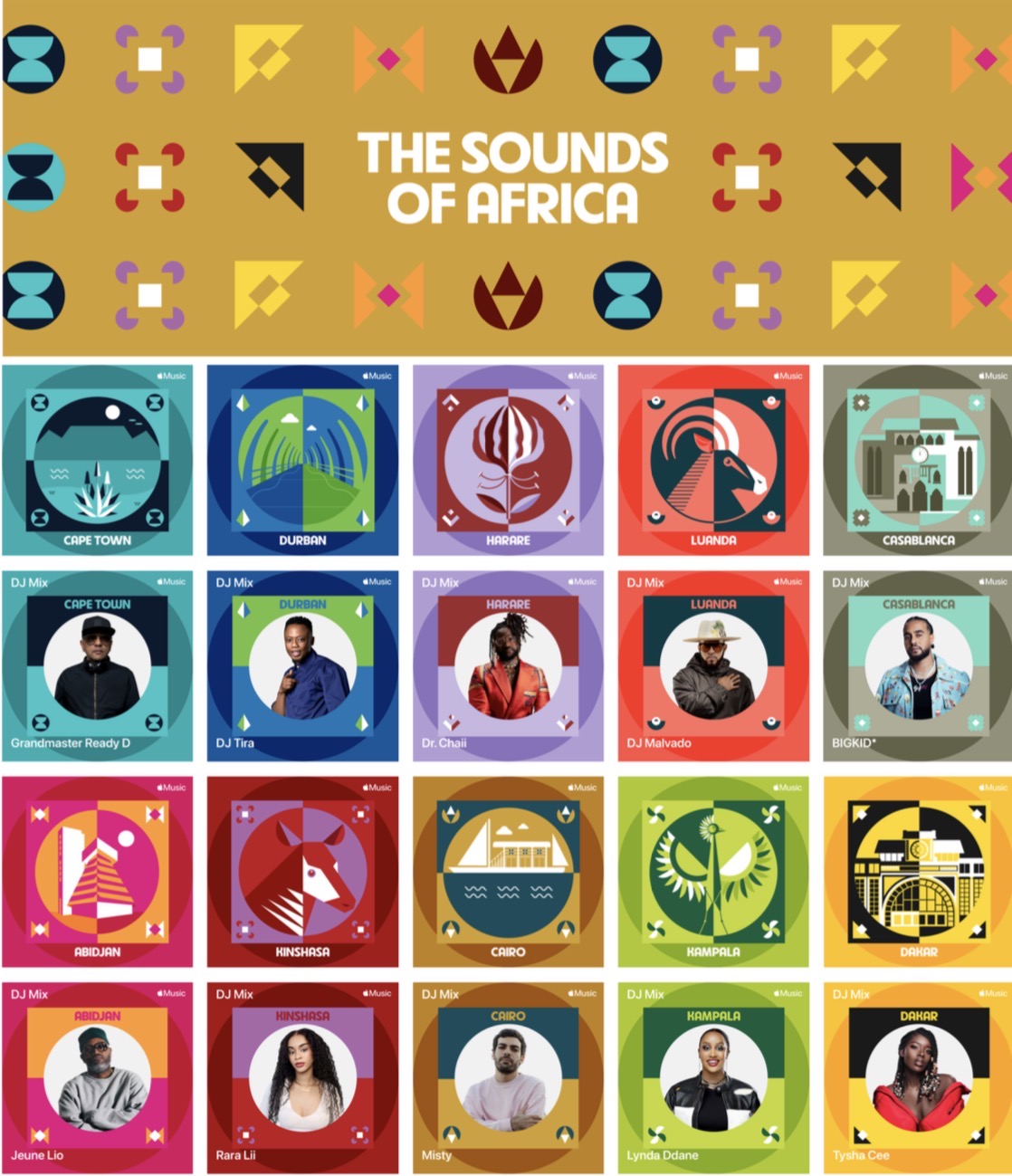
In Harare, curators including Shungudzo, Bantu and Mutsai Musa articulate a musical landscape that moves between sungura, Zimdancehall, Afro jazz and hip hop, while producer Dr Chaii delivers a DJ mix that bridges generational influences. Luanda’s playlists are curated by figures such as Teo No Beat, Anna Joyce and MC Prodígio, with DJ Malvado providing a mix that captures the city’s enduring dancefloor culture rooted in semba, kizomba and kuduro.
Abidjan’s contribution is shaped by curators including Didi B, Alpha Blondy and Black Kent, reflecting a sound that is both historically grounded and contemporary, while DJ Jeune Lio’s mix connects established anthems with newer releases. In Kinshasa, the curatorial input of Fally Ipupa, TRESOR and Innoss’B underscores the city’s longstanding influence through rumba and ndombolo, with Rara Lii offering a DJ mix that traverses eras and styles.
Dakar’s playlists draw on contributions from Baaba Maal and Samba Peuzzi, situating music within broader cultural and communal contexts, complemented by a DJ mix from Tysha Cee. In Kampala, curators such as Joshua Baraka, Azawi and Navio highlight a hybridised musical identity shaped by both legacy acts like Afrigo Band and contemporary artists, with Lynda Ddane curating the city’s mix.
Cairo’s musical narrative is shaped by contributors including Mahmoud Gamal El Din and Karim Osama, reflecting a spectrum that spans classical traditions and modern genres, while DJ Misty provides a mix capturing the city’s dynamic sonic environment. In Casablanca, curators Jaylann, Hassa1 and 777YM foreground an emerging urban sound influenced by hip hop and youth culture, with BIGKID delivering a mix rooted in the city’s evolving identity.
Complementing the playlists is a series of exclusive DJ mixes created in collaboration with established and emerging selectors across the continent. These mixes function not merely as compilations but as interpretive works, tracing sonic lineages while also reimagining them for contemporary audiences. The emphasis on DJs and curators underscores the importance of mediation within African music cultures, where the role of the selector often carries significant cultural weight.
The initiative arrives at a moment when African artists continue to achieve increasing visibility within global markets. Streaming platforms have played a significant role in this shift, enabling cross border circulation of music and facilitating new forms of collaboration. However, the framing of African music within global discourse remains contested, with ongoing debates around representation, ownership and narrative authority.
From a pan African perspective, the significance of the initiative lies in its attempt to decentralise dominant narratives. Rather than privileging a single city or genre as representative of the continent, it presents a mosaic of interconnected yet distinct musical cultures. This approach aligns with broader efforts within African cultural production to articulate identities that are at once local and transnational.
At the same time, questions remain regarding the dynamics of platform power and cultural mediation. While the involvement of local curators suggests a degree of grounded representation, the overarching framework is still defined by a global technology company. This tension reflects wider structural conditions within the global music industry.

Nevertheless, the expansion of “Sounds of Africa” offers a platform through which African musical narratives can be articulated with greater visibility, even as they engage with global audiences. By foregrounding cities as sites of cultural production, the project shifts attention from abstract notions of African music to the lived realities and creative practices that sustain it.
The playlists and DJ mixes are available through Apple Music, with further details accessible via the official Sounds of Africa platform. As Africa Month 2026 unfolds, the initiative provides an opportunity to engage with the continent’s music as a central force shaping the present and future of global culture.


