

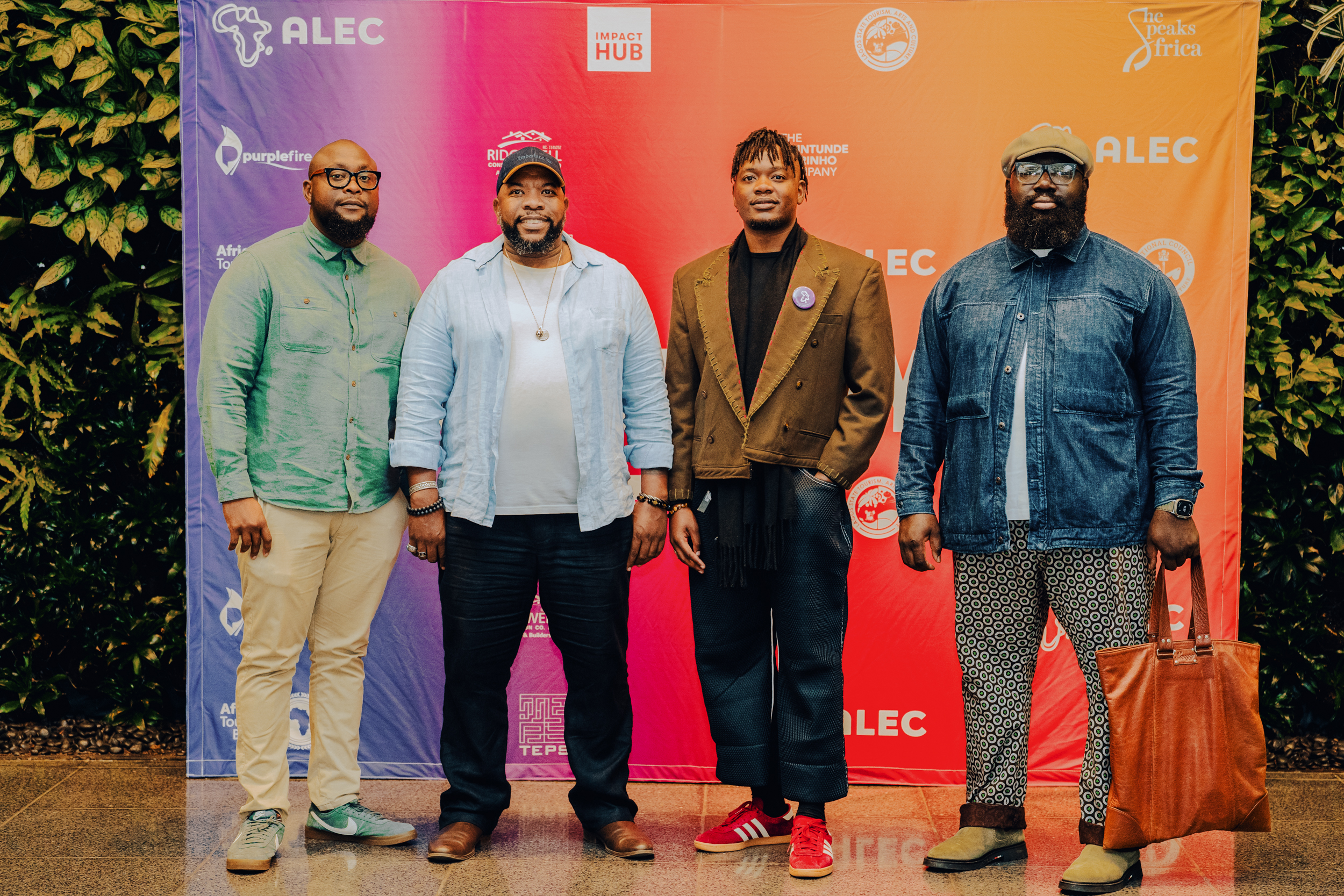
The inaugural Africa Live Entertainment Conference 2026 has drawn to a close in Johannesburg, marking a defining moment for an industry long rich in talent but fragmented in structure. Over two days in April, the gathering set out to do something ambitious and, by most accounts, necessary: to reimagine Africa’s live entertainment economy as a connected, commercially viable ecosystem rather than a patchwork of isolated national markets.
Bringing together policymakers, artists, promoters, investors and cultural leaders, ALEC 2026 quickly established itself as more than a conventional industry conference. It became a working forum where the realities of touring, financing and infrastructure were laid bare, and where solutions were debated with unusual urgency. At the centre of these discussions was a shared recognition that Africa’s creative output has outpaced the systems designed to support it.
That sense of urgency crystallised in the unveiling of the Johannesburg Commitments, a framework that calls for deeper collaboration, policy alignment and the development of sustainable touring circuits across the continent. The document signals a shift in thinking, encouraging stakeholders to approach the industry through interconnected city networks rather than siloed national economies.



The tone was set early by ALEC convener Sasha P and Nigeria’s Consul General in Johannesburg Ninikanwa Olachi Okey-Uche, alongside a virtual keynote from media entrepreneur Mo Abudu. Their contributions framed the conference as both a response to global interest in Africa’s creative economy and a call for the continent to take ownership of its growth trajectory.
Panels across the two days tackled the mechanics of that growth, from artist mobility and visa constraints to rights management and the financing of live events. Industry figures including Bizzle Osikoya, Dama do Bling and Olivier Laouchez offered grounded perspectives shaped by experience across African and global markets.
Among those drawing particular attention was Walter Wanyanya, whose work in Zimbabwe’s festival space has increasingly positioned him as a key voice in conversations around live event infrastructure. Wanyanya’s contribution underscored the importance of building scalable, locally rooted platforms that can plug into a wider continental circuit. His presence served as a reminder that while policy and investment are critical, much of the sector’s momentum continues to be driven by practitioners working on the ground.

The closing session brought together figures such as Cuthbert Ncube and Chim Chalemera, reinforcing the growing intersection between entertainment, tourism and economic policy. Their involvement pointed to a broader recognition that live entertainment is no longer a peripheral cultural activity but a serious economic driver with implications for trade, travel and urban development.
Beyond the main sessions, the conference also made space for industry inclusion through initiatives like the WILA Ladies Brunch, highlighting the role of women in shaping the sector’s future leadership. Institutional backing from the National Council for Arts and Culture further strengthened the link between policy frameworks and creative industry growth.
As delegates departed Johannesburg, the prevailing sentiment was one of cautious optimism. The challenges remain substantial, from regulatory barriers to infrastructure deficits, but ALEC 2026 has, at the very least, reframed the conversation. The emphasis has shifted from identifying problems to coordinating solutions.
If the Johannesburg Commitments translate into action, the conference may well be remembered as the moment Africa’s live entertainment industry began to organise itself not just as a cultural force, but as a coherent economic system.


