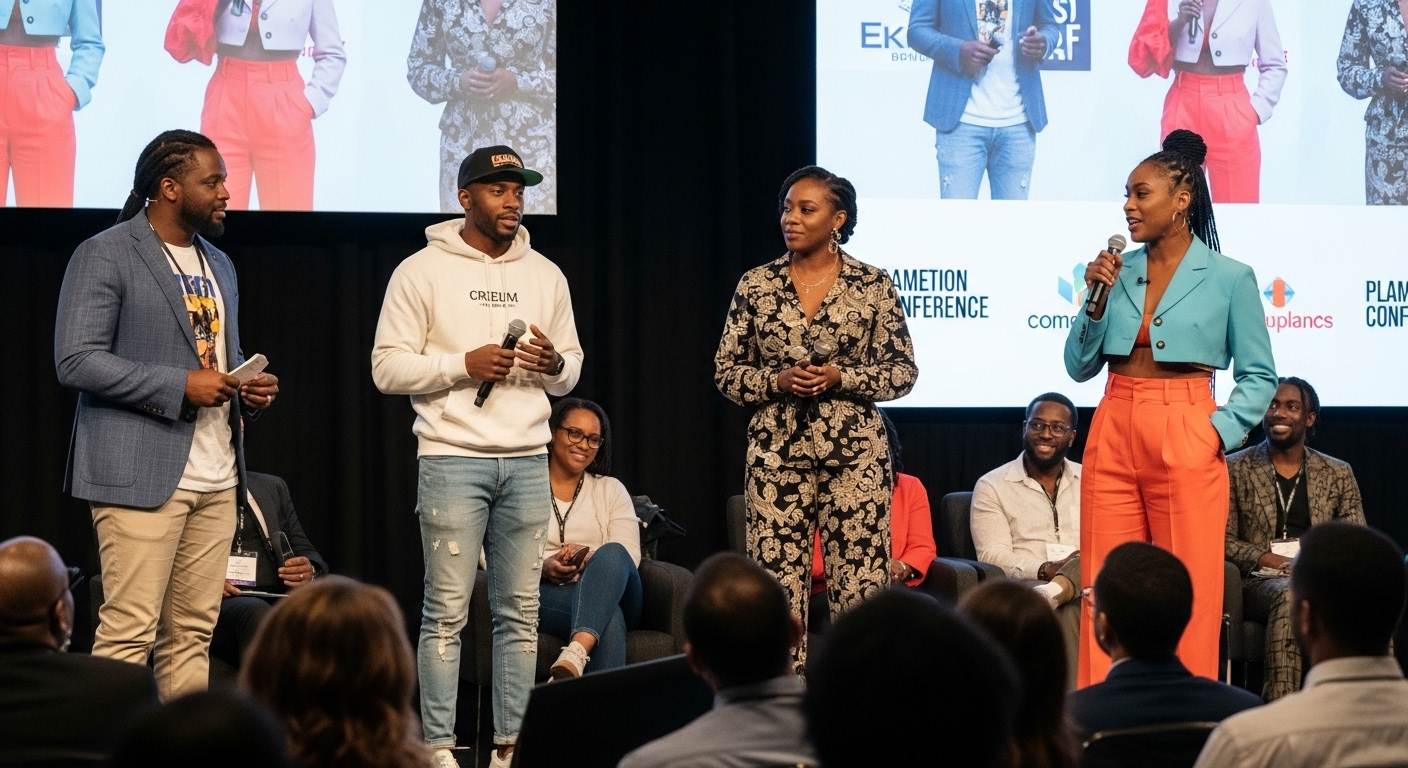
Johannesburg will host the 2026 edition of the Africa Live Entertainment Conference from 23 to 25 April, bringing together policymakers, artists, executives and investors from across the continent to confront a defining question for the industry: how to build a sustainable and globally competitive live entertainment ecosystem in Africa.
At a moment when international attention is increasingly shifting toward Africa’s creative economy, the conference arrives with both urgency and intent. It is designed not merely as a gathering of voices, but as a working platform aimed at addressing structural gaps that continue to limit the growth of live events, touring circuits and cross border collaboration across the continent.
Backed by formal endorsement from the National Council for Arts and Culture and the Lagos State Ministry of Tourism, Arts and Culture, the conference signals a growing alignment between policy frameworks and industry ambitions. That alignment is critical in a sector where regulatory bottlenecks, visa restrictions and fragmented infrastructure have long constrained mobility and scale.



Over three days, delegates will engage in a programme that moves between high level discussions and practical industry exchange. Key sessions will interrogate the state of African live entertainment, the realities of routing African artists into international markets, and the commercial frameworks that underpin rights, royalties and revenue generation. A flagship conversation on touring without borders is expected to draw particular attention, reflecting ongoing challenges around artist mobility and regional cooperation.
The conference will also host a Women in Live Arts brunch and a series of closed door roundtables, creating space for more candid engagement among stakeholders tasked with shaping policy, financing and operational frameworks. These forums are expected to move beyond surface level dialogue toward actionable outcomes, particularly around investment pathways and infrastructure development.
A strong lineup of speakers underscores the conference’s continental reach and industry relevance. Among the headline voices are Mo Abudu, founder of EbonyLife, Olivier Laouchez, and Sipho Dlamini, whose experience across global music markets brings a commercial lens to the conversation. Diplomatic representation, including Ninikanwa Olachi Okey Uche, further reflects the intersection between culture and international relations.
Also among the voices shaping these discussions is Walter Wanyanya, whose work as Director of the Jacaranda Festival places him at the intersection of cultural production and event management in Southern Africa. His participation brings a grounded, practitioner-led perspective to the conference, particularly in conversations around festival infrastructure and audience development. Wanyanya’s experience in curating large-scale public events in Zimbabwe offers valuable insight into the realities of operating within emerging markets, where creativity often outpaces institutional support. In a forum focused on long term industry viability, his contribution underscores the importance of locally rooted expertise in designing solutions that are both practical and scalable.

The broader roster of participants reads as a cross section of Africa’s live entertainment ecosystem, from festival directors and collecting societies to legal experts and touring executives. Figures such as Cuthbert Ncube and Lerato Sengadi bring perspectives that extend beyond performance into tourism, governance and intellectual property.
At the centre of the conference is a clear recognition that talent alone is no longer enough. Africa’s live entertainment sector, rich in creativity and cultural capital, must now contend with the practical realities of scale. Infrastructure deficits, limited access to financing and inconsistent policy environments continue to shape what is possible.

Founder and convener Anthonia Yetunde Alabi has framed the conference as a response to that reality, emphasising that the industry requires structure, collaboration and deliberate investment to unlock its full potential. Her position reflects a broader shift within the sector, where conversations are increasingly moving from celebration to strategy.
Johannesburg’s role as host city is also significant. As one of the continent’s leading cultural and commercial hubs, the city offers both the infrastructure and the symbolic weight required for such a convening. Its positioning within regional and global networks makes it a natural meeting point for stakeholders seeking to bridge African markets with international circuits.
As the conference approaches, expectations are measured but optimistic. The real test will not lie in the quality of conversation, but in what follows. Whether ALEC 2026 can translate dialogue into tangible outcomes, improved touring networks, clearer policy frameworks and increased investment, will determine its long term impact.
For now, the gathering represents a necessary step in a larger process. Africa’s live entertainment industry is no longer asking whether it has potential. The question is how that potential is organised, financed and sustained. In Johannesburg this April, that question will take centre stage.