Namibia has intensified efforts to broaden participation and equitable development within its mining sector through engagement with emerging and small-scale miners. The Ministry of Industries, Mines and Energy convened consultations with the Emerging Mining Association of Namibia (EMAN) on 7 January 2026, as part of a national drive to strengthen the mineral value chain and promote inclusive growth.
According to the Ministry, the initiative aligns with the government’s objective to ensure that mineral beneficiation and value addition remain locally anchored, contributing to sustainable industrialisation. The meeting represented a continuation of Namibia’s consultative approach to policymaking in the extractive industries, focusing on how smaller operators can play a more meaningful role in national development.
Minister of Industries, Mines and Energy Modestus Amutse emphasised that sustainable progress in the mining sector depends on active collaboration between the state and private operators. He underscored that the perspectives of miners working directly within the sector are vital for shaping effective and responsive policies.



“The development of Namibia’s mining sector cannot be achieved by the government alone,” Amutse noted, adding that policies must be grounded in the practical realities of mining communities and designed to support inclusive participation across all scales of operation.
The President of EMAN, Thekla Mutero, expressed readiness among emerging miners to deepen their contribution to Namibia’s mining economy. Mutero called for measures that enable small-scale operators to legally own, develop and benefit from the nation’s mineral wealth. She also highlighted persistent operational constraints, including restrictions on the use of modern mining equipment in areas classified as mining claims. Such limitations, she argued, impede productivity and hinder the sector’s evolution toward safer, regulated, and environmentally responsible practices.
EMAN proposed that the government improve access to mineral processing facilities and crushers, establish local geological and certification services, and facilitate the adoption of compliant modern mining technologies. These measures, the association stated, would enhance the competitiveness and sustainability of small-scale mining.
The organisation further welcomed the Ministry’s ongoing review of the Minerals (Prospecting and Mining) Act of 1992, noting that an updated legal framework should balance regulatory oversight with enabling mechanisms that support local enterprise growth while maintaining environmental accountability.
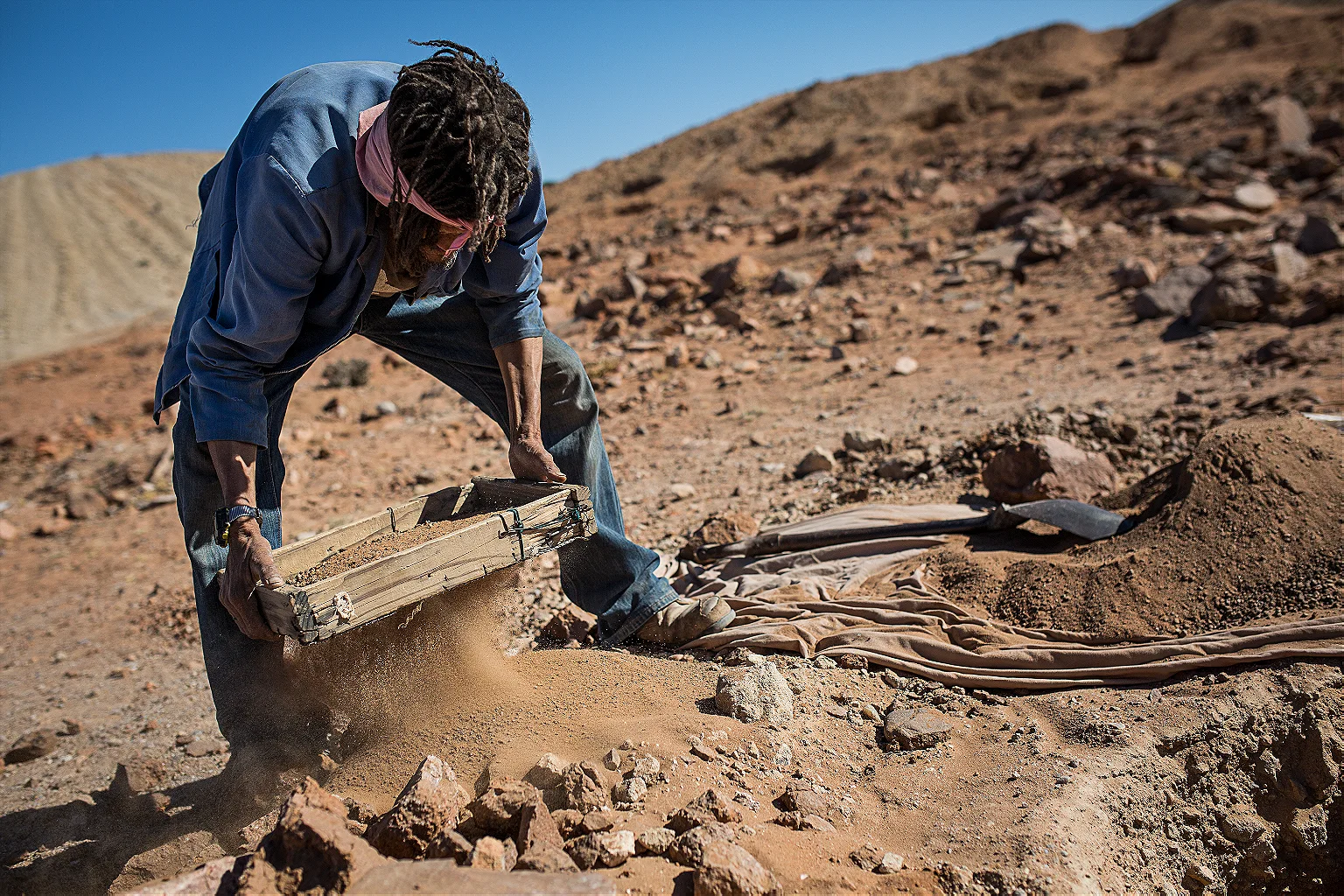
Small-scale mining in Namibia remains a vital part of the national economy, generating employment and livelihoods for rural communities. However, it continues to face systemic barriers, including limited access to financing, technical training, infrastructure, and markets. These challenges constrain productivity and reinforce disparities between large-scale and artisanal mining operations.

Namibia’s renewed focus on inclusive beneficiation reflects a broader continental shift toward resource governance models that prioritise local value creation and equitable development. Across Africa, similar initiatives are emerging to ensure that the extraction of mineral resources translates into long-term social and economic transformation, rather than remaining confined to primary exportation.
By fostering dialogue between policymakers and small-scale miners, Namibia is seeking to redefine how mineral wealth contributes to human development and national prosperity. The approach resonates with a Pan-African vision that recognises the continent’s resource endowment as a foundation for self-determined growth, rather than a source of dependency.
As the consultations continue, both government and industry stakeholders acknowledge that inclusivity, transparency and environmental stewardship will be essential in shaping the future of Namibia’s mining landscape. The country’s evolving mining policy offers a template for how African nations can pursue industrial development while ensuring that mineral wealth remains a shared national asset.