Friday, April 24, 2026
  • Login
The Southern African Times
  • Home
  • Southern Africa
  • Business
    • African Start ups
    • African Continental Free Trade Area
  • Technology
    • Lifestyle
      • Health
      • Culture
      • Food and Drink
      • Entertainment
  • Opinion
  • Sports
  • SAT Jobs
    • Events
  • About Us
    • Advertise with Us
    • Contact Us
No Result
View All Result
  • Home
  • Southern Africa
  • Business
    • African Start ups
    • African Continental Free Trade Area
  • Technology
    • Lifestyle
      • Health
      • Culture
      • Food and Drink
      • Entertainment
  • Opinion
  • Sports
  • SAT Jobs
    • Events
  • About Us
    • Advertise with Us
    • Contact Us
No Result
View All Result
The Southern African Times
No Result
View All Result
Home Opinion

Why Africa comes first in China’s diplomacy

by SAT Reporter
January 12, 2026
in Opinion
0
Why Africa comes first in China’s diplomacy

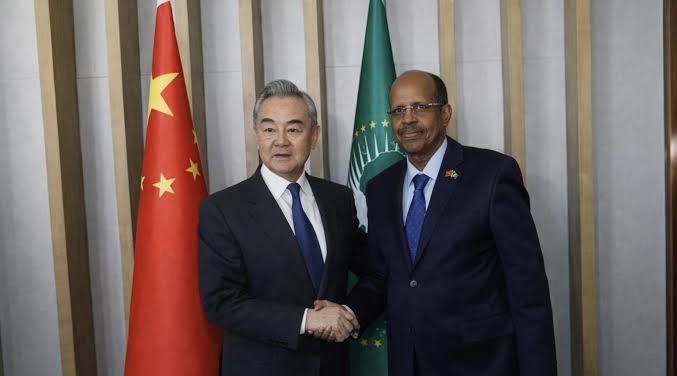
Chinese Foreign Minister Wang Yi’s annual practice of beginning the new year with a visit to Africa has become one of the most enduring features of China’s foreign policy. Once again, Africa hosts China’s first diplomatic engagement of the year, a tradition maintained for 36 consecutive years. This continuity reflects Africa’s structural importance within China’s broader diplomatic strategy and its vision for a cooperative Global South.

Wang’s trip underscored several priorities, including deepening political mutual trust, implementing follow-up actions from the Beijing Summit of the Forum on China-Africa Cooperation (FOCAC) and facilitating exchange and mutual learning between the “two great civilizations” of China and Africa. These goals serve as key factors to inject fresh impetus into building an all-weather China-Africa community with a shared future for the new era.

Africa’s centrality in China’s diplomacy is rooted in shared historical experience and long-term strategic alignment. During the mid-20th century, China and African countries forged bonds through common struggles against colonialism and imperialism. This political solidarity translated into enduring diplomatic trust, symbolized by African states’ pivotal role in restoring the lawful seat of the People’s Republic of China at the United Nations in 1971. That history continues to shape China-Africa relations today, reinforcing a narrative of mutual respect and South-South cooperation.


ADVERTISEMENT

With 54 member states in the United Nations, Africa constitutes the largest regional voting bloc, giving the continent significant influence in global governance debates. Demographically, it has the world’s youngest population, and UN projections suggest that Africa will account for more than a quarter of global population growth by 2050. Economically, Africa’s push for industrialization and regional integration anchored in initiatives such as the African Continental Free Trade Area aligns with China’s own experience in development-led transformation.

China’s engagement with Africa has been institutionalized through mechanisms such as the FOCAC, established in 2000. Over the past two decades, FOCAC has facilitated cooperation in infrastructure, public health, education, agriculture and digital connectivity. Data show that Chinese-financed infrastructure projects have contributed significantly to transport, energy and telecommunications capacity across the continent, addressing bottlenecks long identified by African policymakers themselves.

But as China-Africa relations deepen, their sustainability increasingly depends on societal foundations rather than just intergovernmental agreements. In this context, the China-Africa Year of People-to-People Exchanges, to be formally launched during Wang’s visit at the African Union headquarters in Ethiopia, carries particular significance. Designed to coincide with the 70th anniversary of diplomatic relations between China and Africa, this initiative aims to broaden and deepen cultural and social cooperation between the two societies.

In an international environment marked by geopolitical rivalry, information distortion and civilizational anxiety, people-to-people exchanges function as a crucial stabilizer by building trust where formal diplomacy alone cannot. Education, culture, youth exchanges, tourism, media cooperation and think tank dialogue form the core of these interactions.

China has become one of the leading destinations for African students, with thousands enrolled annually through government scholarships and self-funded programs. These students serve as long-term bridges between societies, shaping perceptions through lived experience.

At the same time, Chinese medical teams, agricultural experts, engineers and volunteers working in African communities engage directly with local populations. These grassroots interactions help demystify China for African societies while enabling Chinese participants to better understand Africa’s social realities. Such everyday engagement counters stereotypes and reduces the risk of misperception that can undermine long-term cooperation.

Crucially, people-to-people exchanges facilitate mutual learning between civilizations at a moment when the international order is under strain. China’s development trajectory, particularly its emphasis on poverty reduction, infrastructure investment and state capacity, offers valuable reference points for African countries seeking development paths suited to their own conditions. This two-way learning challenges the idea that modernization follows a single, Western-defined model.

More broadly, deepening civilizational exchange between China and Africa contributes to the collective rise of the Global South. United Nations Development Programme analyses increasingly highlight South-South cooperation as a vital driver of inclusive growth and global development. When societies of the Global South engage directly by sharing experiences, narratives and innovations, they strengthen their collective capacity to shape international norms, rather than remain rule-takers in a system dominated by others.

In an era when global politics is often framed through ideological confrontation, China-Africa engagement offers an alternative logic centered on dialogue, pluralism and development-first cooperation. The African Union’s Agenda 2063, China’s Global Development Initiative, Global Civilizational Initiative and related frameworks emphasize people-centered growth, cultural confidence and respect for national development choices.

Wang’s visit to Africa should therefore be understood not merely as diplomatic routine, but as a reaffirmation of a long-term strategic and civilizational commitment. By consistently placing Africa first in its diplomacy and elevating people-to-people exchanges, China signals that its partnership with Africa is intended to be durable, adaptive and grounded in societal ties.

Stephen Ndegwa is the executive director of South-South Dialogues, a Nairobi-based communications development think tank. The article reflects the author’s opinions and not necessarily the views of The Southern African Times.

Tags: Addis AbabaAfrica China partnershipAfrica developmentAfrica foreign policyAfrica industrializationAfrica-China communityAfrican UnionAgenda 2063Beijing SummitChina foreign ministerChina infrastructure projectsChina-Africa relationsChinese diplomacycivilizational dialoguedevelopment cooperationeducation and culture exchangeFOCACgeopolitical relationsGlobal Civilizational InitiativeGlobal Development InitiativeGlobal Southmutual learningpeople-to-people exchangesSouth-South cooperationWang Yi
Previous Post

Namibia Engages Emerging Miners to Advance Inclusive Growth and Mineral Beneficiation

Next Post

Gold and Silver Reach Historic Highs as Global Uncertainty Deepens

SAT Reporter

Related Posts

Feeding the Future: Why AI and Agriculture Must Work Together
Opinion

Feeding the Future: Why AI and Agriculture Must Work Together

by Sonny Iroche
April 19, 2026
Julius Malema Sentenced to Five Years in Firearm discharge case
Opinion

Malema’s Sentence: A Test of South Africa’s Rule of Law in a Polarized Age

by Kundai Vambe
April 18, 2026
Zambia’s Copper and the Social Cost of Extraction Deals
The Editorial Board

Zambia’s Copper and the Social Cost of Extraction Deals

by Nothando Ndlovu
April 17, 2026
Op-Ed by Yemi Osinbajo, Former Vice President of Nigeria: Africa Is Losing the Iran War
Opinion

Op-Ed by Yemi Osinbajo, Former Vice President of Nigeria: Africa Is Losing the Iran War

by SAT Reporter
April 13, 2026
A Superpower Under Strain: Iran and the Limits of American Power
Opinion

A Superpower Under Strain: Iran and the Limits of American Power

by Kundai Vambe
April 8, 2026
Next Post
Silver Leads the 2025 Global Commodities Market as Energy and Agricultural Prices Struggle

Gold and Silver Reach Historic Highs as Global Uncertainty Deepens

Browse by Category

  • Africa AI
  • African Continental Free Trade Area
  • African Debt
  • African Start ups
  • Agriculture
  • AI Africa
  • Algeria
  • All News
  • Analysis
  • Angola
  • Arts / Culture
  • Asia
  • Botswana
  • BOTSWANA
  • BREAKING NEWS
  • BRICS
  • Burkina Faso
  • Burundi
  • Business
  • Business
  • Business Wire
  • Cameroon
  • Central Africa
  • Chad
  • China
  • Climate Change
  • Climate Changev
  • Community
  • Congo Republic
  • Conservation
  • Côte d’Ivoire
  • COVID 19
  • CRYPTOCURRENCY
  • Culture
  • Democratic Republic of Congo
  • Diplomacy
  • Eastern Africa
  • Economic Development
  • Economy
  • Education
  • Egypt
  • Elections 2024
  • Energy
  • Entertainment
  • Environment
  • Eritrea
  • Ethiopia
  • Europe
  • Fashion
  • Feature
  • Finance
  • Financial Inclusion
  • Food
  • Food and Drink
  • Foods
  • GABON
  • Ghana
  • Global
  • Global Africa
  • Guinea
  • Health
  • Immigration
  • in Southern Africa
  • International news
  • International Relations
  • Ivory Coast
  • Just In
  • Kenya
  • Lesotho
  • Libya
  • Life Style
  • Lifestyle
  • Literature
  • Malawi
  • Malawi
  • Mali
  • Markets
  • Mauritius
  • Middle East
  • Mining in Africa
  • Morocco
  • Mozambique
  • Namibia
  • niger
  • Niger
  • Nigeria
  • North Africa
  • North-Eastern Africa
  • Obituaries
  • Obituary
  • Opinion
  • PARTNER CONTENT
  • Politics
  • Property
  • Racism
  • Rwanda
  • Rwanda
  • SADC
  • SAT Interviews
  • SAT Investigation
  • SAT Jobs
  • Saudi Arabia
  • Senegal
  • Seychelles
  • Somaliland
  • South Africa
  • South Sudan
  • Sports
  • Startup Africa
  • STOCK EXCHANGE
  • Sudan
  • Sustainability
  • Sustainablity
  • Tanzania
  • Technology
  • Telecommunications
  • The Editorial Board
  • The Power Of She
  • Togo
  • Trade
  • Travel
  • Travel
  • Tunisia
  • Uganda
  • Uncategorized
  • Wealth
  • West Africa
  • World
  • World
  • ZAMBIA
  • Zambia
  • ZIMBABWE
  • Zimbabwe

Browse by Tags

#NewsUpdate #SouthAfrica #SouthernAfricanTimes #TheSouthernAfricanTimes AfCFTA africa African Continental Free Trade Area African development African Development Bank African economies African economy African Union Agriculture Angola Botswana Business China Climate change Cyril Ramaphosa Economic Development economic growth energy transition fiscal policy food security industrialisation Inflation Infrastructure Development International relations Investment Kenya Mozambique Namibia news Nigeria Regional Integration renewable energy Rwanda SADC South Africa Southern Africa sustainable development Tanzania United States Zambia Zimbabwe
ADVERTISEMENT

WHO WE ARE

The Southern African Times is a regional bloc digital newspaper that covers Southern African and world news. The paper also gives a nuanced analysis on news and covers a wide range of reporting which include sports, entertainment, foreign affairs, arts and culture.

Welcome Back!

Login to your account below

Forgotten Password?

Retrieve your password

Please enter your username or email address to reset your password.

Log In

  • Home
  • Southern Africa
  • Business
    • African Start ups
    • African Continental Free Trade Area
  • Technology
    • Lifestyle
      • Health
      • Culture
      • Food and Drink
      • Entertainment
  • Opinion
  • Sports
  • SAT Jobs
    • Events
  • About Us
    • Advertise with Us
    • Contact Us
Are you sure want to unlock this post?
Unlock left : 0
Are you sure want to cancel subscription?