


Friday, April 17, 2026
  • Login
The Southern African Times
  • Home
  • Southern Africa
  • Business
    • African Start ups
    • African Continental Free Trade Area
  • Technology
    • Lifestyle
      • Health
      • Culture
      • Food and Drink
      • Entertainment
  • Opinion
  • Sports
  • SAT Jobs
    • Events
  • About Us
    • Advertise with Us
    • Contact Us
No Result
View All Result
  • Home
  • Southern Africa
  • Business
    • African Start ups
    • African Continental Free Trade Area
  • Technology
    • Lifestyle
      • Health
      • Culture
      • Food and Drink
      • Entertainment
  • Opinion
  • Sports
  • SAT Jobs
    • Events
  • About Us
    • Advertise with Us
    • Contact Us
No Result
View All Result
The Southern African Times
No Result
View All Result
Home Opinion The Editorial Board

Zambia’s Copper and the Social Cost of Extraction Deals

by Nothando Ndlovu
April 17, 2026
in The Editorial Board
0
Zambia’s Copper and the Social Cost of Extraction Deals

There are moments when the language of power becomes so blunt that it stops pretending to be anything else. Reports of a policy memo linked to Marco Rubio see: Bureau of African Affairs—circulating in diplomatic and policy circles—offer one such moment. Whether or not every detail withstands scrutiny, the logic it describes feels entirely at home in the current age of resource competition: access to critical minerals is non-negotiable, and everything else is negotiable.

Zambia happens to sit on what the world suddenly cannot do without. Copper, in vast quantities, runs through its soil; cobalt and lithium shadow it. These are not obscure commodities. They are the quiet infrastructure of the energy transition—the metals inside electric vehicles, power grids, and battery systems that promise a cleaner future. If the twenty-first century is to be electrified, it will be built, in part, from Zambian rock.

And yet, Zambia’s importance does not translate into autonomy. This is the enduring contradiction of the extractive economy: countries that produce what the world needs most often have the least control over the terms on which it is taken.

The reported memo lays out, in unusually stark terms, a strategy of pressure—one that appears to link cooperation in the mining sector with continued access to U.S.-backed health programs. Zambia’s HIV/AIDS treatment infrastructure, like much of sub-Saharan Africa’s, has been sustained in part through initiatives such as PEPFAR. The suggestion that such support could become contingent—less a commitment than a bargaining chip—marks a shift not just in tone but in method. It collapses the distance between humanitarian assistance and strategic demand.

This is not without precedent. Great powers have long used economic tools to secure political ends. What feels different is the candor. The choreography of diplomacy—its careful phrasing, its gestures toward mutual interest—gives way here to something closer to transaction. The message, stripped of embellishment, is simple: access in exchange for compliance, with consequences calibrated for visibility.

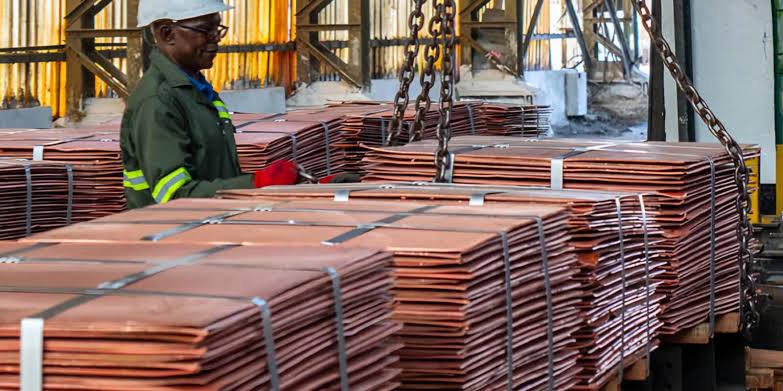
Zambia’s position makes such pressure effective. For decades, its economy has been organized around extraction without transformation. Copper dominates exports, but refining and manufacturing take place elsewhere, where margins widen and value accumulates. The country remains tethered to the lowest segment of a value chain whose upper tiers—processing, technology, production—are controlled abroad. It is a familiar pattern, one that dates back to earlier eras of resource dependency, updated now for a decarbonizing world.

Efforts to alter this arrangement have been uneven. Attempts to renegotiate mining terms or increase state participation have collided with investor resistance, legal disputes, and the ever-present risk of capital flight. Meanwhile, external partners have multiplied. China has become deeply embedded in Zambia’s mining landscape, financing infrastructure and securing supply, often under conditions that critics argue replicate, rather than resolve, dependency.

In this context, leverage becomes a complicated thing. Zambia has what everyone wants, but not the means to dictate how it is used. Its wealth attracts attention, but its constraints invite pressure. The same minerals that make it indispensable also make it vulnerable.

There is a tendency, in discussions of the green transition, to assume that demand for critical resources will naturally empower those who possess them. The reality is less reassuring. Without the capacity to process, to manufacture, or to finance independently, resource abundance does not guarantee influence. It can just as easily intensify competition over control.

What is at stake, then, is not simply the outcome of a single negotiation, but the shape of a broader pattern. If access to essential minerals is increasingly secured through asymmetric pressure (economic, political, or otherwise) then the transition to a new energy system may reproduce many of the inequities of the old one.

Zambia’s predicament is not unique. It is, in many ways, emblematic. Across the continent, countries rich in lithium, cobalt, and rare earths are being drawn into a tightening web of strategic interest. Institutions like the African Union have articulated visions of collective bargaining and value-chain development, but translating those ambitions into policy has proved difficult.

The question, ultimately, is not whether powerful states will pursue their interests. They will. It is whether countries like Zambia can build the economic and institutional capacity to pursue their own, and to do so on terms that are not dictated by urgency alone.

Until then, the ground beneath Zambia will continue to carry more than minerals. It will carry the weight of a negotiation in which the stakes are measured not only in tons of copper, but in the limits of sovereignty itself.

Tags: #AfricanEconomies#AfricaRising#CopperEconomy#CriticalMinerals#EconomicSovereignty#EnergyTransition#ExtractiveIndustries#GlobalSouth#GreenTransition#MarcoRubio#MiningPolicy#MiningSector#PEPFAR#ResourceNationalism#ResourcePolitics#SocialLicenceToOperate#USAfricaRelations#ValueChainsGeopoliticsZambia
Previous Post

Hundreds of Thousands Gather in Douala for Pope Leo’s Mass

Nothando Ndlovu

Related Posts

Gaza: Four Al Jazeera Journalists Killed – Southern African Times Condemns Genocide, Demands Ceasefire
The Editorial Board

Gaza: Four Al Jazeera Journalists Killed – Southern African Times Condemns Genocide, Demands Ceasefire

by The Editorial Board
August 13, 2025
The Great Disinformation Campaign: US Narratives on China in Africa
Opinion

The Great Disinformation Campaign: US Narratives on China in Africa

by SAT Reporter
January 18, 2025
The Southern African Times: Debunking Global North Propaganda on China-Africa Relations
The Editorial Board

The Southern African Times: Debunking Global North Propaganda on China-Africa Relations

by The Editorial Board
April 25, 2024
The Race for Africa’s Mineral Resources: A Call for Strategic Partnerships
The Editorial Board

The Race for Africa’s Mineral Resources: A Call for Strategic Partnerships

by The Editorial Board
April 25, 2024

Browse by Category

  • Africa AI
  • African Continental Free Trade Area
  • African Debt
  • African Start ups
  • Agriculture
  • AI Africa
  • Algeria
  • All News
  • Analysis
  • Angola
  • Arts / Culture
  • Asia
  • Botswana
  • BOTSWANA
  • BREAKING NEWS
  • BRICS
  • Burkina Faso
  • Burundi
  • Business
  • Business
  • Business Wire
  • Cameroon
  • Central Africa
  • Chad
  • China
  • Climate Change
  • Climate Changev
  • Community
  • Congo Republic
  • Conservation
  • Côte d’Ivoire
  • COVID 19
  • CRYPTOCURRENCY
  • Culture
  • Democratic Republic of Congo
  • Diplomacy
  • Eastern Africa
  • Economic Development
  • Economy
  • Education
  • Egypt
  • Elections 2024
  • Energy
  • Entertainment
  • Environment
  • Eritrea
  • Ethiopia
  • Europe
  • Fashion
  • Feature
  • Finance
  • Financial Inclusion
  • Food
  • Food and Drink
  • Foods
  • GABON
  • Ghana
  • Global
  • Global Africa
  • Guinea
  • Health
  • Immigration
  • in Southern Africa
  • International news
  • International Relations
  • Ivory Coast
  • Just In
  • Kenya
  • Lesotho
  • Libya
  • Life Style
  • Lifestyle
  • Literature
  • Malawi
  • Malawi
  • Mali
  • Markets
  • Mauritius
  • Middle East
  • Mining in Africa
  • Morocco
  • Mozambique
  • Namibia
  • Niger
  • niger
  • Nigeria
  • North Africa
  • North-Eastern Africa
  • Obituaries
  • Obituary
  • Opinion
  • PARTNER CONTENT
  • Politics
  • Property
  • Racism
  • Rwanda
  • Rwanda
  • SADC
  • SAT Interviews
  • SAT Investigation
  • SAT Jobs
  • Saudi Arabia
  • Senegal
  • Seychelles
  • South Africa
  • South Sudan
  • Sports
  • Startup Africa
  • STOCK EXCHANGE
  • Sudan
  • Sustainability
  • Sustainablity
  • Tanzania
  • Technology
  • Telecommunications
  • The Editorial Board
  • The Power Of She
  • Togo
  • Trade
  • Travel
  • Travel
  • Tunisia
  • Uganda
  • Uncategorized
  • Wealth
  • West Africa
  • World
  • World
  • Zambia
  • ZAMBIA
  • ZIMBABWE
  • Zimbabwe

Browse by Tags

#NewsUpdate #SouthAfrica #SouthernAfricanTimes #TheSouthernAfricanTimes AfCFTA africa African Continental Free Trade Area African development African Development Bank African economies African economy African Union Agriculture Angola Botswana Business China Climate change Cyril Ramaphosa Economic Development economic growth energy transition fiscal policy food security industrialisation Inflation Infrastructure Development International relations Investment Kenya Mozambique Namibia news Nigeria Regional Integration renewable energy Rwanda SADC South Africa Southern Africa sustainable development Tanzania United States Zambia Zimbabwe
ADVERTISEMENT

WHO WE ARE

The Southern African Times is a regional bloc digital newspaper that covers Southern African and world news. The paper also gives a nuanced analysis on news and covers a wide range of reporting which include sports, entertainment, foreign affairs, arts and culture.

Welcome Back!

Login to your account below

Forgotten Password?

Retrieve your password

Please enter your username or email address to reset your password.

Log In

  • Home
  • Southern Africa
  • Business
    • African Start ups
    • African Continental Free Trade Area
  • Technology
    • Lifestyle
      • Health
      • Culture
      • Food and Drink
      • Entertainment
  • Opinion
  • Sports
  • SAT Jobs
    • Events
  • About Us
    • Advertise with Us
    • Contact Us
Are you sure want to unlock this post?
Unlock left : 0
Are you sure want to cancel subscription?