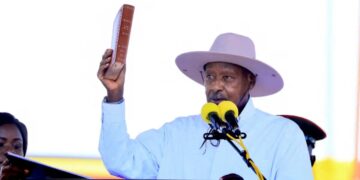
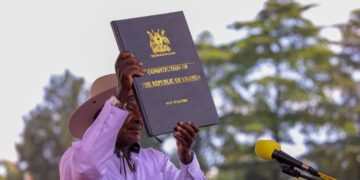
Kenya’s Deputy President, Rigathi Gachagua, has been formally removed from office following a decisive impeachment vote in the Senate. This historic development comes after 53 senators voted in favour of Gachagua’s ousting, with 13 opposing the motion, marking the culmination of a fraught trial that has gripped the nation’s political landscape for weeks.
The impeachment was driven by accusations of undermining national unity, a key charge among the 11 grounds brought forward by Kibwezi West MP Mwengi Mutuse. Of these charges, five—grounds one, four, five, six, and nine—were upheld by the Senate, leading to Gachagua’s ousting.
Senate Proceedings and Tensions Amid Gachagua’s Absence



Senate Speaker Amason Kingi formally announced the results of the vote, declaring that Gachagua had been removed from office with immediate effect. “The Senate has resolved to remove from office the Deputy President Rigathi Gachagua by way of impeachment. Now henceforth, the Deputy President ceases to hold office,” Kingi stated.

The Senate proceedings had been marked by significant tension, particularly after Gachagua’s sudden hospitalisation due to severe chest pains. His lead counsel, Senior Advocate Paul Muite, had requested an adjournment, pleading for more time for Gachagua to recover and provide evidence in his defence. However, Kingi rejected the adjournment request, stating that the trial would continue in the Deputy President’s absence.
“We are aware that this Senate made a decision to hear the charges in plenary, so we are proceeding under sub-article 6 (b), and this House is obligated to accord the deputy president an opportunity to be heard,” Muite argued. He also emphasised that the removal of a Deputy President was a matter of significant national importance and urged the Senate to consider the gravity of the decision.
Nonetheless, the majority of senators voted against delaying the proceedings, resulting in the impeachment trial continuing without Gachagua’s personal defence.
Charges Against Gachagua: A Combination of Corruption Allegations and Political Tensions
The impeachment case against Deputy President Gachagua has been complex and multifaceted, blending allegations of corruption with claims of undermining national unity. A key point of contention was the assertion that Gachagua had accumulated a personal fortune of Ksh5.2 billion (approximately £28 million) since assuming office. This figure, though highly contested, formed one of the 11 impeachment grounds and was hotly debated during the Senate hearings.
Kibwezi West MP Mutuse, the primary mover of the impeachment motion, admitted under cross-examination that the figure was based on an estimate of current land values and the worth of properties allegedly linked to Gachagua. This prompted significant debate in the Senate, with Gachagua’s legal team questioning the accuracy of the claims and challenging Mutuse to substantiate his evidence.
In addition to the corruption accusations, Gachagua was also implicated in a separate scandal involving the Kenya Medical Supplies Authority (KEMSA). Former KEMSA CEO Dr Andrew Mulwa testified before the Senate, alleging that Gachagua had interfered in the awarding of a Ksh3.7 billion tender for malaria nets, pressuring him to hand over sensitive documents to one of his agents.
Mulwa’s testimony painted a picture of coercion, claiming that Gachagua’s actions were unprecedented in his 15 years of public service. “In my 15 years of public service, I had never been asked to do that, and, therefore, I felt coerced to leave the business that I had for the day, go to the EACC, and retrieve the documents,” Mulwa stated.
Senate Divisions and Political Ramifications
The Senate impeachment vote was emblematic of the political fault lines currently dividing Kenya’s political elite. While 53 senators voted to impeach, 13 voted against, and tensions ran high throughout the proceedings.
The Senate is largely dominated by President William Ruto’s United Democratic Alliance (UDA), with 32 senators, followed by the opposition Orange Democratic Movement (ODM) with 20 senators. Former President Uhuru Kenyatta’s Jubilee Party, a minor player in the proceedings, holds five Senate seats, while the Wiper Party and other smaller factions control a handful of votes between them.
Political analysts are closely watching how Gachagua’s removal will affect the relationship between President William Ruto and the political forces aligned with opposition leader Raila Odinga. Gachagua, who was a close ally of President Ruto, has been a polarising figure within Kenya’s political arena, often viewed as both a staunch defender of the administration and a controversial figure accused of undermining national unity.
Impeachment Marks a Turning Point in Kenyan Politics
The successful impeachment of Deputy President Rigathi Gachagua marks a dramatic turning point in Kenyan politics. This is the first time a sitting deputy president has been removed from office through such a process. While Kenya’s political system allows for the replacement of an impeached deputy president, the road ahead remains uncertain for President Ruto, who now faces the task of finding a successor while navigating the deep political divisions that Gachagua’s removal has left in its wake.

As Kenya moves forward from this unprecedented event, the impeachment has set a critical precedent for holding top political officials accountable, even in the face of illness, political wrangling, and significant resistance.