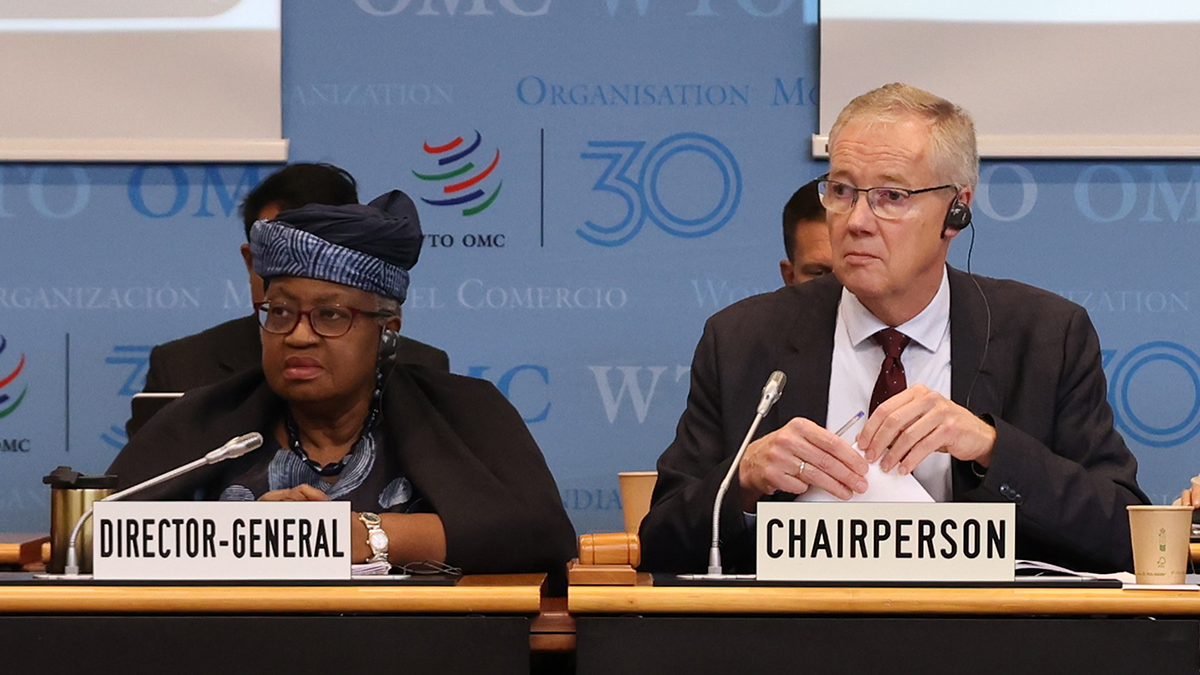
Director-General Ngozi Okonjo-Iweala has urged members of the World Trade Organization (WTO) to remain constructive and collaborative in their approach to advancing critical trade negotiations. Speaking at the General Council meeting in Geneva on 15 October, Okonjo-Iweala emphasised the importance of achieving concrete outcomes in key areas of agriculture, fisheries subsidies, development, and dispute settlement reform.
The Director-General, who also serves as the Chair of the Trade Negotiations Committee, underscored that progress was within reach on several fronts, but cautioned that continued diligence and compromise were essential to overcoming persistent impasses that have plagued the WTO’s agenda for years.
“We need to continue to be constructive and to keep in our sights that we are here to achieve outcomes,” Okonjo-Iweala told WTO members, adding that the recent negotiations had shown signs of promise, particularly in agriculture and fisheries subsidies.



Agriculture negotiations, long a contentious area within the WTO, received particular attention. Okonjo-Iweala expressed her appreciation for the “positive discussions” held at the Trade Negotiations Committee meeting on 10 October, where members deliberated over proposals aimed at advancing talks on agricultural reform.
Together with General Council Chair Ambassador Petter Ølberg of Norway and the Chair of the agriculture negotiations, Ambassador Alparslan Acarsoy of Türkiye, Okonjo-Iweala is set to convene further discussions with WTO members to chart a path forward.
“We can’t accept this important negotiation to be stalemated,” Okonjo-Iweala remarked, pointing out that the negotiations had been gridlocked for over two decades. “Let’s take it seriously and find a way through,” she urged, hinting at the need for fresh thinking to resolve the issues that have kept agricultural talks in limbo.

On fisheries subsidies, where the WTO achieved a breakthrough with the Agreement on Fisheries Subsidies in 2022, Okonjo-Iweala noted encouraging progress. To date, 25 further acceptances are needed for the Agreement to come into force, with several member states expected to deliver their acceptances in the near future.
The Director-General further indicated that members were close to reaching consensus on the second phase of the fisheries deal, which aims to curtail subsidies that contribute to overcapacity and overfishing. However, a few unresolved issues remain. “There are some issues, not many, and some members who need more work to be done so that we can push towards a conclusion,” Okonjo-Iweala said, suggesting that final agreements could be imminent if diplomatic efforts continue in good faith.
Okonjo-Iweala also reported positive movement in development negotiations, particularly on the matter of special and differential treatment for developing countries, which was discussed during the 11 October meeting of the Committee on Trade and Development.
The Director-General expressed her satisfaction with the resumption of work on this front, emphasising the need to maintain momentum and achieve tangible outcomes in Geneva, rather than delaying decisions until the next WTO Ministerial Conference.
Dispute settlement reform remains a priority, with Okonjo-Iweala reiterating that this issue has broad support across the WTO’s membership. She highlighted that reforming the system has been a “collective desire” voiced by all members, noting that the topic had also featured prominently in discussions at the recent G20 meetings and the UN General Assembly.
While the road to reform remains challenging, the Director-General encouraged members to continue working towards a solution. “It requires a lot of listening, but slow and steady is what we need until we can get to where we want,” she noted, advocating for a methodical and patient approach to reforming the WTO’s dispute resolution mechanisms.
Discussions around investment facilitation for development (IFD) also continue, with proponents seeking to incorporate the IFD Agreement into the WTO framework. Okonjo-Iweala said she welcomed the “willingness to dialogue” displayed by members at the General Council meeting and expressed optimism that further progress could be made in finding a solution agreeable to all.
In sum, Okonjo-Iweala’s message was clear: the WTO faces crucial decisions on several long-standing and contentious issues, but with continued constructive engagement and compromise, the organisation has the potential to achieve meaningful outcomes in the near future.