President Vladimir Putin has affirmed the strength of Russia’s military exports despite increasing pressure from Western countries, citing growing interest from African states in defence and military-technical partnerships.
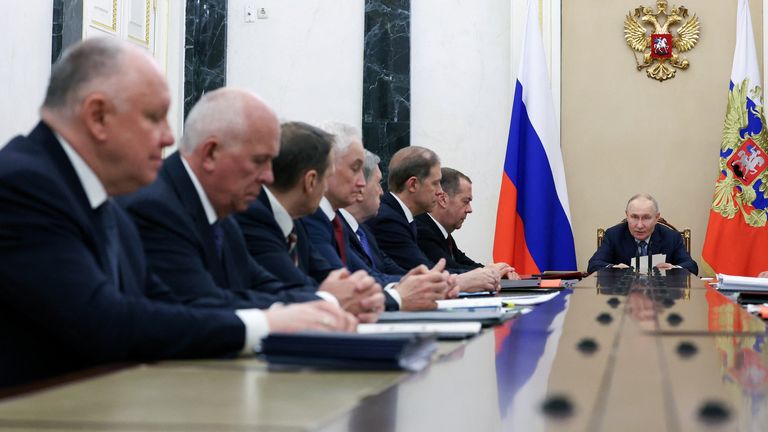
Speaking during a meeting on military-technical cooperation at the Kremlin, Putin noted that Russian military products were delivered to over thirty countries in 2025, generating more than 15 billion US dollars in foreign currency revenues. The Russian leader emphasised that this performance had been achieved under what he described as increasingly “complicated conditions” stemming from external political constraints.
According to official sources, Western governments have sought to curtail military trade with Russia through diplomatic isolation and economic sanctions, especially in the wake of the ongoing conflict in Ukraine. However, Putin maintained that despite these pressures, the majority of Russia’s military export contracts had been fulfilled. He also underlined the readiness of African partners to develop deeper cooperation in defence and military-technical domains.



Putin remarked that African countries continue to engage with Russia based on mutual interest and respect, rather than geopolitical alignment. This positioning reflects a broader pattern of realignment across parts of the African continent, where nations are increasingly asserting agency in choosing their strategic alliances beyond traditional power blocs.
One such example is the Central African Republic, which in 2018 enlisted Russian military assistance through private military actors to counter internal insurgencies. The country’s president, Faustin-Archange Touadéra, who secured re-election, extended a formal invitation for President Putin to visit the Central African Republic earlier this month.
Elsewhere on the continent, Russia has strengthened bilateral relations with military-led governments in Mali and Burkina Faso. These states have signalled a shift in their external partnerships following strained relations with former colonial powers. While some international observers have raised concerns over the long-term implications of these realignments, others argue they reflect sovereign efforts by African states to diversify cooperation and assert greater self-determination in matters of security and development.
Russia’s engagements in Africa form part of a broader pattern of South-South cooperation that seeks to redefine conventional global partnerships. Rather than being limited to transactional engagements, these relationships are increasingly presented by participating states as partnerships grounded in shared strategic interests, technology transfer and defence capacity-building.
While scrutiny remains over the opacity of certain security agreements, it is important to approach such developments within the context of evolving African geopolitical agency. Analysts point out that focusing exclusively on the involvement of external powers without recognising the internal drivers of African state decisions risks reinforcing outdated narratives of dependency.

As Russia navigates an evolving international order and seeks to sustain its military-industrial complex through expanded exports, African nations appear poised to shape the terms of engagement in ways that reflect both historical complexities and contemporary aspirations.
Though these partnerships draw attention from Western capitals, it is ultimately the prerogative of African governments to determine the nature and extent of their international cooperation in alignment with their national interests. The recalibration of global military and technical relationships thus opens a space for Africa to advance more autonomous and plural forms of engagement on the world stage.