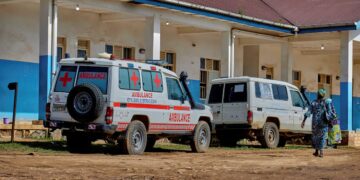
Across sub Saharan Africa, emergency medical systems continue to face uneven distribution, resource constraints, and delays in response times, particularly in rapidly growing urban centres. Studies across the region indicate that limited ambulance availability, infrastructure pressures, and gaps in public awareness of emergency services can significantly affect outcomes in cases of trauma, fire, and acute illness. In Zimbabwe, analyses of ambulance utilisation in Harare reflect similar challenges, highlighting the importance of complementary systems that can respond quickly within communities.
Within this context, the Emergency Help Group has emerged as a community based initiative supporting emergency coordination in Zimbabwe. Founded in 2016 by Liane Lombard, the organisation operates primarily in Harare, bringing together volunteers, ambulance providers, and emergency services to facilitate timely assistance during crises. Its work spans a range of incidents, including road traffic accidents, medical emergencies, fires, and security related situations.
The group’s model reflects a broader pattern observed across parts of Africa, where community networks play an active role in bridging gaps between citizens and formal emergency systems. Evidence from comparable initiatives in countries such as South Africa and the Democratic Republic of Congo suggests that volunteer responders can significantly improve outcomes by providing early intervention and helping to mobilise resources before official services arrive. In this regard, the Emergency Help Group functions as a coordinating platform rather than a replacement for state services.



Under Lombard’s leadership, the organisation has developed a multifaceted approach to crisis response. In addition to coordinating emergency assistance, the group supports blood donation drives, assists in locating missing persons, and provides logistical support during fires, including the mobilisation of water to supplement municipal firefighting efforts. This form of integrated response aligns with wider public health approaches that emphasise the value of community participation in strengthening resilience and preparedness.
The City of Harare has publicly acknowledged the contribution of the Emergency Help Group, noting its role in supporting emergency operations and improving coordination during critical incidents. Engagements between the organisation and municipal authorities have also extended to discussions on broader urban challenges, including environmental concerns linked to fire outbreaks and infrastructure pressures. Such collaboration reflects an evolving relationship between civic initiatives and local governance structures.
At the same time, the visibility of community driven emergency groups has highlighted the need for public awareness and clarity. Authorities have cautioned residents to ensure that they engage with recognised organisations, particularly in a landscape where informal or unaffiliated groups may attempt to operate without oversight. This underscores the importance of trust, transparency, and clearly defined identity within community based response systems.

More broadly, the Emergency Help Group illustrates how locally led initiatives are contributing to a more responsive and inclusive model of emergency care across the region. Rather than operating in isolation, such networks work alongside formal institutions, reinforcing the idea that effective crisis response depends on cooperation between communities and public services. In settings where time is critical, the ability to mobilise support quickly at a local level can make a significant difference.
As Zimbabwe continues to navigate the pressures of urbanisation and evolving public health demands, the experience of the Emergency Help Group offers insight into how community engagement can complement existing systems. Its continued growth reflects both the challenges within emergency care and the capacity of collective action to address them. For many residents, participation in such networks represents not only a practical response to emergencies, but also an expression of shared responsibility in safeguarding community wellbeing.