The World Health Organization has confirmed six cases of Andes virus linked to a cruise vessel travelling from Cabo Verde to Spain’s Canary Islands, following an outbreak that has resulted in three deaths among passengers and crew.
According to the WHO, two additional cases are considered probable, bringing the total number of individuals affected to eight. The organisation stated that laboratory testing using polymerase chain reaction methods confirmed six infections as Andes virus, a strain of hantavirus associated primarily with parts of South America.
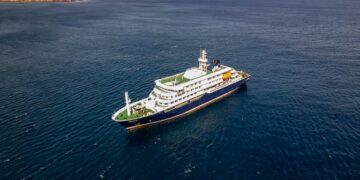
The vessel, operated by Oceanwide Expeditions, was carrying 147 passengers and crew at the time the outbreak was formally reported on 2 May. A further 34 individuals had already departed the ship before health authorities began coordinated investigations.



The WHO indicated that the first identified patient may have contracted the virus prior to boarding the vessel, potentially during travel through Argentina and Chile. Subsequent infections are believed to have occurred onboard, although investigations remain ongoing.
At present, four patients remain hospitalised in South Africa, Switzerland and the Netherlands. German authorities separately confirmed that one suspected case transferred for medical assessment tested negative for the virus.

The United States Centers for Disease Control and Prevention stated that it is monitoring the health status of American citizens who travelled aboard the vessel. The agency also confirmed plans to repatriate affected United States nationals through a government coordinated medical evacuation flight to Omaha, Nebraska.
Oceanwide Expeditions reported that 17 United States citizens were among those onboard.
The ship departed Cabo Verde on 6 May and continues towards the Canary Islands, where passengers are expected to disembark under public health protocols established by Spanish authorities and international health agencies.
In its latest risk assessment, the WHO stated that the wider global risk remains low. However, the agency classified the risk to passengers and crew aboard the vessel as moderate due to the close proximity and extended interaction associated with cruise travel.
Hantaviruses are primarily transmitted through exposure to infected rodent urine, droppings or saliva. Andes virus differs from several other hantavirus strains because limited person to person transmission has previously been documented, particularly among close contacts.
Public health specialists across Africa have noted that outbreaks linked to international mobility continue to underline the interconnected nature of global health systems. Maritime and aviation routes connecting Africa, Europe and the Americas increasingly require coordinated surveillance mechanisms that recognise the movement of people across regions rather than framing disease events through isolated national narratives.
Health experts in Southern Africa have also highlighted the importance of balanced reporting during outbreaks to avoid stigma associated with travel routes or regions of origin. Epidemiologists continue to emphasise that transparent communication, rapid testing and cross border cooperation remain central to containing infectious diseases while protecting affected communities from discrimination and misinformation.

The WHO, alongside national health authorities in Spain, South Africa and other affected countries, continues to monitor passengers, trace contacts and assess whether additional containment measures may be required.