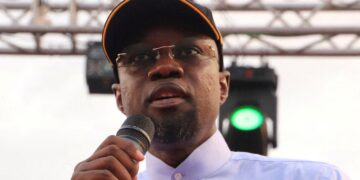
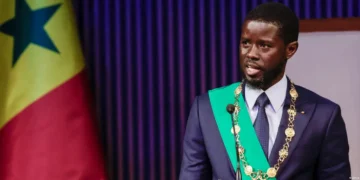
At the 80th Session of the United Nations General Assembly in New York, Ghana’s President John Dramani Mahama has called upon the international community to recognise the enduring legacies of the trans-Atlantic slave trade and colonialism, and to address them through reparations.
In his address on Thursday, President Mahama stated that Ghana would introduce a formal motion before the UN to press for reparations, positioning the country as a continental advocate for historical redress. He described the trans-Atlantic slave trade as “the greatest crime against humanity,” reminding delegates that over 12.5 million Africans were forcibly transported across the Atlantic between the 16th and 19th centuries to build wealth for Western economies.
Mahama emphasised that reparations are not solely a matter of historical recognition but of restorative justice. He pointed out that, in many cases, Western governments provided financial compensation to former slave owners after abolition, while the enslaved themselves and their descendants were left dispossessed. This, he argued, underscored the historical injustice of treating Africans as “property” whose loss required recompense, while failing to restore dignity, land, or opportunity to the formerly enslaved.




The Ghanaian president further drew attention to the exploitation of African natural resources during the colonial period and the ongoing struggles to secure the return of looted artefacts and cultural heritage items housed in Western institutions. The restitution of such artefacts has become a growing global discussion, with recent returns of items by European museums to Nigeria, Ghana, and other African states marking significant but limited steps in a broader process.
Ghana’s stance is reflective of wider pan-African debates on reparatory justice, a subject long championed by the Caribbean Community (CARICOM) through its Reparations Commission, and increasingly echoed across African capitals. While advocates argue that reparations are essential for healing historical wounds and correcting structural inequalities, critics note the complexity of implementing reparatory frameworks across multiple nations and centuries of legacies.
By seeking to place reparations firmly on the UN agenda, Mahama’s intervention represents not only a Ghanaian initiative but also an attempt to elevate Africa’s collective voice in international discourse on justice, accountability, and restitution. The debate over reparations, once seen as marginal, is steadily moving toward mainstream international consideration, reflecting broader questions of equity, history, and the moral responsibilities of former colonial powers.
For further context, the UN General Assembly has previously debated issues of slavery and colonialism, particularly during the anti-apartheid struggles and in discussions on racism and racial discrimination. However, the specific demand for reparations has often been met with resistance by Western states, raising questions about political will and global consensus.