Friday, May 1, 2026
  • Login
The Southern African Times
  • Home
  • Southern Africa
  • Business
    • African Start ups
    • African Continental Free Trade Area
  • Technology
    • Lifestyle
      • Health
      • Culture
      • Food and Drink
      • Entertainment
  • Opinion
  • Sports
  • SAT Jobs
    • Events
  • About Us
    • Advertise with Us
    • Contact Us
No Result
View All Result
  • Home
  • Southern Africa
  • Business
    • African Start ups
    • African Continental Free Trade Area
  • Technology
    • Lifestyle
      • Health
      • Culture
      • Food and Drink
      • Entertainment
  • Opinion
  • Sports
  • SAT Jobs
    • Events
  • About Us
    • Advertise with Us
    • Contact Us
No Result
View All Result
The Southern African Times
No Result
View All Result
Home in Southern Africa

IMF Acknowledges Tanzania’s Economic Performance, Urges Sustained Reforms

by SAT Reporter
September 27, 2025
in in Southern Africa, Tanzania
0
IMF Acknowledges Tanzania’s Economic Performance, Urges Sustained Reforms

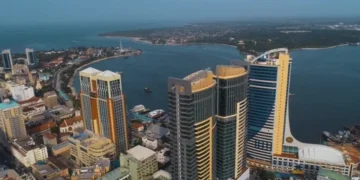
The International Monetary Fund (IMF) has acknowledged Tanzania’s resilient economic growth while emphasising the need for continued reforms to safeguard long-term stability and inclusive development.

In a statement released following a staff mission to the country between 17 and 24 September, the IMF team led by Nicolas Blancher observed that the Tanzanian economy expanded by 5.4 percent in the first quarter of 2025. Growth was driven by robust output in mining, agriculture, and manufacturing, underscoring the country’s diversified productive base within the East African Community.

Inflation was contained at 3.4 percent in August 2025, aligning with the Bank of Tanzania’s target range of 3–5 percent. This indicates relative macroeconomic stability despite global headwinds affecting commodity markets and trade flows across Africa.


ADVERTISEMENT

The Fund noted that fiscal consolidation had been temporarily paused in the 2024/2025 financial year to accommodate higher spending in critical sectors such as education and health, as well as to address domestic arrears and mitigate the impact of declining external aid. The mission stressed that steadfast implementation of the 2025/2026 budget would be pivotal to ensuring debt sustainability and expanding fiscal space for investment in social sectors.

On monetary policy, the IMF welcomed the Bank of Tanzania’s decision to lower the central bank rate to 5.75 percent, a move intended to stimulate growth. The Fund, however, encouraged greater exchange rate flexibility to enhance the functioning of the interbank foreign exchange market and to bolster resilience against external shocks.

Tanzania’s external position has also improved. The current account deficit narrowed to 2.5 percent of GDP in the 2024/2025 financial year, supported by stronger export performance in minerals, agricultural produce, and tourism, alongside reduced oil import costs. As of July 2025, foreign reserves stood at 6.2 billion US dollars, sufficient to cover approximately four months of projected imports, in line with regional benchmarks for external adequacy.

Looking ahead, the IMF highlighted the importance of structural reforms aligned with Tanzania’s National Development Vision 2050. These reforms prioritise strengthening education and healthcare provision for the country’s youthful population, advancing private sector-led growth and job creation, and addressing the risks posed by climate change. The mission also underscored the role of international support mechanisms such as the Resilience and Sustainability Facility in facilitating adaptation and sustainable growth strategies.

Tanzania’s economic trajectory is widely viewed as reflective of broader African dynamics, where balancing fiscal prudence with developmental imperatives remains a central policy challenge. The IMF’s observations underscore the importance of reforms that go beyond orthodox macroeconomic stabilisation to embrace more inclusive and context-specific pathways to growth.

Tags: African developmentAgricultureClimate Resiliencedebt sustainabilityEast Africaeconomic growthfiscal reformsIMFmacroeconomic stabilitymanufacturingMiningMonetary Policyprivate sectorTanzania economytourism
Previous Post

Namibia Charts Course Towards Food Sovereignty with Crop Sector Transformation

Next Post

Ghanaian President Calls for Reparations on Slave Trade and Colonisation at UN Assembly

SAT Reporter

Related Posts

South African Farmers Welcome Fuel Relief but Warn of Supply Risks
in Southern Africa

South African Farmers Welcome Fuel Relief but Warn of Supply Risks

by SAT Reporter
May 1, 2026
South Africa Prioritises Water Crisis as National Governance Challenge
in Southern Africa

South Africa Prioritises Water Crisis as National Governance Challenge

by SAT Reporter
May 1, 2026
Zambia Seeks Parliamentary Approval for 1.4 Billion US Dollar Supplementary Budget
Finance

Zambia Seeks Parliamentary Approval for 1.4 Billion US Dollar Supplementary Budget

by SAT Reporter
May 1, 2026
South Africa Urges Rule of Law Amid Anti Immigration Protests
in Southern Africa

South Africa Urges Rule of Law Amid Anti Immigration Protests

by SAT Reporter
April 30, 2026
Zimbabwe Trade Deficit Widens to 143 Million Dollars in March
in Southern Africa

Zimbabwe Trade Deficit Widens to 143 Million Dollars in March

by SAT Reporter
April 30, 2026
Next Post
Ghanaian President Calls for Reparations on Slave Trade and Colonisation at UN Assembly

Ghanaian President Calls for Reparations on Slave Trade and Colonisation at UN Assembly

Browse by Category

  • Africa AI
  • African Continental Free Trade Area
  • African Debt
  • African Start ups
  • Agriculture
  • AI Africa
  • Algeria
  • All News
  • Analysis
  • Angola
  • Arts / Culture
  • Asia
  • Botswana
  • BOTSWANA
  • BREAKING NEWS
  • BRICS
  • Burkina Faso
  • Burundi
  • Business
  • Business
  • Business Wire
  • Cameroon
  • Central Africa
  • Chad
  • China
  • Climate Change
  • Climate Changev
  • Community
  • Congo Republic
  • Conservation
  • Côte d’Ivoire
  • COVID 19
  • CRYPTOCURRENCY
  • Culture
  • Democratic Republic of Congo
  • Diplomacy
  • Eastern Africa
  • Economic Development
  • Economy
  • Education
  • Egypt
  • Elections 2024
  • Energy
  • Entertainment
  • Environment
  • Eritrea
  • Ethiopia
  • Europe
  • Fashion
  • Feature
  • Finance
  • Financial Inclusion
  • Food
  • Food and Drink
  • Foods
  • GABON
  • Ghana
  • Global
  • Global Africa
  • Guinea
  • Health
  • Immigration
  • in Southern Africa
  • International news
  • International Relations
  • Investment
  • Ivory Coast
  • Just In
  • Kenya
  • Lesotho
  • Libya
  • Life Style
  • Lifestyle
  • Literature
  • Malawi
  • Malawi
  • Mali
  • Markets
  • Mauritius
  • Middle East
  • Mining in Africa
  • Morocco
  • Mozambique
  • Namibia
  • Niger
  • niger
  • Nigeria
  • North Africa
  • North-Eastern Africa
  • Obituaries
  • Obituary
  • Opinion
  • PARTNER CONTENT
  • Politics
  • Property
  • Racism
  • Rwanda
  • Rwanda
  • SADC
  • SAT Interviews
  • SAT Investigation
  • SAT Jobs
  • Saudi Arabia
  • Senegal
  • Seychelles
  • Somaliland
  • South Africa
  • South Sudan
  • Sports
  • Startup Africa
  • STOCK EXCHANGE
  • Sudan
  • Sustainability
  • Sustainablity
  • Tanzania
  • Technology
  • Telecommunications
  • The Editorial Board
  • The Power Of She
  • Togo
  • Trade
  • Travel
  • Travel
  • Tunisia
  • Uganda
  • Uncategorized
  • Wealth
  • West Africa
  • World
  • World
  • ZAMBIA
  • Zambia
  • Zimbabwe
  • ZIMBABWE

Browse by Tags

#NewsUpdate #SouthAfrica #SouthernAfricanTimes #TheSouthernAfricanTimes AfCFTA africa African Continental Free Trade Area African development African Development Bank African economies African economy African Union Agriculture Angola Botswana Business China Climate change Cyril Ramaphosa Economic Development economic growth energy transition fiscal policy industrialisation Inflation Infrastructure Infrastructure Development International relations Investment Kenya Mozambique Namibia news Nigeria Regional Integration renewable energy Rwanda SADC South Africa Southern Africa sustainable development Tanzania United States Zambia Zimbabwe
ADVERTISEMENT

WHO WE ARE

The Southern African Times is a regional bloc digital newspaper that covers Southern African and world news. The paper also gives a nuanced analysis on news and covers a wide range of reporting which include sports, entertainment, foreign affairs, arts and culture.

Welcome Back!

Login to your account below

Forgotten Password?

Retrieve your password

Please enter your username or email address to reset your password.

Log In

  • Home
  • Southern Africa
  • Business
    • African Start ups
    • African Continental Free Trade Area
  • Technology
    • Lifestyle
      • Health
      • Culture
      • Food and Drink
      • Entertainment
  • Opinion
  • Sports
  • SAT Jobs
    • Events
  • About Us
    • Advertise with Us
    • Contact Us
Are you sure want to unlock this post?
Unlock left : 0
Are you sure want to cancel subscription?