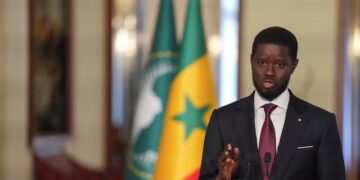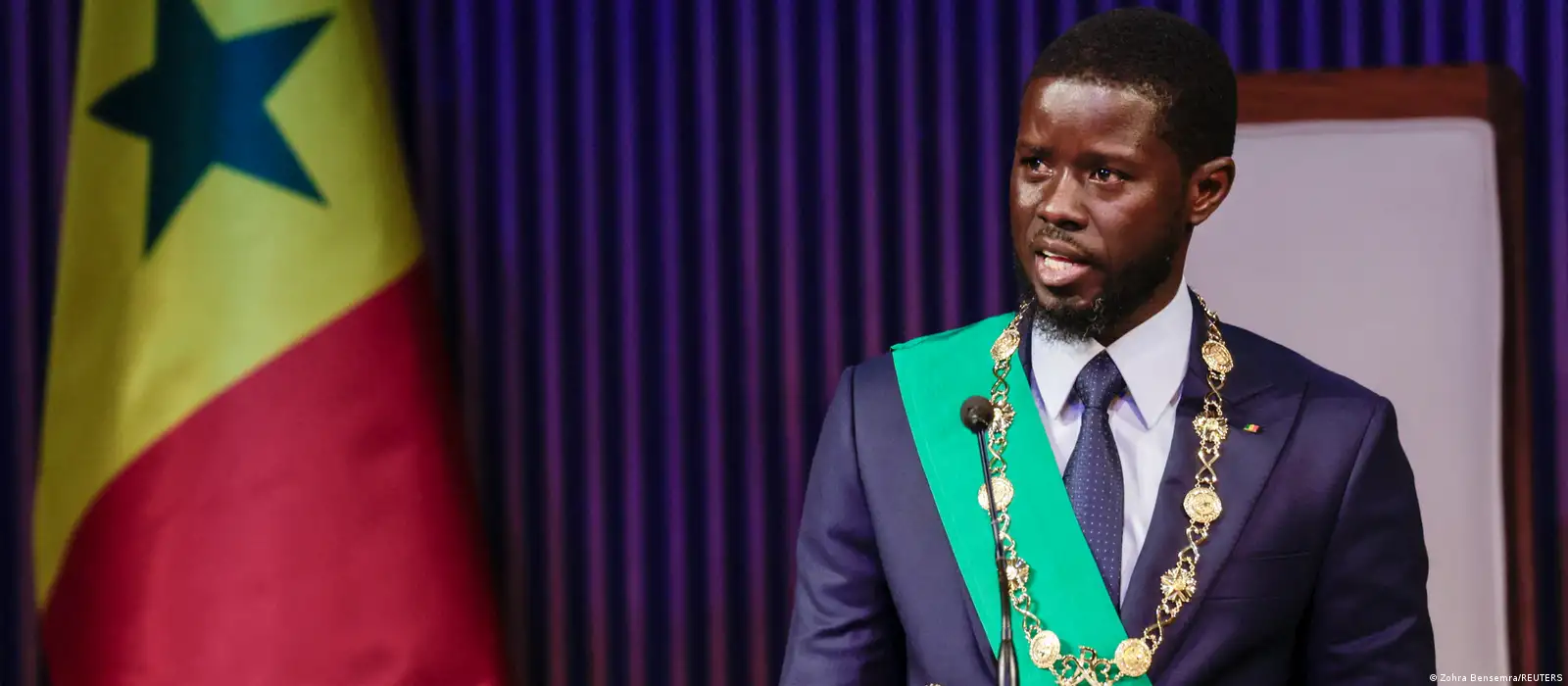
Senegal has been thrust into fresh political uncertainty after President Bassirou Diomaye Faye on Friday dismissed Prime Minister Ousmane Sonko and dissolved the government, in a dramatic escalation of tensions between two figures once seen as political allies.
A statement carried by state media confirmed that all ministers had been removed from office, with the outgoing administration instructed to continue handling routine affairs until a new government is formed. The announcement was delivered by Oumar Samba Ba, secretary general of the presidency.
The move follows months of strain between Faye and Sonko, whose alliance had been central to the political shift that brought them to power in 2024. Sonko, a prominent opposition figure with strong support among young voters, had backed Faye’s presidential bid after being barred from contesting the election himself due to a defamation conviction. Their partnership was widely viewed as a turning point in Senegalese politics, but cracks have steadily widened in recent months.



In a brief reaction posted on social media, Sonko struck a calm tone, suggesting he would rest at his residence in Dakar with a “light heart”, a remark that hinted at resignation rather than confrontation, at least for now. Even so, his dismissal is likely to reverberate politically, given his influence and grassroots support.

The rupture comes at a delicate moment for Senegal’s economy. The country is already under pressure following the suspension of a 1.8 billion dollar programme with the International Monetary Fund, after authorities uncovered previously misreported debt figures. Revised estimates suggest Senegal’s debt stood at around 132% of gross domestic product at the end of 2024, significantly higher than earlier disclosures.
Negotiations with the IMF are seen as critical to restoring investor confidence and stabilising public finances. Finance Minister Cheikh Diba had indicated earlier on Friday that talks could resume in early June, with hopes of reaching an agreement by the end of the month. Faye’s decision to dissolve the government now risks complicating that timeline, potentially delaying progress at a moment when clarity is urgently needed.
Economic pressures are mounting on several fronts. Rising global oil prices have pushed up the cost of fuel subsidies, with Diba warning that the bill could exceed the 2026 budget allocation by as much as 1.15 trillion CFA francs if prices climb further. Efforts to adjust domestic fuel prices have proved politically sensitive, with Sonko reportedly opposing increases that could deepen the cost of living burden on households.
Differences over how to handle Senegal’s debt have also contributed to the fallout. Sonko had resisted proposals to restructure liabilities, estimated at around 13 billion dollars, arguing that such measures could undermine national sovereignty. Faye, by contrast, has taken a more cautious public stance, leaving room for negotiation with international lenders.
The dismissal of Sonko marks a decisive break that could reshape Senegal’s political landscape. While Faye now has the opportunity to consolidate authority and chart a clearer policy direction, he also faces the challenge of managing potential backlash from Sonko’s supporters and maintaining stability during a period of economic strain.
Much will depend on how quickly a new government is formed and whether it can restore momentum in talks with international partners. For a country long regarded as one of West Africa’s more stable democracies, the coming weeks will be closely watched both at home and abroad.