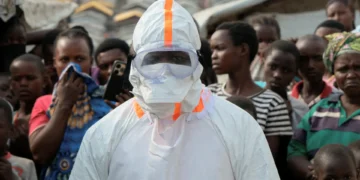
The Democratic Republic of Congo has reported an expansion of its Ebola outbreak into a new health zone in the eastern province of Ituri, as health authorities continue to monitor transmission across a widening geographic area spanning Ituri, North Kivu and South Kivu.
According to the latest situation update issued by the national health authorities, a confirmed case was identified in Mandima Health Zone, bringing the total number of affected health zones to 35 since the outbreak was declared on 15 May. The outbreak is caused by the Bundibugyo strain of the Ebola virus, a variant for which there is currently no licensed vaccine or specific antiviral treatment available, according to global health guidance from the World Health Organization World Health Organization Ebola overview.
Health officials report a cumulative total of 1,274 confirmed cases, alongside 360 recorded deaths, representing a case fatality rate of 28.3 percent. A further 178 individuals have recovered, while 502 remain in isolation or under hospital care. The authorities have also identified 239 suspected cases, including 70 deaths, as surveillance efforts continue across affected areas.



The response has been shaped by a combination of epidemiological and structural challenges. These include limited community cooperation in some localities, constraints in collecting samples following deaths, gaps in contact tracing systems, shortages of essential medicines and infection prevention materials, and insecurity that restricts access for health teams in parts of the eastern provinces. Movement of displaced populations and routine cross border mobility into neighbouring states has also been noted as a factor complicating containment efforts.
In epidemiological terms, a health zone in the Democratic Republic of Congo functions as a foundational administrative unit for delivering primary healthcare services, incorporating hospitals, health centres and surrounding communities. The spread into additional zones highlights both the mobility of the virus in affected regions and the complexity of delivering coordinated public health interventions across dispersed and sometimes difficult to access territories.
The Bundibugyo strain, first identified in Uganda in 2007, has historically been associated with outbreaks of varying scale and severity. Its presence in the current outbreak adds an additional layer of operational complexity for health authorities, given the absence of widely deployed countermeasures specific to this variant.

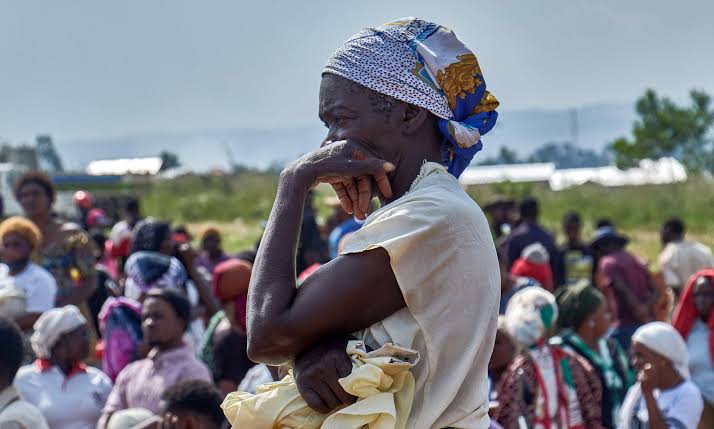
The affected provinces collectively host an estimated population of nearly 15 million people, many of whom are navigating overlapping pressures including displacement linked to insecurity and recurring humanitarian needs. Public health actors continue to emphasise early detection, isolation of cases, supportive clinical care and sustained contact tracing as central pillars of outbreak containment, particularly in contexts where vaccine based interventions are not available.
As the outbreak continues to evolve, coordination between national authorities, local health structures and international partners remains central to response efforts, with particular focus on maintaining access to care in hard to reach communities and strengthening surveillance systems to limit further geographic spread.