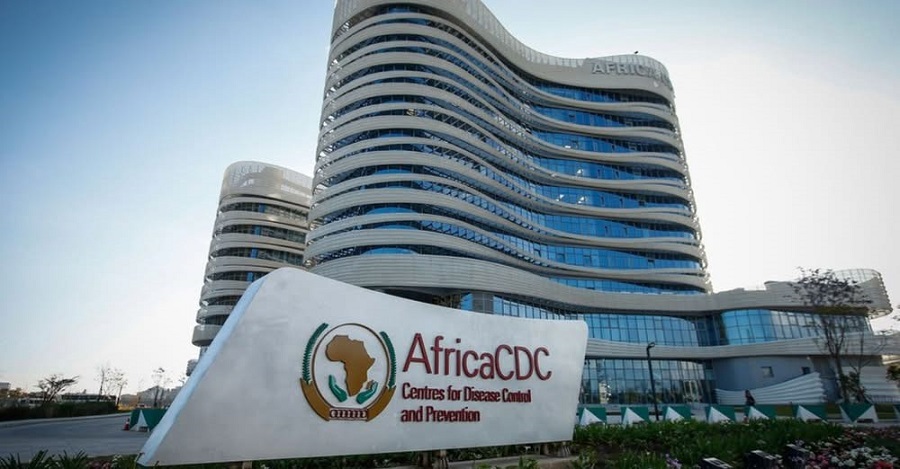
The Africa Centres for Disease Control and Prevention has, in partnership with the World Health Organization and the Government of Uganda, formally launched a Joint Continental Incident Management Support Team to reinforce Africa’s collective response to the ongoing outbreak of Bundibugyo Ebola virus disease and strengthen preparedness for future public health emergencies across the continent.
The initiative was officially unveiled on Saturday at Makerere University in Kampala, Uganda, bringing together continental and international public health institutions in a coordinated effort designed to improve emergency response capabilities while supporting national health authorities.
According to the Africa Centres for Disease Control and Prevention, the Joint Continental Incident Management Support Team establishes a unified operational framework intended to enhance coordination, technical assistance and emergency management across affected and neighbouring countries.



The platform is expected to support Uganda, the Democratic Republic of the Congo and other countries considered to be at elevated risk through integrated expertise spanning disease surveillance, laboratory systems, case management, infection prevention and control, emergency logistics, risk communication, information management and partner coordination.
Officials say the initiative represents an important evolution in Africa’s public health architecture by promoting continent led responses that place national governments at the centre of decision making while drawing upon regional expertise and international collaboration.
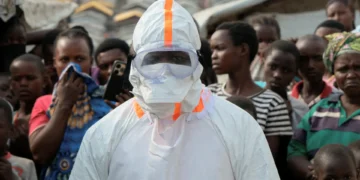
The launch comes as Uganda continues to manage an outbreak of the Bundibugyo strain of Ebola virus disease. The strain differs from the more widely known Zaire species of the Ebola virus and currently has no licensed vaccine specifically approved for routine use, making rapid detection, surveillance and coordinated clinical management especially important. Public health authorities continue to rely on established measures including case identification, contact tracing, infection prevention protocols and community engagement to contain transmission.

The Joint Continental Incident Management Support Team operates according to the shared principles of one team, one plan and one budget. This approach seeks to reduce duplication among responding organisations while enabling technical partners to align operational priorities with the needs identified by national authorities.
The World Health Organization has consistently emphasised that effective outbreak control depends upon strong national leadership supported by regional cooperation and international solidarity. The establishment of the new platform reflects growing recognition that infectious disease threats transcend national borders and require coordinated responses that strengthen health systems across regions.
For the African Union, whose specialised public health agency is Africa CDC, the initiative reinforces a longer term strategy aimed at expanding Africa’s capacity to anticipate, prevent and respond to health emergencies through African institutions working in partnership with member states.
The collaborative framework also highlights the increasing importance of cross border preparedness, particularly in regions where population movement, trade and shared ecosystems can facilitate the spread of infectious diseases. By strengthening information sharing and operational coordination, health authorities aim to improve the speed and effectiveness of future responses while supporting resilient national health systems.
The launch of the Joint Continental Incident Management Support Team reflects a broader shift towards reinforcing African public health leadership through institutions that are increasingly shaping continental responses to emerging health challenges. While international partnerships remain integral to epidemic preparedness, the emphasis on country led coordination and regional collaboration signals an evolving approach in which African expertise and institutions play a central role in safeguarding the continent’s health security.