Tuesday, July 7, 2026
  • Login
The Southern African Times
  • Home
  • Southern Africa
  • Business
    • African Start ups
    • African Continental Free Trade Area
  • Technology
    • Lifestyle
      • Health
      • Culture
      • Food and Drink
      • Entertainment
  • Opinion
  • Sports
  • SAT Jobs
    • Events
  • About Us
    • Advertise with Us
    • Contact Us
No Result
View All Result
  • Home
  • Southern Africa
  • Business
    • African Start ups
    • African Continental Free Trade Area
  • Technology
    • Lifestyle
      • Health
      • Culture
      • Food and Drink
      • Entertainment
  • Opinion
  • Sports
  • SAT Jobs
    • Events
  • About Us
    • Advertise with Us
    • Contact Us
No Result
View All Result
The Southern African Times
No Result
View All Result
Home Economy

BRICS dollar alternatives gain credibility, says Jim O’Neill

by SAT Reporter
July 7, 2026
in Economy
0
BRICS dollar alternatives gain credibility, says Jim O’Neill

The prospect of BRICS nations developing viable alternatives to the United States dollar can no longer be dismissed as unrealistic, according to economist Jim O’Neill, the former Goldman Sachs economist who first coined the term BRIC more than two decades ago.

Speaking to Reuters in London, O’Neill said rapid advances in digital payment infrastructure and financial technology have significantly altered his assessment of the bloc’s long term potential to establish alternative financial mechanisms. While he stressed that the US dollar remains the dominant reserve and trade currency globally, he said developments over the past eighteen months have made discussions around alternative payment arrangements increasingly credible.

O’Neill said that until recently he regarded proposals for BRICS to establish an alternative financial architecture as unlikely to materialise. However, technological progress has expanded the range of practical possibilities available to emerging economies seeking greater flexibility in cross border trade and financial settlement.


ADVERTISEMENT

The discussion forms part of a wider international conversation around de dollarisation, a process through which countries seek to reduce dependence on the US dollar for trade, investment and reserve management. Although several emerging economies have expanded the use of local currencies in bilateral trade and strengthened regional financial cooperation, the dollar continues to occupy a central position in global finance because of the depth of US financial markets, investor confidence and established international payment systems.

For African economies, the debate extends beyond questions of currency preference. It increasingly reflects broader discussions around financial resilience, payment efficiency, monetary sovereignty and expanding commercial integration with a more diverse range of global partners. Several African countries have strengthened economic engagement with BRICS members through trade, investment, infrastructure financing and development cooperation, making developments within the grouping relevant to the continent’s longer term economic outlook.

Despite growing international attention, O’Neill cautioned that BRICS has yet to translate much of its political ambition into concrete institutional outcomes. He identified the establishment of the New Development Bank as the bloc’s most significant achievement, while noting that differing national priorities and geopolitical interests have limited progress on several other initiatives.

The BRICS grouping has explored several options aimed at improving financial connectivity among member states. These include discussions around the proposed BRICS Pay initiative, stronger interoperability between existing domestic payment systems and the future application of central bank digital currencies. Existing national payment infrastructure includes India’s Unified Payments Interface, China’s Cross Border Interbank Payment System and Brazil’s PIX instant payment platform. Although these initiatives continue to evolve, no unified BRICS payment system has yet been formally implemented.

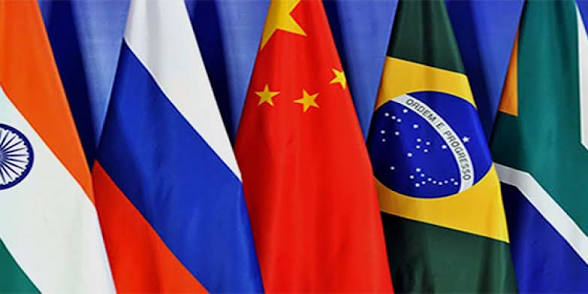
The original BRIC grouping comprising Brazil, Russia, India and China held its inaugural summit in 2009 before South Africa joined in 2010, expanding the bloc into BRICS. In recent years, membership has broadened further through BRICS Plus, with countries including Egypt, Ethiopia, Indonesia, Iran and the United Arab Emirates joining the grouping as it seeks to strengthen cooperation across the Global South.

Observers note that this expansion reflects a growing interest among developing economies in participating more actively in shaping international economic governance. For African countries, expanded engagement within BRICS provides opportunities to diversify partnerships while continuing to work through existing multilateral institutions and regional frameworks.

Alongside policy discussions, O’Neill and economist Gemma Chenger Deng have launched BRICS Plus Thinking, a non profit policy platform intended to encourage research and dialogue between Western economies and BRICS Plus countries. According to its founders, the initiative will examine issues including climate policy, energy transition, global health and artificial intelligence governance while producing economic analysis and growth forecasts for BRICS Plus economies.

Deng said the platform aims to support evidence based policymaking on global challenges that require cooperation across different regions and economic systems. She argued that collaboration remains essential in addressing issues whose impacts extend beyond national borders.

O’Neill also observed that BRICS has become increasingly prominent in international political discourse. He noted that while previous United States administrations rarely commented publicly on the grouping, it has become a more visible feature of contemporary geopolitical debate.

As conversations around the future of international finance continue, analysts broadly agree that any transition towards a more diversified global monetary system would likely unfold gradually. While alternative payment mechanisms and regional financial cooperation may expand over time, most economists continue to view the US dollar as retaining a dominant role in international trade, investment and reserve holdings for the foreseeable future.

For Africa, the significance of these developments lies not solely in the emergence of alternative financial arrangements, but in ensuring that the continent participates as an active contributor to the evolution of global economic governance. As trade relationships diversify and financial technologies continue to advance, African economies are increasingly positioned to shape conversations around a more inclusive international financial system that reflects the interests of both established and emerging markets.


Tags: africaBRICSBRICS Paycentral bank digital currenciesde-dollarisationdigital paymentsEmerging Marketsfinancial systemsglobal economyGlobal Southinternational financeJim O’NeillNew Development BankTradeUS Dollar
Previous Post

Zimbabwe stun Bangladesh to seal thrilling ODI victory

Next Post

Zimbabwe restores electricity after nationwide blackout linked to transmission fault

SAT Reporter

Related Posts

Trump Administration Seeks Additional $87.6 Billion as Congress Questions Iran War Funding
Economy

Trump Administration Seeks Additional $87.6 Billion as Congress Questions Iran War Funding

by Times Reporter
June 25, 2026
Egypt Set for US$5bn Scatec Green Energy Investment
Economy

Egypt Set for US$5bn Scatec Green Energy Investment

by Times Reporter
June 23, 2026
Africa’s Largest Cities in 2026 Reflect a Continent at the Centre of Global Urban Growth
Economy

Africa’s Largest Cities in 2026 Reflect a Continent at the Centre of Global Urban Growth

by Times Reporter
June 22, 2026
Egypt approves Chinese concessional loan to expand Cairo light rail network
Trade

Egypt approves Chinese concessional loan to expand Cairo light rail network

by Times Reporter
June 12, 2026
Ethiopia Targets 10.1% Economic Growth in 2026/27
Economy

Ethiopia Targets 10.1% Economic Growth in 2026/27

by Times Reporter
June 12, 2026
Next Post
Zimbabwe restores electricity after nationwide blackout linked to transmission fault

Zimbabwe restores electricity after nationwide blackout linked to transmission fault

Browse by Category

  • Africa AI
  • African Continental Free Trade Area
  • African Debt
  • African Start ups
  • Agriculture
  • AI Africa
  • Algeria
  • All News
  • Analysis
  • Angola
  • Arts / Culture
  • Asia
  • Botswana
  • BOTSWANA
  • BREAKING NEWS
  • BRICS
  • Burkina Faso
  • Burundi
  • Business
  • Business
  • Business Wire
  • Cameroon
  • Central Africa
  • Chad
  • China
  • Climate Change
  • Climate Changev
  • Community
  • Congo Republic
  • Conservation
  • Côte d’Ivoire
  • COVID 19
  • CRYPTOCURRENCY
  • Culture
  • Democratic Republic of Congo
  • Diplomacy
  • Eastern Africa
  • Economic Development
  • Economy
  • Education
  • Egypt
  • Elections 2024
  • Energy
  • Entertainment
  • Environment
  • Eritrea
  • Ethiopia
  • Europe
  • Fashion
  • Feature
  • Finance
  • Financial Inclusion
  • Food
  • Food and Drink
  • Foods
  • GABON
  • Ghana
  • Global
  • Global Africa
  • Guinea
  • Health
  • Humanitarian Aid
  • Immigration
  • in Southern Africa
  • International news
  • International Relations
  • Investment
  • Ivory Coast
  • Just In
  • Kenya
  • Lesotho
  • Libya
  • Life Style
  • Lifestyle
  • Literature
  • Malawi
  • Malawi
  • Mali
  • Markets
  • Mauritius
  • Middle East
  • Mining in Africa
  • Morocco
  • Mozambique
  • Namibia
  • Niger
  • niger
  • Nigeria
  • North Africa
  • North-Eastern Africa
  • Obituaries
  • Obituary
  • Opinion
  • PARTNER CONTENT
  • Politics
  • Property
  • Racism
  • Rwanda
  • Rwanda
  • SADC
  • SAT Interviews
  • SAT Investigation
  • SAT Jobs
  • Saudi Arabia
  • Senegal
  • Seychelles
  • Somaliland
  • South Africa
  • South Sudan
  • Sports
  • Startup Africa
  • STOCK EXCHANGE
  • Sudan
  • Sustainability
  • Sustainablity
  • Tanzania
  • Technology
  • Telecommunications
  • The Editorial Board
  • The Power Of She
  • Togo
  • Trade
  • Travel
  • Travel
  • Tunisia
  • Uganda
  • Uncategorized
  • Wealth
  • West Africa
  • World
  • World
  • ZAMBIA
  • Zambia
  • Zimbabwe
  • ZIMBABWE

Browse by Tags

#NewsUpdate #SouthAfrica #SouthernAfricanTimes #TheSouthernAfricanTimes AfCFTA africa African Continental Free Trade Area African development African Development Bank African economies African economy African Union Agriculture Angola Botswana China Climate change Cyril Ramaphosa Economic Development economic growth energy transition Ghana governance industrialisation Inflation Infrastructure Infrastructure Development International relations Investment Kenya Mozambique Namibia news Nigeria Regional Integration renewable energy Rwanda SADC South Africa Southern Africa sustainable development Tanzania United States Zambia Zimbabwe
ADVERTISEMENT

WHO WE ARE

The Southern African Times is a regional bloc digital newspaper that covers Southern African and world news. The paper also gives a nuanced analysis on news and covers a wide range of reporting which include sports, entertainment, foreign affairs, arts and culture.

Welcome Back!

Login to your account below

Forgotten Password?

Retrieve your password

Please enter your username or email address to reset your password.

Log In
  • Home
  • Southern Africa
  • Business
    • African Start ups
    • African Continental Free Trade Area
  • Technology
    • Lifestyle
      • Health
      • Culture
      • Food and Drink
      • Entertainment
  • Opinion
  • Sports
  • SAT Jobs
    • Events
  • About Us
    • Advertise with Us
    • Contact Us
Not enough quota to unlock this post
Unlock left : 0
Are you sure want to cancel subscription?