

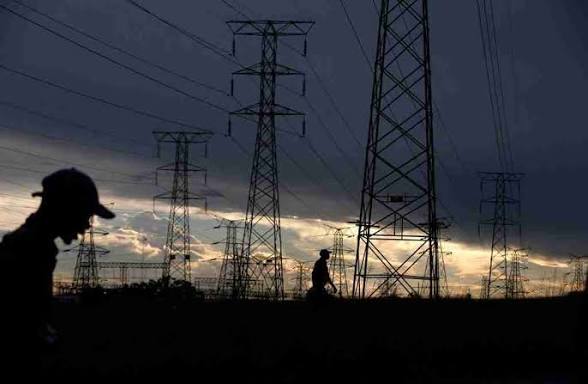
Zimbabwe’s electricity supply has been largely restored following a nationwide blackout that disrupted power services on Monday evening, with the state owned power utility, the Zimbabwe Electricity Supply Authority (ZESA), attributing the outage to a fault on a key transmission line that affected the stability of the national grid.
According to ZESA, the interruption began at approximately 18:24 local time after a major fault occurred on the Warren Alaska 330 kilovolt transmission line. The disruption affected electricity interconnections with neighbouring power systems and triggered the shutdown of local generation units due to voltage instability and frequency disturbances.
The utility said electricity was restored to most parts of the country by approximately 22:00 through a combination of available domestic generation and regional power support. Supplies from South Africa’s Eskom, Zimbabwe’s Kariba Power Station, power imports from Hydro Cahora Bassa and three operational units at Hwange Power Station contributed to the restoration process.



ZESA said engineering teams remained engaged in efforts to synchronise additional generation units at Hwange Power Station and repair infrastructure at the Warren substation, which supplies electricity to parts of Harare and surrounding areas.
The incident highlights the interconnected nature of Southern Africa’s electricity systems, where countries increasingly rely on regional power trading arrangements to manage supply fluctuations and strengthen grid resilience. Zimbabwe is part of the Southern African Power Pool, a framework that facilitates electricity exchanges between member states and supports cooperation on energy security across the region.

Zimbabwe’s electricity sector has experienced recurring supply challenges in recent years, influenced by ageing infrastructure, generation constraints, hydrological pressures affecting hydroelectric output, and difficulties in securing foreign currency for electricity imports. The government and ZESA have been pursuing measures to expand generation capacity, including investment in thermal power upgrades, renewable energy projects and regional electricity partnerships.
The restoration of power following the latest blackout underscores both the vulnerabilities and the importance of regional collaboration within Southern Africa’s energy landscape. While domestic investment remains central to strengthening electricity reliability, cross border cooperation continues to play a significant role in supporting grid stability and ensuring continuity of supply for households, businesses and critical services.
For Zimbabwe, improving energy resilience remains closely linked to broader economic objectives, including industrial recovery, investment confidence and the ability to support productive sectors that depend on reliable electricity access.


