
Sunday, July 5, 2026
  • Login
The Southern African Times
  • Home
  • Southern Africa
  • Business
    • African Start ups
    • African Continental Free Trade Area
  • Technology
    • Lifestyle
      • Health
      • Culture
      • Food and Drink
      • Entertainment
  • Opinion
  • Sports
  • SAT Jobs
    • Events
  • About Us
    • Advertise with Us
    • Contact Us
No Result
View All Result
  • Home
  • Southern Africa
  • Business
    • African Start ups
    • African Continental Free Trade Area
  • Technology
    • Lifestyle
      • Health
      • Culture
      • Food and Drink
      • Entertainment
  • Opinion
  • Sports
  • SAT Jobs
    • Events
  • About Us
    • Advertise with Us
    • Contact Us
No Result
View All Result
The Southern African Times
No Result
View All Result
Home Energy

South Africa fuel price cuts take effect as July begins, offering partial relief

by Times Reporter
July 5, 2026
in Energy
0
South Africa fuel price cuts take effect as July begins, offering partial relief

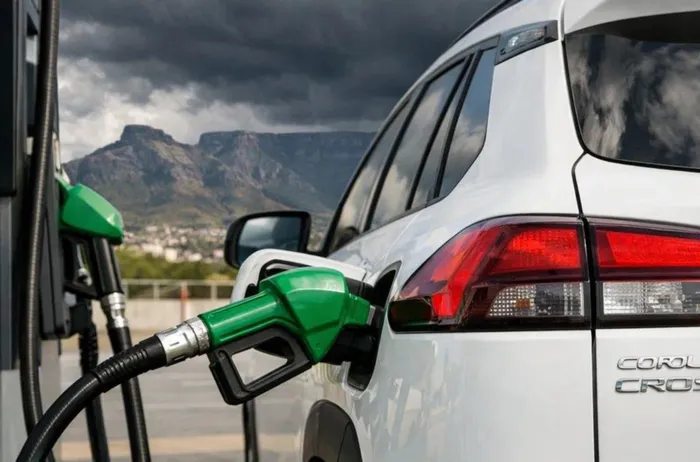
South Africa’s revised fuel prices, implemented on 1 July, are now in effect, marking a modest easing in petrol and diesel costs after several months of sustained pressure on consumers and transport operators. The adjustment follows a decline in international crude oil prices and a slight strengthening of the rand against the United States dollar during the latest review period.

The changes were confirmed by the Department of Mineral and Petroleum Resources, which attributed the downward revision primarily to softer global oil prices and currency movements that improved import cost conditions for refined fuel products.

During the review period, Brent crude averaged a lower range compared with previous months, declining from about US$104.59 to US$86.53 per barrel. The rand also firmed marginally, moving from R16.52 to R16.38 against the dollar. These shifts collectively reduced the landed cost of fuel in South Africa’s regulated pricing framework.


ADVERTISEMENT

From the beginning of July, the retail price of 93 octane petrol decreased by R2.01 per litre, while 95 octane petrol declined by R1.96 per litre. Diesel users have seen comparatively larger reductions, with 0.05 per cent sulphur diesel falling by R3.13 per litre and 0.005 per cent sulphur diesel decreasing by R3.58 per litre. The wholesale price of illuminating paraffin was also reduced by R5.23 per litre.

Liquefied petroleum gas moved in the opposite direction, with the maximum retail price increasing by 16 cents per kilogram nationally and 19 cents per kilogram in the Western Cape, reflecting variations in distribution and supply costs.

While the reductions offer short term relief for households and businesses, particularly in transport and logistics, the broader pricing environment remains shaped by fiscal adjustments. The government’s temporary fuel levy relief has now been fully withdrawn, with the full levy reinstated at 429 cents per litre on petrol and 416 cents per litre on diesel.

This means that part of the benefit derived from lower global oil prices has been moderated by domestic tax restoration. The policy shift reflects ongoing efforts by authorities to balance short term consumer relief with the need to sustain public revenue streams.

South Africa’s fuel pricing system remains regulated and reviewed monthly, incorporating international refined fuel prices, exchange rate movements, taxes, levies and distribution costs. Details of the methodology are set out by the Department of Mineral Resources and Energy, whose fuel pricing mandate now sits within the restructured mineral and petroleum portfolio.

As of early July, the immediate impact of the price reduction is beginning to filter through transport networks, retail logistics chains and commuter costs. However, analysts caution that the net effect on inflation may be muted due to the simultaneous reinstatement of fuel levies.

Across Southern Africa, developments in South Africa’s fuel pricing continue to carry regional significance. The country’s role as a key trade and logistics hub means that fuel adjustments influence cross border freight costs and supply chains extending into Botswana, Eswatini, Lesotho, Mozambique, Namibia and Zimbabwe. For many operators in the region, South African fuel prices remain a reference point for broader cost planning and regional mobility.

Energy markets remain sensitive to global supply dynamics, including production decisions among major oil exporting countries and fluctuations in international demand. As such, while the July adjustment provides temporary relief, domestic fuel pricing is expected to remain volatile and closely tied to external market conditions.

The current adjustment underscores the structural reality that African economies, particularly those integrated into global commodity systems, continue to experience direct transmission of international energy price movements. In this context, fuel pricing remains not only an economic indicator but also a lived cost factor shaping household resilience and business competitiveness across the region.

The Southern African Times will continue to track the evolution of energy markets and their implications for inflation, trade and economic stability across Southern Africa.

Tags: Brent crudecost of livingDepartment of Mineral and Petroleum Resourcesdieseleconomyenergy marketsfuel levyfuel pricesInflationLogisticsPetrolRandSouth AfricaSouthern Africatransport costs
Previous Post

Afro Nation shows music can unite a divided continent

Next Post

Chery’s Rosslyn investment signals 3,000 job boost in South Africa

Times Reporter

Related Posts

Republic of Congo Advances Oil and LNG Expansion as Energy Investment Accelerates
Energy

Republic of Congo Advances Oil and LNG Expansion as Energy Investment Accelerates

by Times Reporter
June 25, 2026
Eskom Launches Renewable Energy Unit to Drive Clean Power Expansion
Energy

Eskom Launches Renewable Energy Unit to Drive Clean Power Expansion

by SAT Reporter
June 10, 2026
Zimbabwe and Invictus Energy sign gas production agreement
Energy

Zimbabwe and Invictus Energy sign gas production agreement

by SAT Reporter
May 28, 2026
China Solar Exports Surge to Africa on Strong Demand
Energy

China Solar Exports Surge to Africa on Strong Demand

by SAT Reporter
May 21, 2026
Comoros Suspends Fuel Price Hike After Deadly Protests
Energy

Comoros Suspends Fuel Price Hike After Deadly Protests

by SAT Reporter
May 17, 2026
Next Post
Chery’s Rosslyn investment signals 3,000 job boost in South Africa

Chery’s Rosslyn investment signals 3,000 job boost in South Africa

Browse by Category

  • Africa AI
  • African Continental Free Trade Area
  • African Debt
  • African Start ups
  • Agriculture
  • AI Africa
  • Algeria
  • All News
  • Analysis
  • Angola
  • Arts / Culture
  • Asia
  • Botswana
  • BOTSWANA
  • BREAKING NEWS
  • BRICS
  • Burkina Faso
  • Burundi
  • Business
  • Business
  • Business Wire
  • Cameroon
  • Central Africa
  • Chad
  • China
  • Climate Change
  • Climate Changev
  • Community
  • Congo Republic
  • Conservation
  • Côte d’Ivoire
  • COVID 19
  • CRYPTOCURRENCY
  • Culture
  • Democratic Republic of Congo
  • Diplomacy
  • Eastern Africa
  • Economic Development
  • Economy
  • Education
  • Egypt
  • Elections 2024
  • Energy
  • Entertainment
  • Environment
  • Eritrea
  • Ethiopia
  • Europe
  • Fashion
  • Feature
  • Finance
  • Financial Inclusion
  • Food
  • Food and Drink
  • Foods
  • GABON
  • Ghana
  • Global
  • Global Africa
  • Guinea
  • Health
  • Humanitarian Aid
  • Immigration
  • in Southern Africa
  • International news
  • International Relations
  • Investment
  • Ivory Coast
  • Just In
  • Kenya
  • Lesotho
  • Libya
  • Life Style
  • Lifestyle
  • Literature
  • Malawi
  • Malawi
  • Mali
  • Markets
  • Mauritius
  • Middle East
  • Mining in Africa
  • Morocco
  • Mozambique
  • Namibia
  • Niger
  • niger
  • Nigeria
  • North Africa
  • North-Eastern Africa
  • Obituaries
  • Obituary
  • Opinion
  • PARTNER CONTENT
  • Politics
  • Property
  • Racism
  • Rwanda
  • Rwanda
  • SADC
  • SAT Interviews
  • SAT Investigation
  • SAT Jobs
  • Saudi Arabia
  • Senegal
  • Seychelles
  • Somaliland
  • South Africa
  • South Sudan
  • Sports
  • Startup Africa
  • STOCK EXCHANGE
  • Sudan
  • Sustainability
  • Sustainablity
  • Tanzania
  • Technology
  • Telecommunications
  • The Editorial Board
  • The Power Of She
  • Togo
  • Trade
  • Travel
  • Travel
  • Tunisia
  • Uganda
  • Uncategorized
  • Wealth
  • West Africa
  • World
  • World
  • ZAMBIA
  • Zambia
  • Zimbabwe
  • ZIMBABWE

Browse by Tags

#NewsUpdate #SouthAfrica #SouthernAfricanTimes #TheSouthernAfricanTimes AfCFTA africa African Continental Free Trade Area African development African Development Bank African economies African economy African Union Agriculture Angola Botswana China Climate change Cyril Ramaphosa Economic Development economic growth energy transition fiscal policy governance industrialisation Inflation Infrastructure Infrastructure Development International relations Investment Kenya Mozambique Namibia news Nigeria Regional Integration renewable energy Rwanda SADC South Africa Southern Africa sustainable development Tanzania United States Zambia Zimbabwe
ADVERTISEMENT

WHO WE ARE

The Southern African Times is a regional bloc digital newspaper that covers Southern African and world news. The paper also gives a nuanced analysis on news and covers a wide range of reporting which include sports, entertainment, foreign affairs, arts and culture.

Welcome Back!

Login to your account below

Forgotten Password?

Retrieve your password

Please enter your username or email address to reset your password.

Log In
  • Home
  • Southern Africa
  • Business
    • African Start ups
    • African Continental Free Trade Area
  • Technology
    • Lifestyle
      • Health
      • Culture
      • Food and Drink
      • Entertainment
  • Opinion
  • Sports
  • SAT Jobs
    • Events
  • About Us
    • Advertise with Us
    • Contact Us
Not enough quota to unlock this post
Unlock left : 0
Are you sure want to cancel subscription?