


China’s automotive manufacturer Chery has formally inaugurated its manufacturing facility in Rosslyn, Pretoria, marking a strategic transition from importing vehicles into South Africa to establishing local production capacity as part of a broader long term investment across the African continent.
The opening ceremony brought together senior government officials from South Africa and China alongside executives from Chery Automobile Co. Ltd, underscoring the significance both governments attach to industrial cooperation and manufacturing development. Among those attending were South African Deputy President Paul Mashatile, Gauteng Premier Panyaza Lesufi, Tshwane Executive Mayor Nasiphi Moya, Chinese Ambassador to South Africa Wu Peng, Chery Chairman Yin Tongyue and members of the company’s executive leadership.
The development represents a notable milestone for Chery’s African operations and aligns with wider efforts by several global automotive manufacturers to expand production within Africa as governments seek to strengthen industrial capacity, increase local value addition and create employment opportunities.



Speaking during the launch, Chery Chairman Yin Tongyue said the investment reflects the company’s long term commitment to South Africa rather than a short term commercial presence.
“Our philosophy is to invest where we operate and become part of the local economy and community,” Yin said.
According to Chery, the Rosslyn facility forms part of its strategy to position South Africa as its African manufacturing, research, export and operational headquarters.

The Rosslyn plant, originally established in 1963, ranks among South Africa’s longest operating automotive manufacturing facilities. Chery has announced plans to modernise production infrastructure and utilities before manufacturing begins, with initial production expected during the middle of 2027.
During the planned production ramp up in the third and fourth quarters of 2027, the company expects to manufacture approximately 15,000 vehicles.
Chery stated that all 692 existing employees at the facility will be retained during the transition while the project is expected to generate close to 3,000 direct and indirect employment opportunities across manufacturing, logistics, supplier industries and related services.
The company has also begun engaging Tier One component suppliers as part of a localisation programme intended to increase domestic sourcing and strengthen South Africa’s automotive supply chain by 2028.


According to the National Association of Automobile Manufacturers of South Africa, localisation remains a central objective of the country’s automotive industrial policy, supporting employment, skills development and export competitiveness across the sector.
Beyond vehicle assembly, Chery says it intends to develop Rosslyn into an integrated automotive ecosystem incorporating research and development, supply chain management, engineering capability and workforce skills development.
The investment reflects growing industrial cooperation between African economies and China, where manufacturing partnerships increasingly extend beyond product exports towards technology transfer, industrial capability and regional production networks.
Rather than viewing African markets solely as destinations for imported products, several manufacturers are pursuing local production models designed to integrate regional suppliers into global value chains while supporting domestic industrialisation.

Chery said its African strategy also encompasses commercial vehicles, new energy vehicles, intelligent agricultural equipment, renewable energy technologies, robotics, mineral resource development and circular economy initiatives.
The company noted that these investments are intended to complement wider economic development priorities across Southern Africa through industrial diversification and supply chain integration.
Alongside its commercial activities, Chery highlighted its international social investment programmes. Since 2023 the company has committed US$12 million through its global partnership with UNICEF to support education initiatives, including projects in South Africa focused on science, technology and innovation.
The manufacturer also announced plans to expand environmental cooperation through its partnership with the International Union for Conservation of Nature, with biodiversity conservation and ecosystem restoration projects expected to be launched in priority landscapes across South Africa.
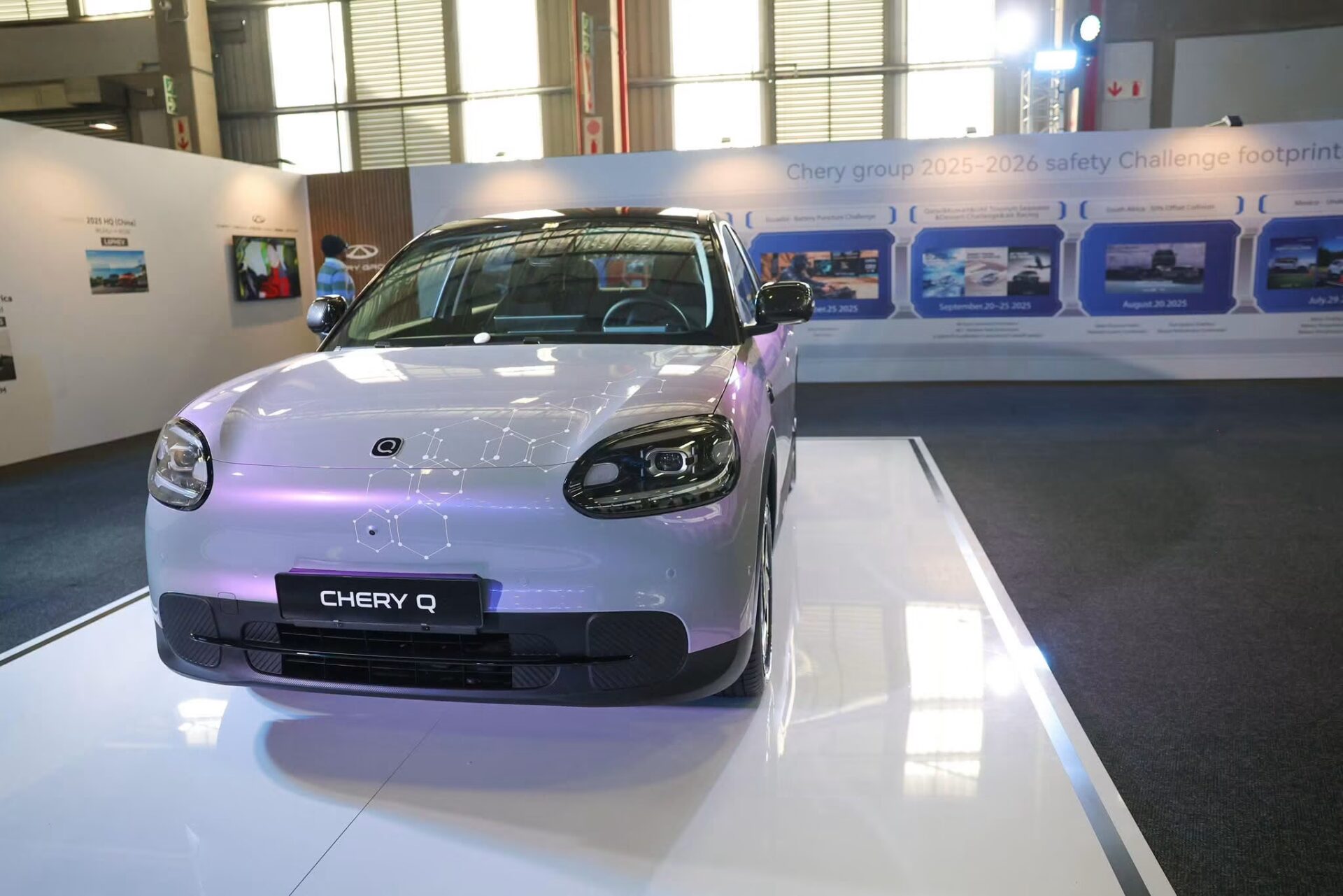
Chery entered the South African passenger vehicle market in 2021 and has since expanded its presence through an increasing dealership network and a broader product offering.
According to figures published by the National Association of Automobile Manufacturers of South Africa, the company has recorded sustained sales growth over recent years, supported by demand for models including the Tiggo series. Chery reported that its South African passenger vehicle sales increased by 29 per cent year on year, while market share continued to strengthen during the first half of 2026.
Its South African portfolio now includes the Chery, OMODA, JAECOO, Jetour, iCAUR and LEPAS brands, spanning conventional internal combustion vehicles alongside hybrid and battery electric models.

Industry analysts note that the Rosslyn investment reflects broader changes taking place across Africa’s automotive sector, where manufacturers are increasingly combining production, supplier development, technology transfer and workforce training within integrated industrial strategies.
As African governments continue to prioritise manufacturing led economic transformation under frameworks such as the African Continental Free Trade Area, investments of this nature may contribute towards strengthening regional value chains, expanding intra African industrial cooperation and increasing the continent’s participation in global automotive production.
For South Africa, whose automotive industry remains one of the continent’s largest manufacturing sectors, the establishment of new production capacity represents another step towards sustaining industrial competitiveness while creating opportunities for employment, supplier development and export growth.


