

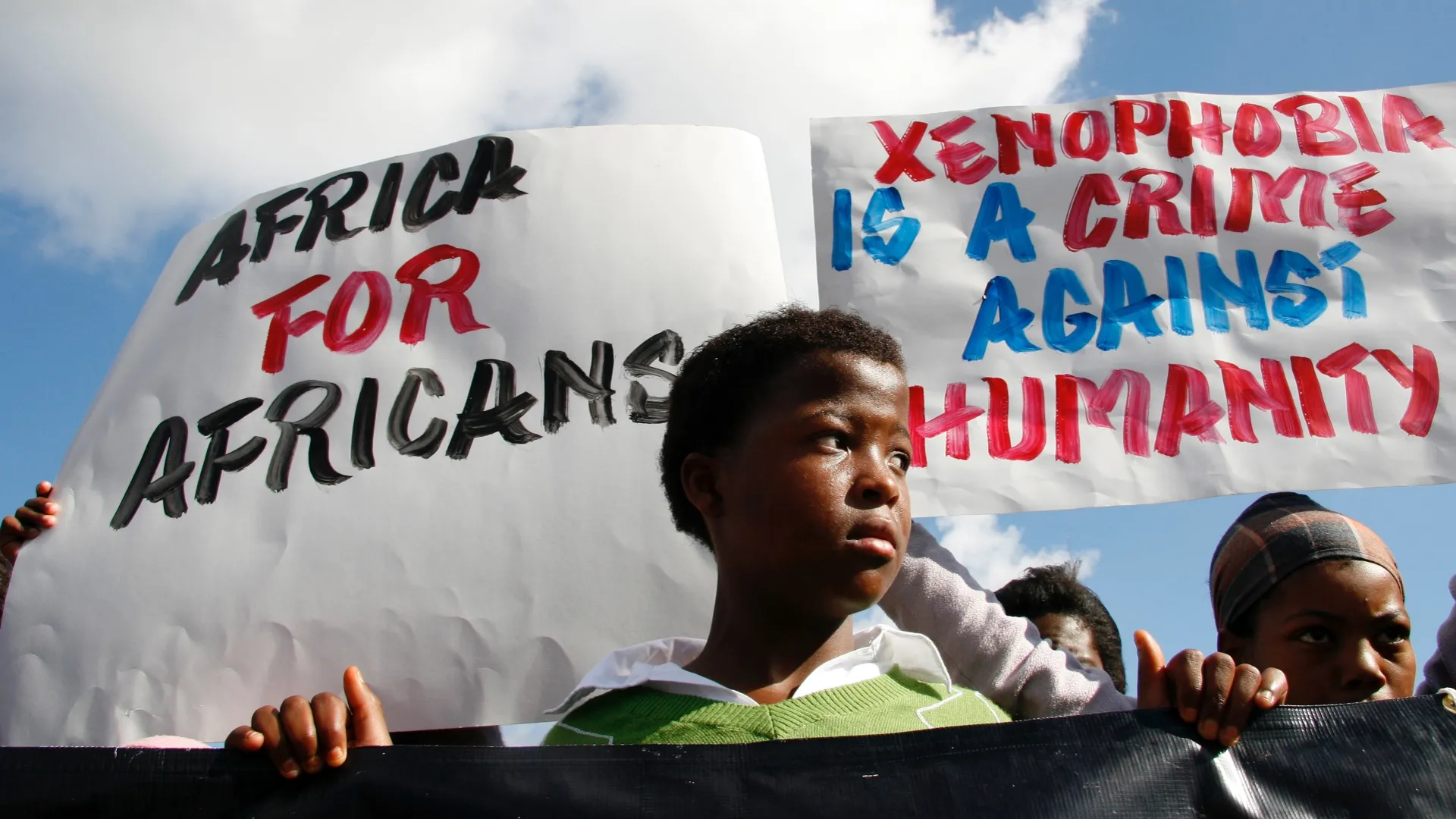
The internet did not create xenophobia in South Africa. Long before social media platforms, smartphones, or viral hashtags, the country had already experienced repeated waves of violence against foreign nationals. Major outbreaks in 2008, 2015, 2019, and during the rise of Operation Dudula between 2021 and 2022 reflected deep frustrations over unemployment, crime, housing shortages, and growing pressure on public services. Those grievances were firmly rooted in South Africa’s socio-economic realities. What has changed is not the existence of those tensions, but the speed, scale, and visibility with which they now spread.
The recent anti-migrant mobilisation associated with Jacinta Ngobese-Zuma and the March & March movement demonstrates how profoundly the digital environment has transformed collective action. Coordinated protests held across several provinces around 30 June 2026 drew widespread public participation while simultaneously dominating online discourse. Supporters framed the demonstrations as a campaign for stricter immigration enforcement, stronger border security, and the protection of South African citizens. Critics, however, pointed to incidents of intimidation, displacement, violence, and looting that accompanied parts of the mobilisation. Regardless of where one stands politically, the events highlighted how online platforms have become inseparable from modern political organisation.
The significance of this moment lies not simply in the scale of the protests but in the way cyberspace accelerated them. South Africa is no longer confronting an immigration debate alone. It is confronting the reality that digital platforms have fundamentally altered how social grievances are organised, amplified, and sustained. Xenophobia existed before the internet. Social media did not invent public frustration over migration. What digital connectivity has done is dramatically reduce the barriers to mobilisation, allowing local frustrations to evolve into nationwide movements within hours rather than months.



South Africa’s rapid expansion of internet access, driven by affordable smartphones and increasingly accessible mobile connectivity, has fundamentally reshaped public discourse. Millions of South Africans now receive their news, political messaging, and community updates through platforms such as WhatsApp, Facebook, TikTok, and X. Information that would once have remained confined to neighbourhood meetings or local community structures can now reach millions almost instantaneously. Geography has largely ceased to be a meaningful barrier to political mobilisation, enabling movements to build national momentum with unprecedented speed.
The architecture of today’s digital platforms is central to this transformation. Their business models depend on attracting and retaining user attention, and few emotions capture attention more effectively than outrage. Hashtags unite strangers behind shared causes, livestreams create an immediate sense of participation, and short emotionally charged videos spread across multiple platforms long before journalists, researchers, or government officials have the opportunity to verify or contextualise them. Mobilisation that previously required months of planning can now emerge over the course of a single weekend.
Platforms such as X have become particularly influential because of their immediacy and reach. While debates continue globally over content moderation and the appropriate balance between free expression and platform responsibility, one reality remains difficult to dispute: algorithms optimise for engagement rather than accuracy. Content that provokes fear, anger, or moral outrage consistently receives greater visibility than careful analysis or nuanced explanation. A graphic video depicting a crime allegedly involving a foreign national, whether representative or entirely isolated, is far more likely to spread rapidly than evidence explaining the complex relationships between migration, crime, employment, and economic pressures.
Closed messaging platforms such as WhatsApp present an even greater challenge. End to end encryption provides essential privacy protections for users but simultaneously limits external scrutiny of harmful content. Recycled videos, manipulated images, fabricated government notices, and misleading captions can circulate rapidly through trusted personal networks, acquiring credibility simply because they are forwarded by friends, relatives, or respected community members. By the time fact checkers intervene, the narrative has often become accepted as fact. In this environment, misinformation rarely succeeds because it is entirely fabricated. More often, it succeeds through selective emphasis, emotional framing, and relentless repetition.
This evolution demands that we rethink cybersecurity itself. Traditionally, cybersecurity focused on protecting computer systems, critical infrastructure, and digital networks from technical attacks. Increasingly, however, information has become strategic terrain. Coordinated narratives can erode public trust, deepen social divisions, influence political behaviour, and contribute directly to real world violence. Similar dynamics have been observed during the Brexit referendum, the 2016 United States presidential election, and numerous conflicts around the world where information manipulation became a strategic weapon. South Africa is not an isolated case. It is part of a broader global transformation in which information ecosystems have become central to national resilience.
At the same time, attributing the problem solely to digital platforms would overlook the deeper structural conditions that allow xenophobia to flourish. The Norwegian sociologist Johan Galtung argued that violence should not be understood only as physical harm but also as the gap between people’s potential and the conditions preventing them from achieving it. Persistent unemployment, inadequate housing, failing public services, widening inequality, and limited economic opportunity constitute forms of structural violence that generate frustration, insecurity, and resentment. Digital platforms did not create these conditions. They have simply become extraordinarily effective at accelerating how those frustrations are expressed, organised, and transmitted.
The consequences increasingly extend beyond South Africa’s borders. Families in Zimbabwe, Mozambique, Malawi, Nigeria, and other African countries now follow developments in real time through social media. Governments monitor online discussions before formal diplomatic engagement even begins. International media report unfolding events almost instantaneously, meaning that protests originating in a single South African city can quickly evolve into regional diplomatic concerns affecting migration patterns, humanitarian responses, and interstate relations across Southern Africa.
Recognising the role of cyberspace should not be interpreted as dismissing legitimate public concerns. South Africans are entitled to expect effective border management, consistent enforcement of immigration laws, safer communities, and meaningful policies that address unemployment and pressure on public services. These issues deserve serious, evidence based policy responses rather than political slogans. Understanding digital amplification simply explains why these debates have become increasingly polarised and why local grievances now escalate with unprecedented speed.
The appropriate response therefore lies neither in heavy handed censorship nor in allowing digital platforms to operate without meaningful responsibility. Democratic societies must continue protecting freedom of expression while responding decisively to incitement, coordinated disinformation campaigns, and calls for violence. Achieving that balance requires transparent platform governance, stronger digital literacy, more effective law enforcement, rapid public communication, and closer regional cooperation on information security. Equally important is equipping citizens with the critical thinking skills necessary to distinguish legitimate public debate from digitally amplified manipulation.
South Africa is becoming an important case study in twenty first century democratic resilience. The recent mobilisation did not become one of the country’s largest because South Africans suddenly became more xenophobic than in previous years. It became larger because unprecedented digital connectivity, algorithmic amplification, and instantaneous communication have fundamentally lowered the barriers to collective action while dramatically increasing the reach of divisive narratives.
The algorithm did not ignite the fire. It supplied the oxygen. It carried embers across digital networks, intensified existing tensions, and enabled flames to spread faster than traditional institutions could respond. That is perhaps the defining lesson of this moment. National resilience can no longer be measured solely by the security of networks or the protection of critical infrastructure. It must also be measured by the resilience of the information environment, the shared digital space where public opinion is shaped, trust is negotiated, and social cohesion is either strengthened or eroded. Protecting that space is no longer simply a technological challenge. It has become a democratic imperative.
Written by Kundai Darlington Vambe, a lawyer and researcher focusing on law, governance and technology, with a particular interest in artificial intelligence, cybercrime and international legal frameworks.



