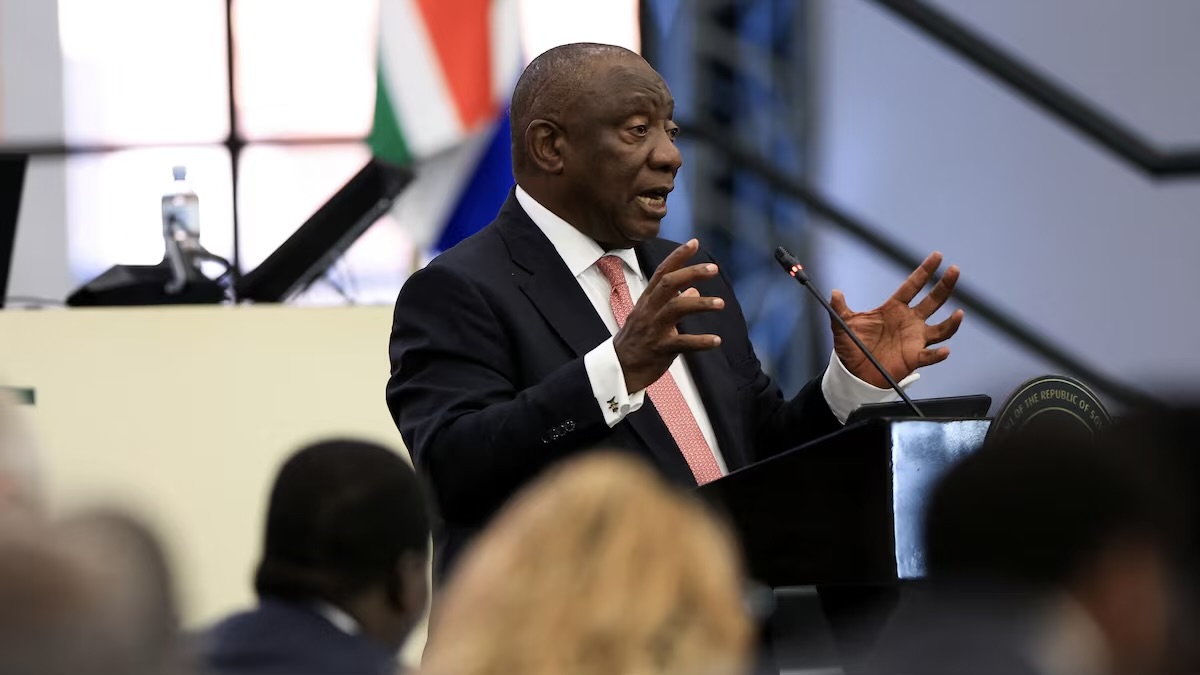
South African President Cyril Ramaphosa has announced a Cabinet reshuffle that includes changes to the Democratic Alliance’s ministerial representation and the return of former minister Dina Pule to the executive.
The changes, announced late on Tuesday, come after the Democratic Alliance’s new leader, Geordin Hill-Lewis, requested adjustments to the party’s Cabinet positions following his election as leader in April.
Among the most significant changes is the removal of former DA leader John Steenhuisen as Minister of Agriculture. Steenhuisen has been appointed Deputy Minister of Trade, while Willie Aucamp takes over the agriculture portfolio at a time when South Africa is battling a severe outbreak of foot and mouth disease.



Aucamp previously served as Minister of Forestry, Fisheries and the Environment. His appointment aligns with Hill-Lewis’s request for new leadership in the agriculture ministry as the government responds to the livestock disease, which has raised concerns within the farming sector and affected agricultural exports.
The Democratic Alliance remains the second largest party in South Africa’s Government of National Unity, behind Ramaphosa’s African National Congress (ANC).
Ramaphosa also appointed ANC veteran Dina Pule as Minister of Social Development, filling a vacancy created in May after Sisisi Tolashe was removed from office following allegations of misconduct.
Pule returns to Cabinet more than a decade after she was dismissed as communications minister in 2013. At the time, media reports alleged she had granted preferential treatment to a company linked to her boyfriend. Although Pule denied any wrongdoing, Parliament’s ethics committee later found that she had breached the code of conduct for lawmakers and imposed sanctions against her.
A senior figure in the ANC Women’s League, Pule’s appointment marks a notable political comeback despite the controversy surrounding her earlier tenure in government.
The reshuffle reflects both the evolving dynamics within South Africa’s coalition government and the influence of coalition partners in shaping Cabinet appointments. It also comes as the country faces mounting economic pressures, agricultural challenges and preparations for the 2026 local government elections.