Wednesday, June 10, 2026
  • Login
The Southern African Times
  • Home
  • Southern Africa
  • Business
    • African Start ups
    • African Continental Free Trade Area
  • Technology
    • Lifestyle
      • Health
      • Culture
      • Food and Drink
      • Entertainment
  • Opinion
  • Sports
  • SAT Jobs
    • Events
  • About Us
    • Advertise with Us
    • Contact Us
No Result
View All Result
  • Home
  • Southern Africa
  • Business
    • African Start ups
    • African Continental Free Trade Area
  • Technology
    • Lifestyle
      • Health
      • Culture
      • Food and Drink
      • Entertainment
  • Opinion
  • Sports
  • SAT Jobs
    • Events
  • About Us
    • Advertise with Us
    • Contact Us
No Result
View All Result
The Southern African Times
No Result
View All Result
Home West Africa

France Assists Benin in Foiling Coup Attempt Amid Renewed Scrutiny of Foreign Involvement in West Africa

by SAT Reporter
December 12, 2025
in West Africa
0
France Assists Benin in Foiling Coup Attempt Amid Renewed Scrutiny of Foreign Involvement in West Africa

Calm has been restored to Cotonou following a failed coup attempt in Benin, after loyalist security forces, supported by regional allies and limited French logistical assistance, regained control of key state institutions. The event, which unfolded on Sunday, marks the latest in a troubling succession of attempted military takeovers in West Africa, underscoring both the fragility of democratic institutions and the enduring complexity of external engagement in African security matters.

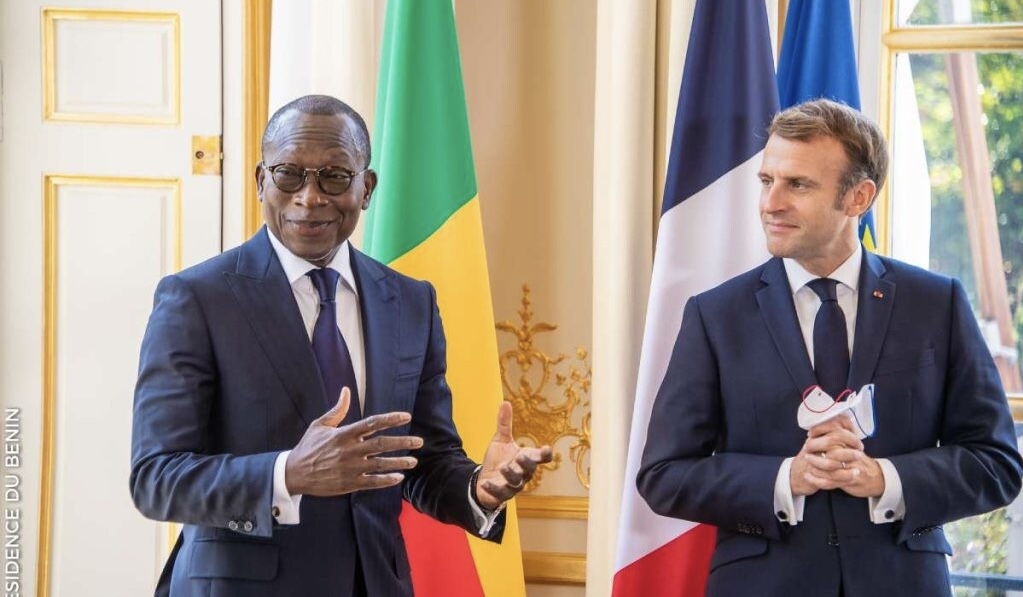
According to officials at the Élysée Palace, France provided “surveillance, observation, and logistical support” at the request of the Beninese government. French President Emmanuel Macron reportedly coordinated with his counterparts in Nigeria and Sierra Leone—the latter currently holding the chairmanship of the Economic Community of West African States (ECOWAS)—to facilitate a rapid regional response. Though France’s direct involvement appears limited, its presence has reignited debate on the nature and legitimacy of external participation in African internal affairs.

The coup attempt began early Sunday when a small group of soldiers seized Benin’s national broadcaster and declared President Patrice Talon deposed. Within hours, loyalist units, backed by intelligence coordination from neighbouring Nigeria, countered the putsch. By Monday, government officials confirmed that a dozen plotters had been arrested and that all hostages, including senior officers, had been released.


ADVERTISEMENT

President Talon, who has governed Benin since 2016, appeared on national television to assure the public that the situation was “completely under control.” His administration, however, faces domestic criticism for its narrowing political space, with opposition parties—most notably the Democrats led by former President Thomas Boni Yayi—barred from next year’s elections. Boni Yayi condemned the coup attempt as a “bloody and shameful attack on our country” but reiterated that legitimate power transfer must occur through “free and transparent elections.”

The events in Benin unfold amid a pattern of coups that has reshaped the political landscape of West Africa. Mali (2020, 2021), Burkina Faso (2022), and Niger (2023) have all experienced military takeovers that dismantled civilian governance and expelled French troops once stationed under Operation Barkhane. These developments have significantly weakened Paris’s long-standing influence in the region, prompting renewed questions about the viability of France’s military footprint in postcolonial Africa.

ECOWAS, long viewed as the principal guarantor of constitutional order in West Africa, swiftly condemned the attempted coup. Its President, Omar Alieu Touray, announced the deployment of troops from Nigeria, Ghana, Sierra Leone, and Ivory Coast to assist Benin in maintaining stability. Touray described the regional environment as a “state of emergency,” shaped by converging challenges of insurgency, economic precarity, and democratic erosion.

While France’s contribution to the thwarting of the coup was tactical rather than operational, it nonetheless carries significant symbolic weight. Across Francophone Africa, recent years have witnessed a surge in anti-French sentiment, with publics increasingly rejecting what they perceive as neo-imperial interference. In Mali, Niger, and Burkina Faso, successive juntas have accused Paris of undermining sovereignty and exploiting regional insecurity for geopolitical leverage. The withdrawal of French forces from these states has been both a reflection of domestic rejection and a recalibration of France’s regional strategy.

From a decolonial perspective, the Benin episode illustrates the enduring tension between security pragmatism and postcolonial autonomy. While Benin’s request for French support may appear to reaffirm bilateral cooperation, it simultaneously exposes the structural dependency that post-independence African states often confront in moments of crisis. The reliance on external surveillance and coordination underscores gaps in regional defence capacity, raising questions about ECOWAS’s long-term ability to manage security threats without European involvement.

For many African analysts, the deeper concern lies in perception. Even limited French engagement risks being interpreted as paternalistic, particularly given France’s recent loss of legitimacy in the Sahel. Yet, the situation in Benin cannot be reduced to a binary narrative of domination or dependency. It also reflects African agency—the Beninese government actively sought assistance through established regional and bilateral channels, thereby asserting its sovereignty within a multilateral framework rather than ceding it.

The incident may, therefore, serve as a litmus test for a more balanced African security paradigm—one where regional cooperation remains central but external partnerships are governed by transparency, consent, and mutual respect. It is this recalibration of Africa’s postcolonial relations with external actors that will determine whether the continent can transcend the cyclical pattern of coups and crisis management.

Benin’s swift restoration of order demonstrates the resilience of its institutions but also highlights the fragility of political legitimacy across the region. With elections approaching and democratic contestation constrained, the country faces the dual challenge of maintaining stability while ensuring that governance remains participatory and credible. As West Africa navigates this volatile period, the imperative is clear: genuine sovereignty must be built on African solutions—rooted in accountable governance, regional solidarity, and a deliberate distancing from old hierarchies of power.

Tags: African sovereigntyBeninCoup AttemptDecolonisationdemocracyECOWASEmmanuel MacronFrançafriqueFrancegovernanceNigeriaPatrice TalonPostcolonialismregional securitywest africa
Previous Post

South Africa Awaits Decision as United States Moves to Renew AGOA Trade Framework

Next Post

South Sudan Mediates Agreement with Sudan’s Rival Forces to Safeguard Key Heglig Oil Field

SAT Reporter

Related Posts

Obi Secures Presidential Ticket, Sets Up Fresh Showdown With Tinubu
Nigeria

Obi Secures Presidential Ticket, Sets Up Fresh Showdown With Tinubu

by SAT Reporter
June 2, 2026
Senegal shake up complicates IMF talks and rattles markets
Senegal

Senegal shake up complicates IMF talks and rattles markets

by SAT Reporter
May 27, 2026
Eni approves 4 billion dollar expansion of Ivory Coast oil project
Ivory Coast

Eni approves 4 billion dollar expansion of Ivory Coast oil project

by SAT Reporter
May 26, 2026
Nigeria growth eases in first quarter despite reform push
Nigeria

Nigeria growth eases in first quarter despite reform push

by SAT Reporter
May 26, 2026
Tinubu secures APC ticket, sets sights on second term
Nigeria

Tinubu secures APC ticket, sets sights on second term

by SAT Reporter
May 25, 2026
Next Post
South Sudan Mediates Agreement with Sudan’s Rival Forces to Safeguard Key Heglig Oil Field

South Sudan Mediates Agreement with Sudan’s Rival Forces to Safeguard Key Heglig Oil Field

Browse by Category

  • Africa AI
  • African Continental Free Trade Area
  • African Debt
  • African Start ups
  • Agriculture
  • AI Africa
  • Algeria
  • All News
  • Analysis
  • Angola
  • Arts / Culture
  • Asia
  • Botswana
  • BOTSWANA
  • BREAKING NEWS
  • BRICS
  • Burkina Faso
  • Burundi
  • Business
  • Business
  • Business Wire
  • Cameroon
  • Central Africa
  • Chad
  • China
  • Climate Change
  • Climate Changev
  • Community
  • Congo Republic
  • Conservation
  • Côte d’Ivoire
  • COVID 19
  • CRYPTOCURRENCY
  • Culture
  • Democratic Republic of Congo
  • Diplomacy
  • Eastern Africa
  • Economic Development
  • Economy
  • Education
  • Egypt
  • Elections 2024
  • Energy
  • Entertainment
  • Environment
  • Eritrea
  • Ethiopia
  • Europe
  • Fashion
  • Feature
  • Finance
  • Financial Inclusion
  • Food
  • Food and Drink
  • Foods
  • GABON
  • Ghana
  • Global
  • Global Africa
  • Guinea
  • Health
  • Humanitarian Aid
  • Immigration
  • in Southern Africa
  • International news
  • International Relations
  • Investment
  • Ivory Coast
  • Just In
  • Kenya
  • Lesotho
  • Libya
  • Life Style
  • Lifestyle
  • Literature
  • Malawi
  • Malawi
  • Mali
  • Markets
  • Mauritius
  • Middle East
  • Mining in Africa
  • Morocco
  • Mozambique
  • Namibia
  • niger
  • Niger
  • Nigeria
  • North Africa
  • North-Eastern Africa
  • Obituaries
  • Obituary
  • Opinion
  • PARTNER CONTENT
  • Politics
  • Property
  • Racism
  • Rwanda
  • Rwanda
  • SADC
  • SAT Interviews
  • SAT Investigation
  • SAT Jobs
  • Saudi Arabia
  • Senegal
  • Seychelles
  • Somaliland
  • South Africa
  • South Sudan
  • Sports
  • Startup Africa
  • STOCK EXCHANGE
  • Sudan
  • Sustainability
  • Sustainablity
  • Tanzania
  • Technology
  • Telecommunications
  • The Editorial Board
  • The Power Of She
  • Togo
  • Trade
  • Travel
  • Travel
  • Tunisia
  • Uganda
  • Uncategorized
  • Wealth
  • West Africa
  • World
  • World
  • ZAMBIA
  • Zambia
  • ZIMBABWE
  • Zimbabwe

Browse by Tags

#NewsUpdate #SouthAfrica #SouthernAfricanTimes #TheSouthernAfricanTimes AfCFTA africa African Continental Free Trade Area African development African Development Bank African economies African economy African Union Agriculture Angola Botswana China Climate change Cyril Ramaphosa Economic Development economic growth energy transition governance IMF industrialisation Inflation Infrastructure Infrastructure Development International relations Investment Kenya Mozambique Namibia news Nigeria Regional Integration renewable energy Rwanda SADC South Africa Southern Africa sustainable development Tanzania United States Zambia Zimbabwe
ADVERTISEMENT

WHO WE ARE

The Southern African Times is a regional bloc digital newspaper that covers Southern African and world news. The paper also gives a nuanced analysis on news and covers a wide range of reporting which include sports, entertainment, foreign affairs, arts and culture.

Welcome Back!

Login to your account below

Forgotten Password?

Retrieve your password

Please enter your username or email address to reset your password.

Log In
  • Home
  • Southern Africa
  • Business
    • African Start ups
    • African Continental Free Trade Area
  • Technology
    • Lifestyle
      • Health
      • Culture
      • Food and Drink
      • Entertainment
  • Opinion
  • Sports
  • SAT Jobs
    • Events
  • About Us
    • Advertise with Us
    • Contact Us
Not enough quota to unlock this post
Unlock left : 0
Are you sure want to cancel subscription?