Zimbabwe’s fuel sector is expanding in ways that defy basic economics. Demand has not surged. Consumption has remained broadly stable. Yet fuel stations are multiplying at a pace that cannot be explained by market forces alone. That disconnect is not incidental. It is the story.
The Financial Intelligence Unit study covering 2020 to 2025 reaches a conclusion that reframes the sector entirely. The proliferation of fuel and gas retail sites is not being driven by consumption. It is being driven by capital flows, a portion of which are suspected to be illicit.
Fuel’s attractiveness in this context is structural. It is one of the few sectors in Zimbabwe that operates almost entirely in United States dollars and largely in cash. That combination creates a high velocity, low visibility environment where value can be moved, stored and reintroduced into the economy with limited traceability.



The report identifies gold smuggling as a central driver. Zimbabwe’s own National Risk Assessment already flags gold as a major source of launderable proceeds. The FIU study connects those proceeds directly to the fuel and LPG trade.
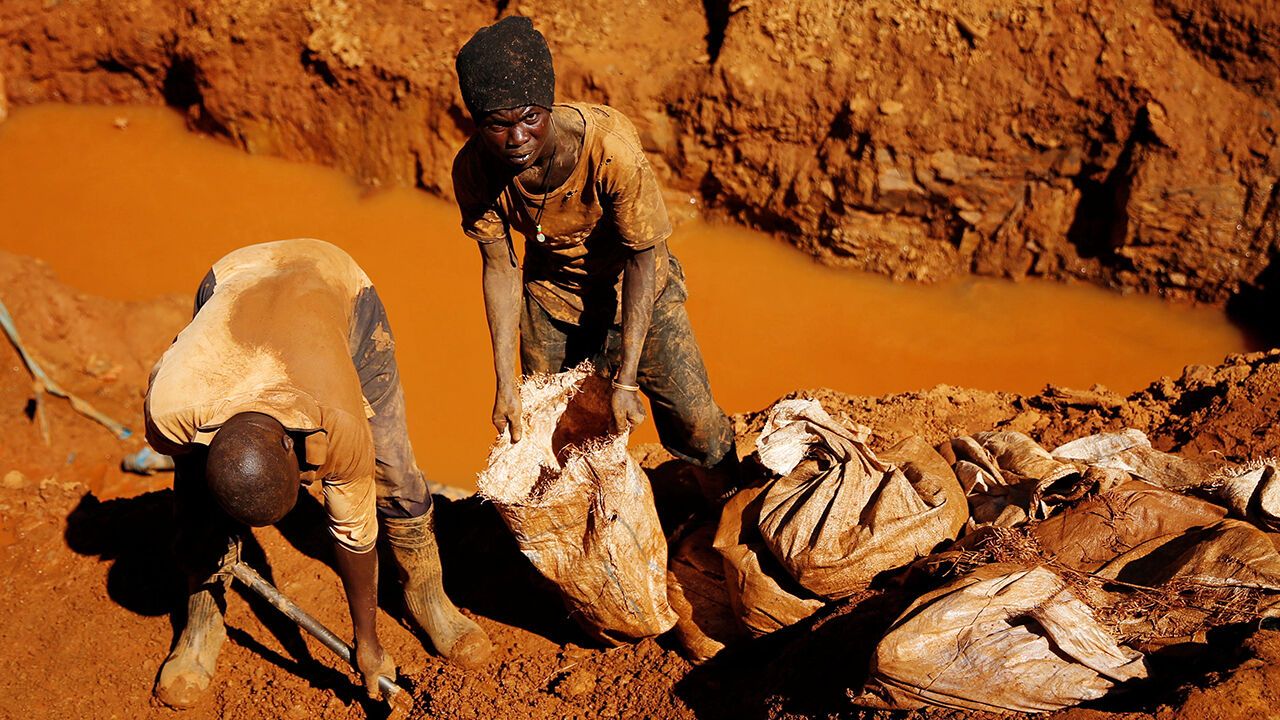
The mechanism is specific. Gold is smuggled into South Africa, where proceeds are realised in foreign currency and held in offshore accounts. These funds are then used, often through informal systems such as hawala, to pay foreign suppliers for fuel and LPG imports into Zimbabwe. Once the product arrives, it is sold locally in United States dollars cash.
What begins as illicit gold revenue reappears as legitimate fuel sales.
This cycle is not marginal. It is supported by organised networks of couriers who coordinate suppliers, transporters and local dealers. Some operate fleets of tanker trucks. Others facilitate payments, including cash deliveries and the use of safe deposit boxes. In certain instances, local traders are instructed to deposit proceeds with third parties, including real estate developers.
The study also notes that not all imports are paid through formal banking channels. This is particularly evident in the LPG sector, where some transactions are alleged to have been settled through offshore accounts and cash based systems.
This sits alongside formal flows that are themselves substantial. Zimbabwe paid at least US$6.7 billion for fuel and LPG imports through the banking system between January 2020 and March 2025. Yet even within this formal structure, payments are often routed through financial centres such as the United Kingdom, Mauritius and Switzerland, jurisdictions that are not primary sources of the fuel itself. While common in global trade, this layering introduces additional opacity.
The distortion becomes most visible at the retail level.
Operators linked to illicit capital are able to sell fuel at sub economic prices. The report attributes this to the need to accelerate cash mobilisation rather than maximise profit margins. The effect is immediate. Established fuel companies report declining monthly volumes, in some cases falling from 300000 litres to around 120000 litres. Some have begun closing sites altogether.

This is not competitive efficiency. It is capital with a different objective function.
Regulatory gaps have made this possible. Retail fuel licences do not require proof of funding, despite construction costs running into hundreds of thousands of United States dollars. There are no criminal background checks for applicants. Licensing authorities apply only basic client verification, and land allocation lacks clear guidelines, resulting in clusters of service stations in both urban and residential areas.
In practice, entry into the sector is weakly policed, while returns, denominated in hard currency, are immediate.
The report further identifies arbitrage within state linked transactions. Fuel allocated for government projects in local currency has, in some cases, been diverted into the open market and sold in United States dollars. A telecommunications company that received US$12.6 million in government funding allegedly channelled US$4 million through a fuel station to access USD cash, with no evidence of legitimate telecom spending. Another company registered itself with a name resembling a government ministry and used the confusion to import millions of litres of fuel duty-free.
The spread between official and parallel exchange rates creates an incentive structure where such diversion is highly profitable. The resulting gains enable operators to undercut competitors while expanding their retail footprint.
Cash sits at the centre of this system. The FIU recorded 251 reports related to the sector between 2020 and 2025, including 236 suspicious transaction reports. Around 10 percent of analysed cases involved suspected money laundering, with the remainder linked to fraud, corruption and theft. A common feature across these cases is the limited use of formal banking channels, with some operators maintaining minimal or no transactional activity despite high sales volumes.
When an industry of this scale operates largely in cash, it erodes visibility across the financial system. Tax compliance becomes harder to enforce. Monetary authorities lose oversight of currency flows. Illicit capital is able to circulate with reduced friction.
The policy recommendations outlined in the report are direct. Integrating customs and banking systems would allow authorities to match imports with verified payments. Introducing proof of funding and beneficial ownership requirements for licences would raise entry barriers. Limiting large cash transactions, including proposals to cap local payments above US$10000 outside the banking system, would begin to close obvious loopholes.
These are necessary interventions. Whether they are sufficient is less clear.
The deeper issue is structural. Capital is moving into fuel not simply because the sector is open, but because it offers liquidity, anonymity and protection in an economy where confidence in formal financial systems remains fragile.
The expansion of Zimbabwe’s fuel sector is therefore not evidence of growth in energy demand or retail innovation. It is an indicator of where capital, both legitimate and illicit, is finding refuge.
The result is a sector where capital of unknown origin can be deployed quickly, scaled rapidly and recovered in hard currency. Real estate developers have responded accordingly, converting land into service stations to capture dollar based returns. Investors, facing limited confidence in financial assets, are following the same path.
At the centre of this ecosystem is cash. Large, persistent and often unbanked. The report notes that significant volumes of transactions bypass formal banking channels entirely, with some payments for imports allegedly made through informal networks and offshore accounts. Even where banking systems are used, patterns such as third party payments and transfers through financial centres introduce further opacity.
This is not merely a question of compliance. It is a question of visibility.
When a sector of this scale operates largely outside traceable financial channels, it weakens the state’s ability to monitor capital flows, enforce taxation and manage currency stability. It also creates conditions in which other forms of arbitrage can thrive. The diversion of fuel intended for government projects into the open market, to be sold in United States dollars, is one such example. The gains are immediate and significant. The cost is systemic.
The policy responses proposed in the report are technically sound. Tighter licensing requirements, integration of customs and banking data, limits on large cash transactions and stronger oversight of informal payment systems would all begin to close the gaps.
But the underlying issue is harder to address. The migration of capital into fuel retail is not simply opportunistic. It reflects a broader lack of confidence in formal financial instruments and regulatory enforcement. In such an environment, sectors that offer liquidity, anonymity and hard currency returns will continue to attract both legitimate and illicit capital.
The expansion of Zimbabwe’s fuel sector is therefore not a sign of economic dynamism. It is a signal of where money feels safest when the system does not. And right now, that place is not the formal economy.
However, trade-based money laundering of this kind is not a Zimbabwean peculiarity. The Financial Action Task Force has flagged it globally as one of the hardest forms of financial crime to detect, precisely because the goods are real. But the FIU’s report is rare in its specificity, a national financial intelligence body openly naming the sector, the mechanism, the foreign jurisdictions involved, and the weaknesses in its own regulatory architecture. For regional partners, particularly South Africa, where the report alleges fake-ID shell companies are operating fuel export businesses, the implications are uncomfortable.
Zimbabwe’s fuel pumps, in other words, are telling a story about a regional criminal economy. The FIU has put that story on paper. The question now is whether anyone acts on it.
Written by Gift Kugara Mawire, a lecturer, researcher, and commentator on politics, governance, business, and emerging technologies, with a strong interest in Zimbabwean and African affairs.

The views expressed are those of the author and do not necessarily reflect those of Southern African Times.