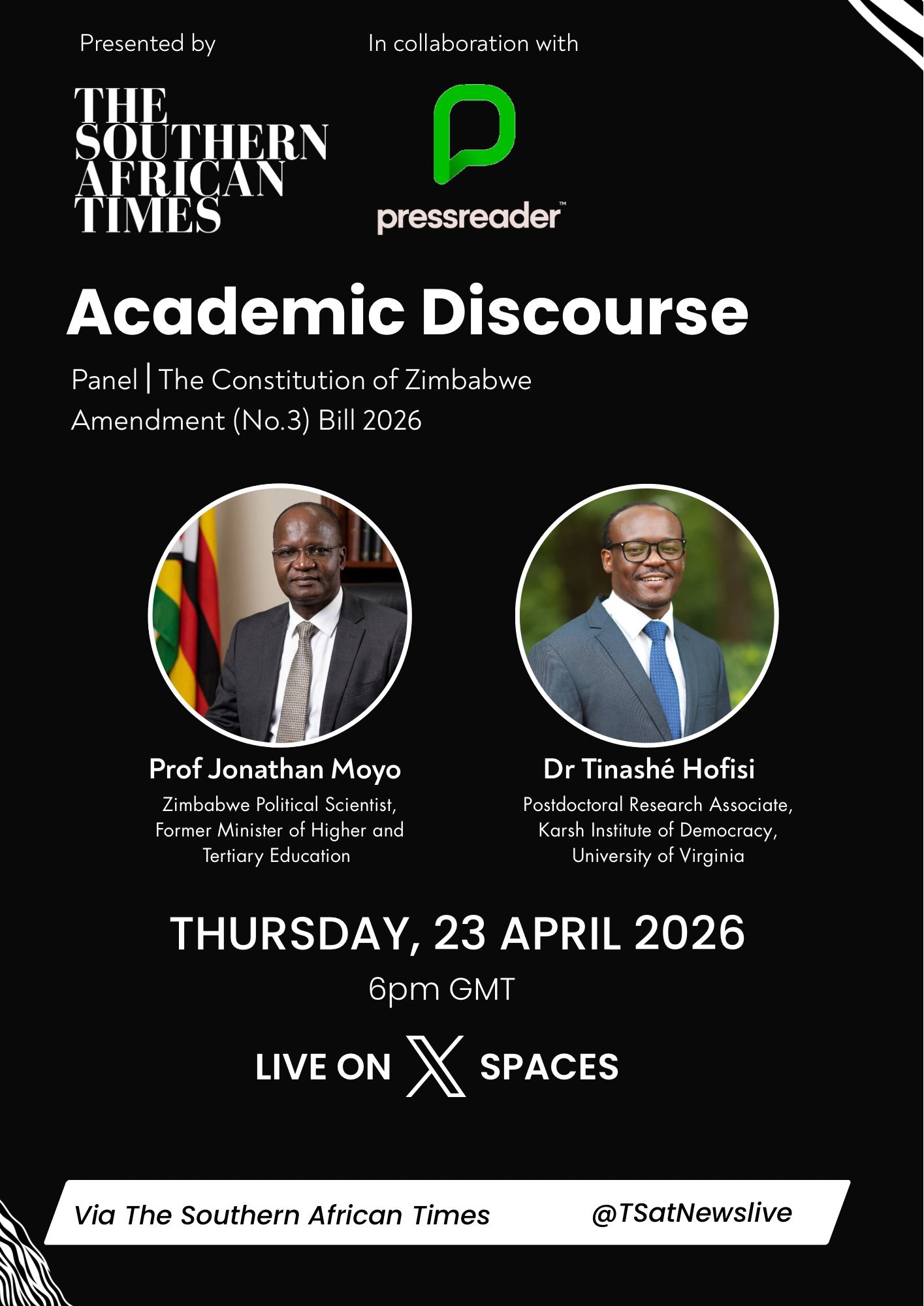
The Southern African Times will convene a high-level academic panel discourse this Thursday examining the Constitution of Zimbabwe Amendment (No. 3) Bill, 2026, bringing together leading legal and political voices to interrogate one of the country’s most consequential proposed reforms.
The discussion, scheduled for 18:00 GMT, will be broadcast live via Twitter Spaces and YouTube, expanding access to a global audience and reflecting a growing demand for structured, evidence-based public dialogue on constitutional governance. The forum is being hosted in partnership with the Ministry of Information and Broadcasting, Zimbabwe, and PressReader.
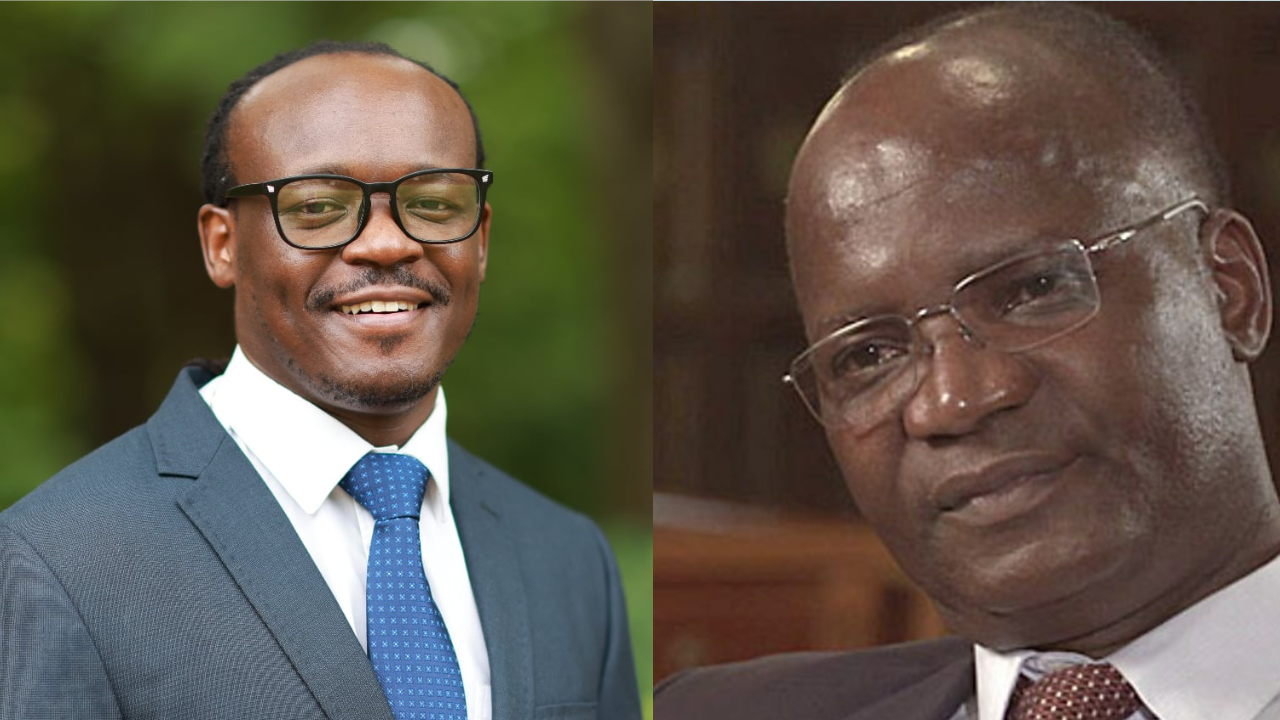
At the centre of the discussion will be Professor Jonathan Moyo, a political scientist and former Minister of Higher and Tertiary Education, who will present arguments in favour of the proposed amendment. He will be joined by Dr Tinashé Hofisi, a constitutional law scholar and Postdoctoral Research Associate at the Karsh Institute of Democracy at the University of Virginia, who is expected to advance a critical perspective grounded in comparative constitutional analysis and democratic accountability.



The panel will be moderated by Farai Ian Muvuti, Chief Executive Officer of The Southern African Times, alongside Nyasha Matanda. Matanda is an award-winning entrepreneur, diaspora trade and wellness leader, and healthcare regulation specialist, whose work focuses on building purpose-led businesses and global impact ecosystems.

The Constitution of Zimbabwe Amendment (No. 3) Bill, 2026, has generated significant debate within legal, political, and civil society circles. The proposed changes raise fundamental questions regarding institutional balance, the separation of powers, and the long-term trajectory of constitutional reform in Zimbabwe.
Rather than adopting a conventional debate format, The Southern African Times has structured the session as an academic discourse, designed to ensure rigour, balance, and clarity of argument. The programme will include opening statements, multiple rounds of rebuttal, a cross-questioning segment between the speakers, and a moderated discussion focusing on key thematic areas including constitutional interpretation, governance implications, and institutional reform.
The final segment will open the floor to audience engagement, allowing participants from across Zimbabwe and the diaspora to pose questions in real time. This interactive component is expected to broaden the scope of the discussion while maintaining its scholarly tone.
In convening this forum, The Southern African Times continues to expand its role as a platform for policy dialogue and intellectual exchange, positioning itself at the intersection of media, academia, and governance. The inclusion of both proposition and opposition perspectives reflects a deliberate effort to foster balanced and credible discourse on issues of national and regional significance.
The panel will be accessible globally via Twitter Spaces and YouTube. Viewers are encouraged to set a reminder and join the live broadcast using the link below:
Watch live on YouTube:
https://www.youtube.com/live/0_Dpm3Ikm8M?si=siCbffA_0jaZdDMD