Hungary’s incoming government has indicated that it will halt the country’s planned withdrawal from the International Criminal Court, signalling a potential recalibration of its approach to international justice and multilateral institutions.
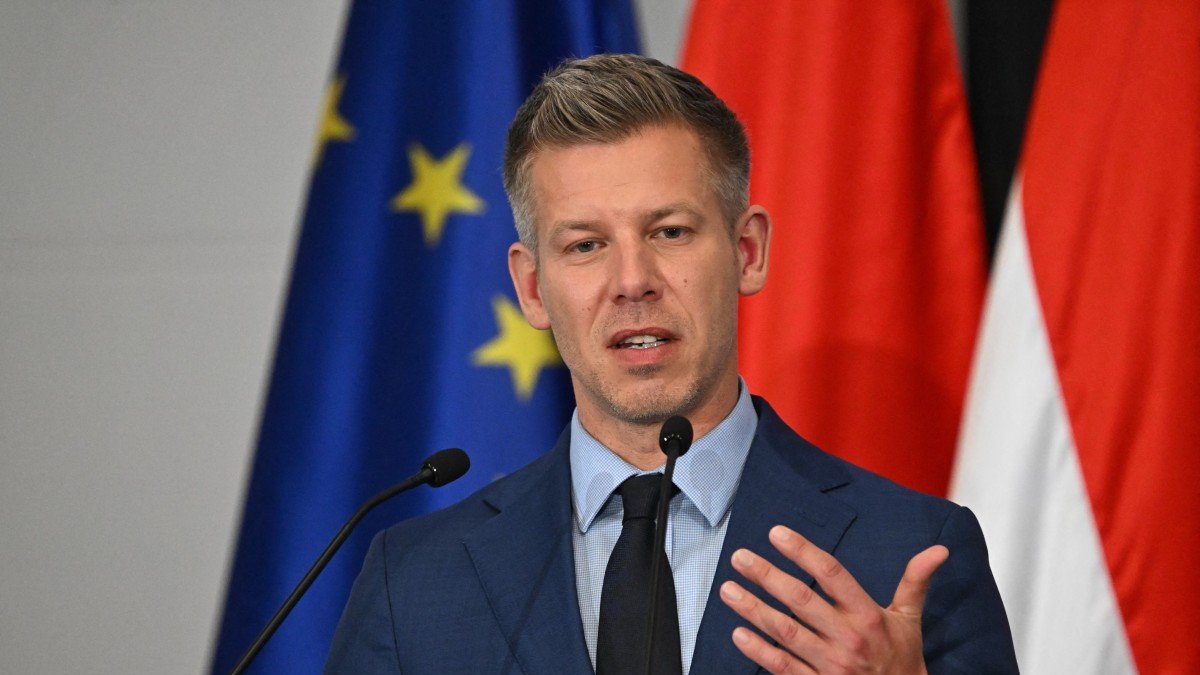
Peter Magyar, leader of the Tisza party and prime minister elect following a decisive electoral outcome earlier this month, confirmed during a press briefing in Budapest that his administration intends to reverse the withdrawal process initiated under former prime minister Viktor Orbán. The withdrawal had been scheduled to take effect in early June, which would have positioned Hungary as the only European Union member state outside the jurisdiction of the Court.
Magyar stated that continued membership in the International Criminal Court entails clear legal obligations, including the enforcement of arrest warrants issued by the Court. He noted that individuals subject to such warrants could be detained if they enter Hungarian territory, aligning the country with the Rome Statute framework governing the ICC. Further details on ongoing proceedings can be found in the ICC case database.



The announcement carries broader geopolitical implications, particularly in relation to Israeli prime minister Benjamin Netanyahu, who has been the subject of an arrest warrant issued by the Court in connection with alleged war crimes linked to the Gaza conflict. Hungary under Orbán had been among the governments critical of the warrant and had maintained close diplomatic relations with Israel.
Magyar’s position suggests a departure from this stance and reflects a re engagement with multilateral legal norms. His remarks indicate that adherence to international legal frameworks will form part of Hungary’s foreign policy orientation, though the practical implications will depend on subsequent legislative and diplomatic steps.

From an African perspective, the developments resonate with longstanding debates around the role and equity of international justice mechanisms. African states have historically engaged with the ICC in complex ways, balancing commitments to accountability with concerns regarding selective enforcement and geopolitical influence. South Africa has been particularly prominent in shaping these debates. In 2024, Pretoria initiated proceedings against Israel at the International Court of Justice, alleging violations of the Genocide Convention in relation to the Gaza conflict. The case, which drew global attention, underscored South Africa’s longstanding position that international law should be applied consistently across all states, regardless of geopolitical alignment. More on South Africa’s diplomatic engagement can be accessed via the Department of International Relations and Cooperation.
While the International Court of Justice and the International Criminal Court operate as distinct institutions with different mandates, the South African case has reinforced broader continental calls for accountability mechanisms that are both credible and impartial. Across Africa, there has been sustained engagement with questions of how international justice can better reflect diverse historical experiences and contemporary political realities, rather than reinforcing uneven applications of legal standards.
The evolving position of Hungary may therefore be viewed within a wider global conversation on accountability, sovereignty and the legitimacy of international institutions. For observers across the African continent, the emphasis remains on ensuring that such institutions operate in a manner that is equitable, transparent and reflective of diverse geopolitical realities rather than singular narratives.
As Hungary prepares for a political transition, the decision to remain within the ICC framework is likely to be closely monitored both within Europe and across regions such as Africa, where the implications of international legal norms continue to be actively debated.